
Whale-Driven Chainlink Price Volatility and Institutional Adoption Potential
The Whale Factor: On-Chain Activity as a Leading Indicator for Chainlink
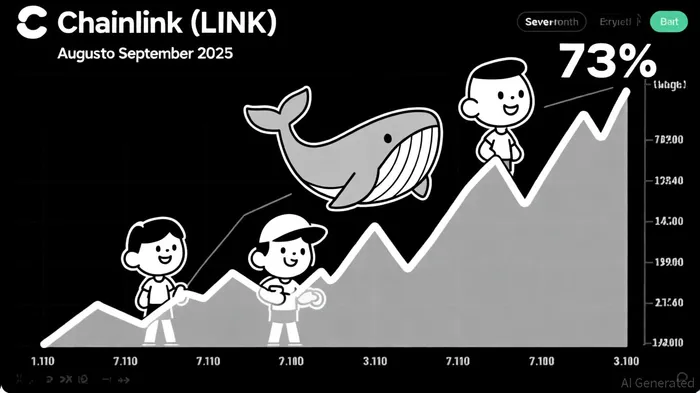
In the volatile world of cryptocurrency, on-chain whale activity has emerged as a critical barometer for predicting price surges. For ChainlinkLINK-- (LINK), 2025 has seen a dramatic uptick in whale-driven movements, with large investors converting EthereumETH-- into LINK and transferring tokens to long-term storage. A single whale, for instance, swapped 4,806 ETH ($21.25 million) into 938,489 LINK in late August, signaling robust conviction in the asset's future performance [1]. Such transactions, coupled with a 73% price rally from $15 to $26 since mid-August, underscore the interplay between whale accumulation and market sentiment [2].
Whale activity has surged to a seven-month high, with over 4,624 whale-sized transactions (each exceeding $100,000) recorded in August alone. These movements have reduced circulating supply on exchanges by 40% year-to-date, tightening liquidity and creating upward pressure on the price [3]. According to a report by CoinLaw, the balance of LINK tokens held by whale wallets increased by 8.5% in just seven days, further reinforcing bullish momentum [4].
Institutional Adoption: Chainlink's Infrastructure Edge
While whale activity drives short-term volatility, Chainlink's long-term trajectory is anchored by institutional adoption. The project has secured partnerships with financial giants like ICE, Swift, and the U.S. Department of Commerce, integrating real-world data (e.g., forex rates, macroeconomic indicators) into blockchain ecosystems [5]. For example, Chainlink's collaboration with ICE to deliver on-chain pricing for precious metals and foreign exchange has expanded its utility in institutional-grade applications [6].
Institutional confidence is also reflected in Chainlink's Total Value Secured (TVS), which surpassed $93 billion in 2025, a testament to its role as a foundational oracleORCL-- infrastructure provider [7]. The platform's Cross-Chain Interoperability Protocol (CCIP) has further solidified its position, enabling seamless token and data transfers across 50+ blockchains. A case study with ANZ Bank in 2023 demonstrated CCIP's ability to simplify cross-border transactions, a use case now gaining traction in tokenized real-world assets (RWA) [8].
Technical Momentum and Market Projections
From a technical perspective, LINK has broken key trendlines, with a push above $24 triggering a rally toward $26. Analysts at Phemex note that if bulls break the $26.32 resistance level, the price could target $30, potentially setting a new yearly high [9]. The MVRV ratio (a measure of realized vs. market value) has flipped positive, and active addresses have hit an eight-month peak, signaling growing retail and institutional participation [10].
However, caution persists. While whale accumulation has absorbed short-term selling pressure, the MVRV ratio of 12.77% indicates many holders have unrealized gains, which could lead to profit-taking if the price stalls. Additionally, macroeconomic headwinds and regulatory uncertainties remain risks for the broader crypto market [11].
Conclusion: A Bullish Outlook with Caveats
Chainlink's confluence of whale-driven demand, institutional partnerships, and technical strength positions it as a standout in the altcoin space. Whale activity has historically preceded major rallies, and the current surge in accumulation suggests a potential continuation of this trend. Meanwhile, institutional adoption—particularly in RWA tokenization and cross-chain interoperability—provides a durable foundation for long-term growth.
That said, investors must remain vigilant. The sustainability of this rally will depend on continued adoption, regulatory clarity, and the ability of Chainlink's ecosystem to scale. For now, the data points to a compelling case for LINK as a whale-backed, institutionally validated play on the future of blockchain infrastructure.






Comentarios
Aún no hay comentarios