
Why WGMI May Struggle to Outperform Bitcoin in a Bull Market
The cryptocurrency market's evolution has introduced new investment vehicles, including the Valkyrie BitcoinBTC-- Miners ETF (WGMI), which tracks Bitcoin mining companies. While WGMIWGMI-- aims to capitalize on Bitcoin's (BTC) bull cycles, a closer examination of risk-adjusted returns and market maturity reveals why it may struggle to outperform Bitcoin directly in a bull market.
Risk-Adjusted Returns: Bitcoin's Edge
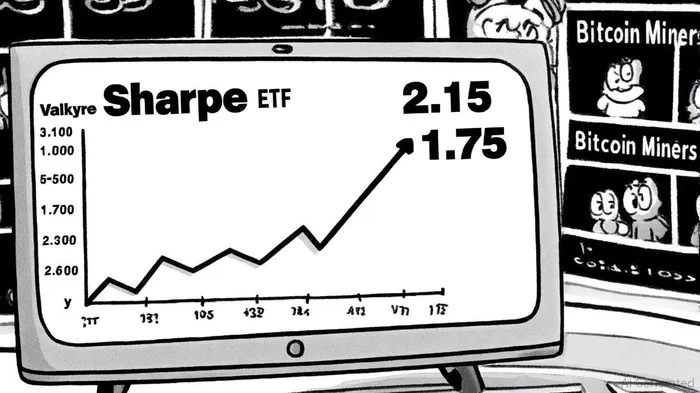
Bitcoin's Sharpe ratio—a metric that evaluates returns relative to volatility—has surged in recent quarters. As of Q3 2025, Bitcoin's Sharpe ratio stands at 2.15, the highest among major assets, outpacing the S&P 500's 0.82 and large-cap tech stocks' 1.0 [4]. In contrast, WGMI's Sharpe ratio is 1.75, significantly lower than Bitcoin's [1]. This gap underscores Bitcoin's superior efficiency in balancing risk and reward.
Historical data further supports this trend. While Bitcoin's 10-year Sharpe ratio is 0.85, its 1-year ratio has climbed to 1.83, reflecting improved risk-adjusted performance as the market matures [5]. WGMI, however, ranks poorly among ETFs, performing worse than 77% of its peers in risk-adjusted returns [3]. This disparity suggests that Bitcoin's direct exposure to price appreciation, combined with its maturing volatility profile, gives it a structural advantage over derivative products like WGMI.
Volatility and Drawdowns: A Tale of Two Assets
Bitcoin's volatility has declined in 2025, with 30-day annualized volatility dropping to 25.26% in July—the lowest since October 2023 [5]. This trend aligns with broader on-chain indicators, such as a 20-month low in network transactions, signaling reduced speculative activity . Meanwhile, WGMI's volatility remains elevated at 79.04%, far exceeding Bitcoin's [1].
Maximum drawdowns also highlight Bitcoin's resilience. While WGMI faced a -85.76% drawdown, Bitcoin's recent consolidation phase saw a milder -12% decline in 2025 [5]. Historical bear markets, however, show Bitcoin's vulnerability to severe drawdowns (e.g., -93% in 2013), though these have moderated as institutional adoption and regulatory clarity reduce uncertainty [4]. WGMI's higher volatility and drawdowns make it a riskier proposition, particularly in a bull market where investors prioritize capital preservation and compounding returns.
Market Maturity: Bitcoin's Long-Term Tailwind
Bitcoin's maturation is evident in its reduced volatility and improved Sharpe ratios, driven by factors like ETF inflows, institutional buying, and macroeconomic tailwinds [4]. For instance, the Federal Reserve's anticipated rate cuts and rising global liquidity have bolstered Bitcoin's appeal as a hedge against inflation [2]. In contrast, WGMI's performance is tied to the cyclical fortunes of mining firms, which face operational risks such as energy costs and regulatory scrutiny.
Moreover, Bitcoin's on-chain activity reflects a shift from retail-driven speculation to institutional-grade transactions. Large-scale purchases by entities like MicroStrategy and ETFs have stabilized its price structure, reducing the impact of short-term volatility [4]. WGMI, by contrast, lacks this institutional foundation, making it more susceptible to market corrections.
Conclusion: The Bull Market's Preferred Play
While WGMI offers indirect exposure to Bitcoin's growth, its higher volatility, lower Sharpe ratio, and operational risks position it as a less efficient investment compared to Bitcoin itself. In a bull market, where capital efficiency and risk management are paramount, Bitcoin's maturing profile and superior risk-adjusted returns make it the dominant choice. Investors seeking to capitalize on the next leg of the bull cycle would likely find direct Bitcoin exposure more aligned with their objectives than derivative products like WGMI.





Comentarios
Aún no hay comentarios