
Westlake Chemical (NYSE:WLK): A Case of Earnings Misinterpretation Amid Temporary Headwinds
Westlake Chemical (NYSE:WLK) has faced significant scrutiny following its Q1 2025 earnings report, which revealed a net loss of $0.31 per share—far below the $0.70 consensus estimate. While investors have reacted by driving the stock down 19.5% year-to-date, a closer examination of the company’s operational challenges, strategic advantages, and forward-looking catalysts suggests that the near-term pain may mask long-term resilience. Here’s why WLK’s fundamentals could be stronger than its recent numbers imply.
The Downward Spiral in Q1 2025: Temporary or Structural?
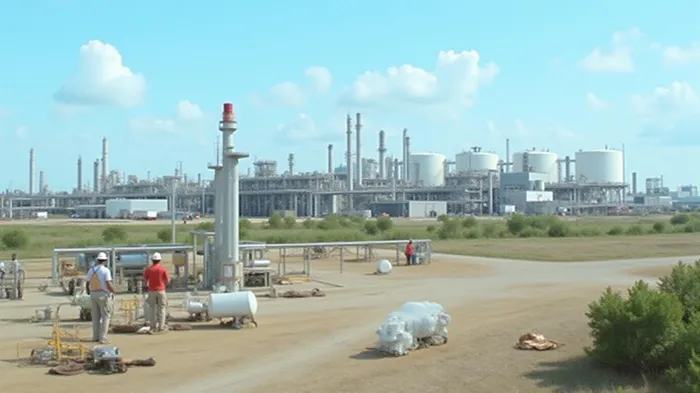
Westlake’s Q1 stumble was largely attributable to external and planned disruptions, not structural weaknesses. Key drivers of the $40 million net loss included:
- Higher feedstock and energy costs in North America, which impacted the Performance and Essential Materials (PEM) segment.
- Planned turnarounds at its Petro 1 ethylene unit and Geismar facility, combined with unplanned outages, which reduced production and added $80 million to financial headwinds.
- A 2% sales volume decline in PEM due to global demand softness for PVC resin and polyethylene.
Despite these challenges, the company’s Housing and Infrastructure Products (HIP) segment showed encouraging signs. HIP’s EBITDA rose sequentially by $19 million, driven by strong demand for roofing, siding, and trim products. This suggests that WLK’s exposure to housing and construction markets—key drivers of long-term demand—remains intact.
Why the Earnings Are Understated: A Focus on the Fundamentals
- Operational Turnarounds Completed: The Petro 1 ethylene unit turnaround, which concluded in April 2025, removes a major drag on production. Management emphasized no further major turnarounds are planned, enabling higher operating rates and third-party ethylene sales to rebound.
- Cost Discipline and Structural Advantages:
- Westlake’s integrated business model—combining feedstock production, ethylene cracking, and downstream PVC and polyethylene manufacturing—gives it a $0.07/lb cost advantage over non-integrated competitors.
- The company has raised its 2025 cost-reduction target to $150–$175 million, with $40 million already achieved in Q1. Capital spending cuts (now $900 million vs. prior plans) further strengthen cash flow.
Strong Balance Sheet: Despite $4.6 billion in debt, Westlake holds $2.5 billion in cash and equivalents, providing ample liquidity to navigate volatility. This contrasts with peers that face tighter credit conditions.
Upcoming Catalysts for Recovery
- Q2 2025 Earnings (Aug. 5, 2025): Analysts project an EPS of $1.10, a significant rebound from Q1’s loss. If achieved, this would reflect the benefits of post-turnaround operational stability and improved cost pass-through.
- Global Demand Stabilization: While PEM’s Q1 struggles reflected weak industrial demand, Westlake’s exposure to North American housing markets—which account for 60% of HIP sales—remains robust. Even a modest recovery in U.S. housing starts could lift margins.
- Trade Policy Resilience: Despite global trade tensions, Westlake’s domestic feedstock sourcing (e.g., shale gas) and diversified customer base reduce direct exposure to tariffs or supply chain shocks.
Valuation: A Discounted Opportunity?
Westlake’s stock trades at a forward P/E of 16.93, far below its five-year average of 22.8. While the trailing P/E of 154.48 appears elevated due to Q1 losses, a normalized earnings scenario (factoring in Q2’s projected $1.10 EPS and a full-year rebound) suggests the stock could be undervalued.
Conclusion: WLK’s Earnings Are a Temporary Detour, Not a Dead End
Westlake’s Q1 stumble was largely a product of planned and temporary disruptions, not deteriorating fundamentals. With turnarounds completed, cost reductions on track, and HIP’s resilience intact, the company is positioned to rebound in 2025. The Q2 earnings report on August 5 will be pivotal: meeting the $1.10 EPS estimate could reignite investor confidence, particularly if PEM margins stabilize.
Crucially, Westlake’s $2.5 billion cash cushion and integrated cost advantages provide a buffer against macroeconomic uncertainty. At current valuations, WLK offers a compelling risk-reward profile for investors willing to look past short-term noise. If operational improvements materialize, the stock’s current dip could prove to be a buying opportunity.
Final Takeaway: Westlake’s earnings are understated due to temporary challenges. Investors should focus on its long-term strengths—operational leverage, cost discipline, and housing market exposure—to assess its true value.





Comentarios
Aún no hay comentarios