
Western Union's USDPT Stablecoin and the Future of Global Remittances: Strategic Infrastructure Investment in Blockchain Payments
Strategic Rationale: Why Solana?
Western Union's decision to anchor USDPT on Solana is rooted in the blockchain's technical superiority. Solana's capacity to process over 2,000 transactions per second (TPS) at an average cost of $0.00025 per transaction, according to a Coinotag report, positions it as an ideal platform for high-volume remittance corridors. By leveraging Solana's high-speed network, Western Union aims to reduce settlement times from days to seconds, slashing costs by up to 80% compared to traditional systems, as suggested in a Coinotag analysis. This contrasts sharply with EthereumETH-- or TronTRX--, which, while established, lack Solana's throughput and fee efficiency for mass-market adoption.
The partnership with Anchorage Digital Bank further strengthens this infrastructure. USDPT will be fully backed by U.S. dollar reserves, custodied under FDIC-insured safeguards, as noted in a CryptoBriefing report, ensuring regulatory compliance under the U.S. GENIUS Act according to an AMBCrypto report. This alignment with legal frameworks mitigates risks for institutional adoption, a critical factor in scaling stablecoin usage.
Technical Integration and Accessibility
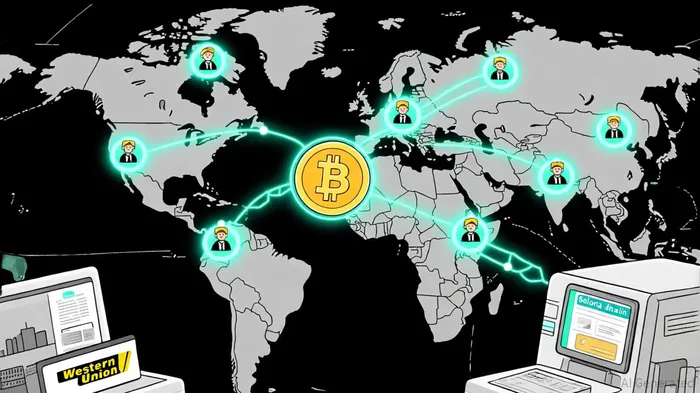
USDPT's integration with Western Union's existing infrastructure is a masterstroke. The stablecoin will be accessible via the company's mobile apps and 500,000+ physical agent locations across 200 countries, according to a Coinotag report, eliminating the need for users to navigate complex crypto wallets. This hybrid model-combining digital assets with physical payout options-addresses a key barrier to adoption in underserved markets, where remittances often constitute a lifeline for families.
Technically, USDPT employs multi-signature wallets and regular audits by Anchorage Digital to secure user funds. Solana's smart contract capabilities enable real-time conversions between USDPT and fiat currencies, streamlining the user experience. For Western Union, this infrastructure reduces operational expenses by up to 50%, driven by Solana's low transaction costs.
Competitive Positioning and Market Impact
In a crowded stablecoin market, USDPT's competitive edge lies in its legacy network and regulatory compliance. Rivals like PayPal and MoneyGram have dabbled in blockchain remittances, but none combine Western Union's global reach with Solana's technical prowess. Analysts project that USDPT could capture a significant share of the remittance market by offering fees under 1%, compared to traditional wire transfers that often exceed 6%.
The stablecoin's potential to process billions in annual volume through Western Union's 100 million customer base underscores its scalability. By 2026, this could translate to $10–$15 billion in annual transaction value, directly challenging legacy players and fintech disruptors alike.
Long-Term Infrastructure Strategy
Western Union's USDPT initiative is not a one-off experiment but part of a broader digital transformation. The company's long-term strategy includes expanding USDPT's use cases beyond remittances-such as payroll, e-commerce, and decentralized finance (DeFi) integrations. This aligns with industry trends where stablecoins are increasingly used as interoperable value layers in global finance.
Moreover, the choice of Solana reflects a forward-looking infrastructure play. As blockchain adoption accelerates, networks that prioritize scalability and low fees-like Solana-will dominate high-volume applications. Western Union's investment in this ecosystem positions it to capitalize on the next phase of financial innovation.
Conclusion: A Paradigm Shift in Remittances
USDPT exemplifies how strategic infrastructure investments in blockchain can unlock efficiency, reduce costs, and democratize access to financial services. For investors, the stablecoin's alignment with regulatory frameworks, technical robustness, and Western Union's operational scale presents a compelling case. As the 2026 launch approaches, USDPT could redefine the $800 billion remittance market, proving that legacy institutions can lead the charge in Web3 adoption.





Comentarios
Aún no hay comentarios