
Wesco International: Leading the Charge in Sustainable Logistics—A Fortunate Play for ESG Investors
The logistics and distribution sector, a backbone of global commerce, is undergoing a quiet revolution. Amid rising climate concerns and investor demand for ESG (Environmental, Social, Governance) transparency, companies like Wesco InternationalWCC-- (NYSE: WCC) are emerging as pioneers. The firm's third consecutive inclusion on USA TODAY's Climate Leaders 2025 list—a first for a Fortune 500 logistics provider—cements its position as a leader in decarbonizing supply chains. This isn't just a reputational win; it's a strategic advantage that could unlock significant valuation uplift in an increasingly sustainability-driven market.
The Math of Sustainability: Wesco's Emission Intensity Edge
To understand Wesco's leadership, dissect its emission intensity metric—a key driver of the Climate Leaders ranking. The company has reduced its carbon output relative to revenue by over 9% since 2021, exceeding the list's 3% annual threshold. This isn't merely compliance; it's a signal of operational efficiency. Lower emissions mean lower energy costs, streamlined logistics, and reduced regulatory risk—a trifecta that boosts margins and investor confidence.
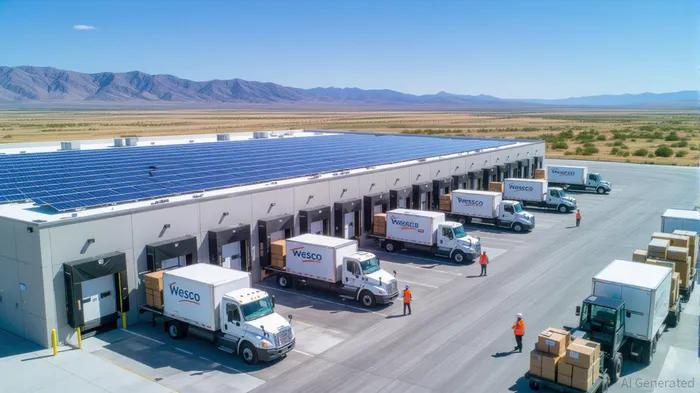
While peers like Menlo Worldwide Logistics or C.H. Robinson face pressure to catch up, Wesco's early adoption of renewable energy, electric vehicle fleets, and smart warehouse technologies has created a first-mover advantage. For instance, its 700 global sites now include solar-powered distribution centers, slashing Scope 1 and 2 emissions while future-proofing infrastructure against stricter global regulations.
ESG as a Growth Multiplier: Why Investors Should Take Note
The Climate Leaders list isn't just an environmental accolade—it's a market signal. The 25% surge in list participants since 2024 reflects a stark reality: ESG performance is becoming a core valuation metric. Institutional investors, from BlackRockBLK-- to Fidelity, now weight carbon intensity alongside P/E ratios. For Wesco, this means:
- Access to ESG Capital: Funds targeting sustainability outperformed traditional funds in 2024, with ESG assets under management hitting $40 trillion globally. Wesco's strong CDP ratings (among the top 10% of participants) make it a prime target for this inflow.
- Cost Savings at Scale: Every percentage point reduction in emission intensity translates to millions in avoided energy costs. With $22B in annual revenue, even small efficiencies compound rapidly.
- Market Share Gains: As retailers and manufacturers seek suppliers with low-carbon footprints (think Walmart's Project Gigaton or Amazon's Climate Pledge), Wesco's sustainability credentials act as a differentiating shield against competitors.
Sector Leadership: Outperforming in a Transitioning Industry
Consider the broader logistics landscape. The Fortune 500's distribution giants—C.H. Robinson (CHRW), JB Hunt (JBHT)—lag behind Wesco in ESG disclosure and carbon reduction. For example, while Wesco's 2023 Scope 1/2 emissions dropped by 6%, CHRW's fell just 2%. This gap is critical: investors are pricing in sustainability readiness, and laggards may face stranded assets or higher borrowing costs as ESG credit ratings diverge.
Moreover, Wesco's global footprint—50 countries, 700 sites—provides a scalable platform to deploy green solutions. Its partnership with Siemens to electrify European warehouses, for instance, could become a replicable model, turning sustainability investments into revenue-generating assets.
Valuation: Is WCC Priced for This Future?
At current levels, Wesco's stock trades at 12x forward earnings, a discount to its 5-year average of 14.5x. This undervaluation could be temporary if the market begins pricing in ESG-linked tailwinds. Key catalysts include:- Regulatory Tailwinds: Even without federal climate policies, California's 2026 carbon border tax and EU's CBAM (Carbon Border Adjustment Mechanism) will penalize non-compliant firms—Wesco is already ahead.- Client Contracts: Long-term deals with ESG-focused clients (e.g., renewable energy firms needing low-emission logistics) could stabilize revenue streams.- Debt Reduction: A lower carbon footprint reduces refinancing risks, as green bonds often carry cheaper rates.
The Bottom Line: A Buy for the Long Game
Wesco International isn't just a logistics company—it's a sustainability innovator in a sector ripe for disruption. Its Climate Leaders recognition isn't a one-off; it's the result of years of deliberate strategy. With ESG integration now a $40 trillion opportunity, Wesco's leadership positions it to outpace peers and attract capital flows. For investors with a 3–5 year horizon, WCC offers asymmetric upside: a stock undervalued today, but primed to capture the premium of a greener, more regulated economy. The question isn't whether ESG matters—it's how soon the market will reward those who act first.







Comentarios
Aún no hay comentarios