
Wendy's Q1 Results: A Mixed Bag with Storm Clouds on the Horizon?
Investors in Wendy’sWEN-- (WEN) are facing a classic case of “good news, bad news.” The fast-food giant just reported Q1 earnings that beat expectations but came with a brutal full-year outlook revision. Let’s break down the numbers—and what they mean for your portfolio.
The Q1 adjusted EPS of $0.23 beat the $0.20 consensus, while revenue of $534.8 million edged past estimates. But here’s the catch: global systemwide sales slumped 1.1% to $3.4 billion, dragged down by a 2.1% drop in same-restaurant sales. The U.S. market, which accounts for the bulk of Wendy’s business, saw systemwide sales plummet 2.6% year-over-year, with same-restaurant sales down a staggering 2.8%.
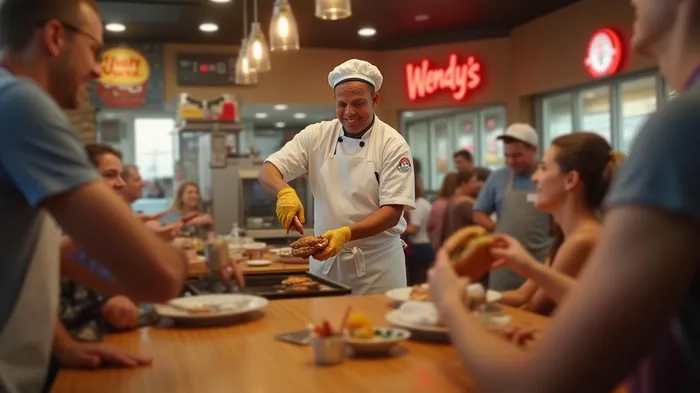
The company cited a “challenging consumer environment” for the U.S. struggles—likely a mix of inflation, shifting dining preferences, and increased competition. Meanwhile, international markets shined: systemwide sales surged 8.9%, with same-restaurant sales up 2.3%, proving that Wendy’s formula works outside North America.
But here’s the red flag: Wendy’s slashed its 2025 EPS guidance to a range of $0.92–$0.98, down from the prior $0.98–$1.02. That’s a full 2–5 cents below analyst expectations, and the company now expects global systemwide sales to shrink by up to 2% instead of growing 2–3% as previously hoped.
Investors are already reacting. Shares fell over 5% in after-hours trading, reflecting fears that Wendy’s can’t reverse its U.S. slump. But there’s nuance here. The company still added 68 net new restaurants in Q1, sticking to its 2–3% annual unit growth target. Digital sales hit a record 20.3% of total sales, a critical metric as online ordering becomes table stakes for fast-food success.
CEO Kirk Tanner emphasized that Wendy’s “held traffic and dollar share” in the U.S.—a sign the brand isn’t losing relevance. But holding ground isn’t the same as growing. The real question is: Can the company replicate its international success stateside?
The bright spots are undeniable. International sales growth of 8.9% suggests Wendy’s model—think fresh beef, drive-thru innovation, and localized menus—is resonating globally. The dividend, at $0.14 per share, remains intact, and the company returned $173.5 million to shareholders via buybacks and dividends in Q1 alone.
However, the U.S. market’s decline is a major hurdle. If the domestic slump persists, Wendy’s could face a prolonged earnings struggle. The company’s revised guidance essentially says it’s now banking on international growth and cost discipline to meet even the lowered EPS target.
So, what’s an investor to do? On one hand, Wendy’s has a strong brand, a track record of innovation (remember the Frostee comeback?), and a global expansion plan. On the other, the U.S. is its bread-and-butter, and its decline is a warning sign.
The verdict? Wendy’s is a hold for now—but keep a close eye on Q2. If U.S. sales stabilize or rebound, shares could bounce. If not, this stock could get ugly fast. The dividend provides some comfort, but top-line weakness is a poison pill in a competitive fast-food landscape.
In conclusion, Wendy’s Q1 report is a reminder that no brand is immune to shifting consumer trends. While the company’s international momentum and digital focus are positives, the U.S. sales collapse and revised guidance highlight real risks. Investors should proceed with caution until there’s proof Wendy’s can turn its domestic performance around. The jury’s still out—but the stakes have never been higher.





Comentarios
Aún no hay comentarios