
Wells Fargo's Staples Model Reset: What Was Priced In for Clorox?
Wells Fargo's move on CloroxCLX-- is not an isolated view; it's the latest in a systematic reset of 2026 expectations across the consumer staples sector. The firm's analysts, led by Chris Carey, have cut their price target for Clorox to $142.00, a slight reduction from the prior $145. This new target is based on a revised calendar 2026 earnings per share estimate of $7.08, down from $7.30. The key takeaway is the multiple: the firm is applying an unchanged, more modest multiple of approximately 20 times projected earnings, signaling a lower growth premium is now priced in.
This adjustment follows similar updates for sector peers. Just days earlier, Wells lowered its price target on The Procter & Gamble Company (NYSE:PG) to $158 from $170, also maintaining an Overweight rating. While the specific numbers differ, the pattern is clear-a sector-wide model update as firms recalibrate their 2026 outlooks.
The stark valuation disconnect this reset reveals is what makes the setup interesting. Clorox's current stock price implies a P/E ratio of 37.7x, a premium multiple that now sits in direct tension with the firm's new, more conservative earnings projection. The market is still pricing in a higher growth trajectory than Wells Fargo's updated model suggests. This expectation gap is the core arbitrage: the stock's rich valuation is not yet aligned with the lowered earnings consensus, creating a potential vulnerability if the guidance proves accurate.
The Reality Check: ERP Headwinds vs. Brand Strength
The guidance reset is a direct response to a specific, painful reality: Clorox is facing a steep organic sales decline. The company itself has forecast a 5%-9% drop in organic sales for fiscal 2026, with the primary culprit being the ongoing transition to a new enterprise resource planning (ERP) system. This isn't a minor hiccup; it's a fundamental operational disruption that is directly pulling down the top line. The market had likely been pricing in a more stable, if not accelerating, growth trajectory from a portfolio of strong brands. The new forecast forces a sharp reset of those expectations.
This operational headwind sits atop broader consumer spending pressures. Analysts are concerned that retailers may continue to reduce inventory levels amid weaker demand, a dynamic that compounds the company's own internal challenges. The result is a double whammy: a direct hit from the ERP transition and indirect pressure from a cautious retail environment. This explains the sector-wide caution, as firms like Wells FargoWFC-- see a "challenging" year ahead where volume growth is unlikely to improve materially.
Yet, the company's brand strength remains a critical counterpoint. Approximately 80% of Clorox's brands rank in the top two of their categories, a testament to enduring consumer loyalty and market power. This competitive positioning is the buffer against pure volume erosion. The company is adapting by offering smaller and larger packaging options to meet value-seeking demands, a tactical response to the economic climate. In other words, the brand equity is there, but it is currently being overwhelmed by the operational and macroeconomic noise.
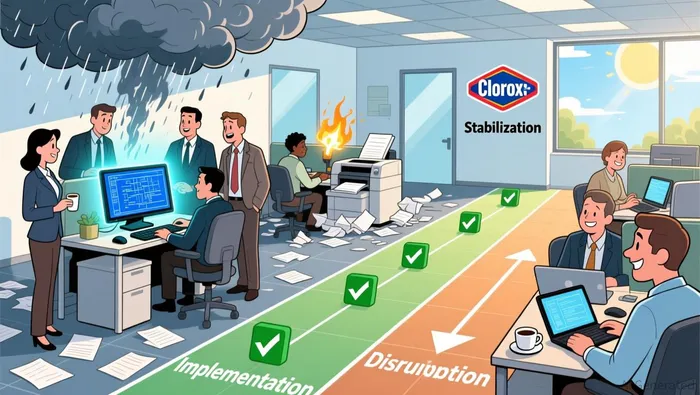
The bottom line is an expectation gap defined by a disconnect between assets and execution. The market's high valuation implies confidence in that brand strength driving future growth. The new guidance, however, shows the company is sacrificing near-term sales to fix its internal systems, with the full impact of that transition still ahead. For now, the reality of the ERP-driven decline is priced in, but the path to recovery-and whether the brand strength can fully reassert itself-remains the key uncertainty.
Valuation and the Dividend Anchor
For investors, Clorox presents a classic tension between a stable income stream and a challenging growth trajectory. The stock's appeal is anchored in its dividend, which has risen to 4.9% as the share price has pulled back. The company's streak of 48 consecutive quarterly dividend increases underscores a long history of financial discipline and cash flow generation, a feature that attracts passive income seekers even in a volatile market.
Financially, the company is in a solid position to support that payout. Clorox maintains a relatively low leverage profile, with less than $3 billion in long-term debt and a debt-to-equity ratio of 0.2. This provides a sturdy foundation and supports future growth opportunities, even as the business navigates its current headwinds.
Yet, the core arbitrage opportunity-or risk-lies in the valuation gap. The market is still pricing Clorox at a premium, with a current P/E ratio of 37.7x. This multiple implies a high growth trajectory and a premium for its brand strength. In stark contrast, analysts like Wells Fargo are applying a more modest multiple of approximately 20x to their revised earnings forecast. The disconnect is clear: the market's rich valuation is not yet aligned with the lowered earnings consensus and the company's own forecast for a 5%-9% drop in organic sales for fiscal 2026.
This expectation gap is the central puzzle. The dividend and balance sheet offer a floor of stability, but the stock's price is being driven by growth expectations that the company's own guidance and sector-wide resets are now questioning. For now, the valuation premium sits in direct tension with the operational reality, making Clorox a stock where the income yield provides comfort, but the growth story remains the critical uncertainty.
Catalysts and Risks: What to Watch in 2026
The expectation gap for Clorox hinges on a few key catalysts and risks that will determine if the market's reset is justified. The primary near-term catalyst is the execution of the ERP transition and the stabilization of organic sales growth. The company has forecast a 5%-9% drop in organic sales for fiscal 2026, a direct result of the system overhaul. Investors must watch for signs that this disruption is bottoming out and that volume growth is beginning to stabilize, ideally moving from decline toward flat or modest positive territory. Any delay or further erosion in the sales trajectory would validate the lowered earnings consensus and pressure the stock further.
Beyond the company's internal execution, broader consumer and retail trends are critical. The sector faces pressure from potential weakness in consumer spending, which could dampen demand for discretionary staples. At the same time, analysts are watching for changes in retail inventory levels; if retailers continue to reduce stock, it compounds the company's volume challenges. Clorox is adapting by offering smaller and larger packaging to meet value-seeking demands, but the success of these tactics depends on the overall health of the consumer wallet.
On the flip side, the broader sector outlook offers a potential offset. Fidelity expects the consumer staples sector to benefit from a better investment backdrop in 2026, helped by lower interest rates and the easing of several recent headwinds. This includes a slowdown in the adoption of GLP-1 weight-loss drugs and a stabilization in alcohol consumption, which could support discretionary spending. If this sector-wide improvement materializes, it could provide a tailwind for Clorox's brand portfolio, even as it navigates its internal transition.
The bottom line is a race between internal and external forces. The market has priced in a challenging year, but the stock's rich valuation still implies a faster recovery than the current guidance suggests. The catalysts to watch-ERP stabilization, sales growth turning positive, and a supportive consumer environment-are the signals that will either close the expectation gap or widen it further. For now, the setup remains one of high uncertainty, where the company's operational reality must catch up to its brand potential.







Comentarios
Aún no hay comentarios