
Wells Fargo's Strategic Shift: Selling San Francisco Headquarters
Generado por agente de IAEli Grant
martes, 3 de diciembre de 2024, 5:18 pm ET2 min de lectura
JLL--
Wells Fargo, one of the United States' largest banks, has announced its intention to sell a 49% stake in its San Francisco headquarters, according to a report by the Wall Street Journal. This strategic move signals a shift in the bank's corporate real estate strategy, as it aims to optimize its footprint and reduce costs. The sale comes amidst a broader trend of companies reassessing their real estate needs, particularly in light of the pandemic-driven shift towards remote work.
The 620,000-square-foot property at 333 Market Street has been fully occupied by Wells Fargo since 2018, with a lease set to expire in 2033. The bank's commitment to its office space is evident, but the sale suggests a reassessment of its real estate needs. This mirrors a nationwide trend of companies reducing their office footprint, with the San Francisco market seeing its highest-ever office vacancy rates. The fully occupied building with a long-term lease provides investors with protected cash yields, contrasting the vacancies and lease expirations prevalent in downtown San Francisco.
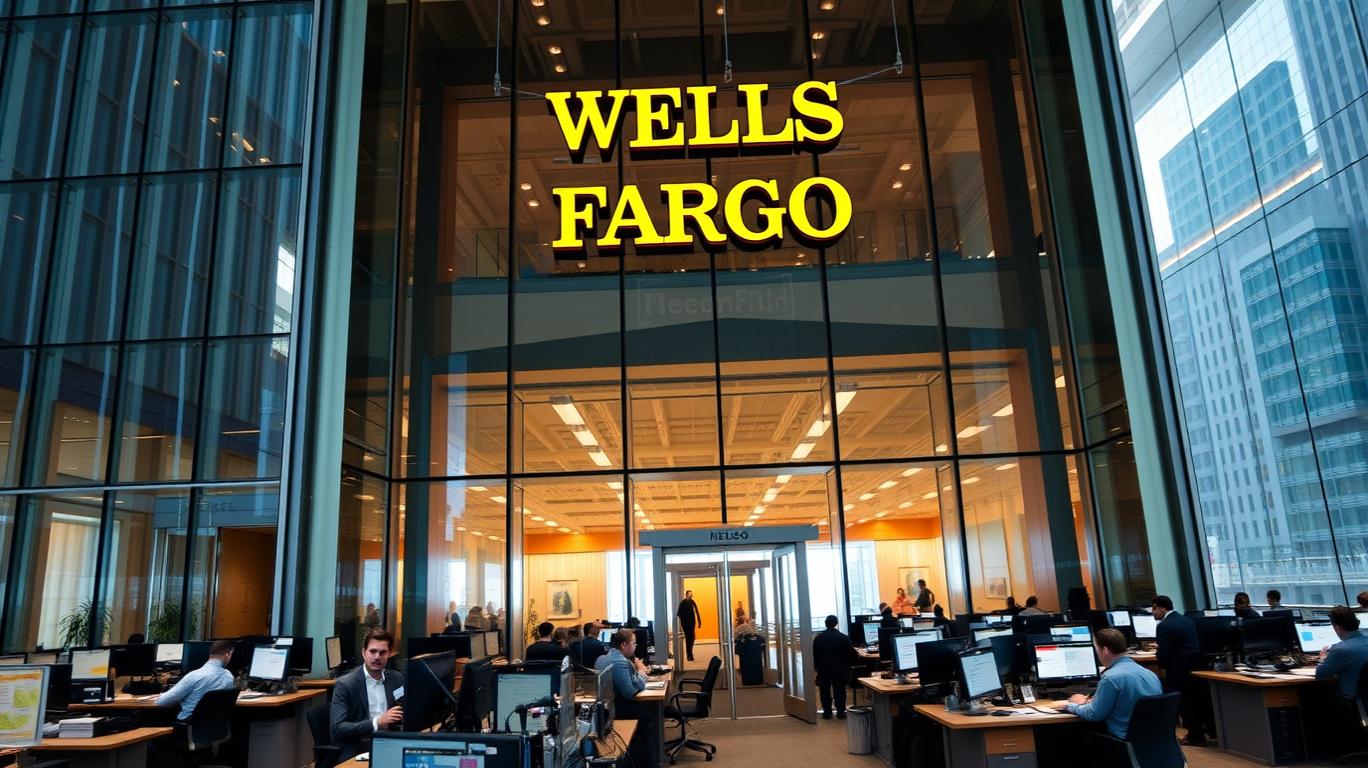
The sale of the headquarters reflects broader trends in commercial real estate and the office market, with a shift towards hybrid work models and urban flight. According to JLL's listing, the bank is committed to its office space, but the sale suggests a reassessment of real estate needs. This mirrors a nationwide trend of companies reducing their office footprint, with the San Francisco market seeing its highest-ever office vacancy rates. The fully occupied building with a long-term lease provides investors with protected cash yields, contrasting the vacancies and lease expirations prevalent in downtown San Francisco.
Wells Fargo's decision to sell its San Francisco headquarters can be attributed to a confluence of factors. Firstly, the rise in interest rates and inflation has led to increased refinancing costs for commercial real estate, making it less attractive for the bank to hold onto the property. Secondly, the shift towards remote work has resulted in many companies reducing their office space requirements, leading to a glut of available commercial real estate in major cities like San Francisco. This oversupply, coupled with high vacancy rates, has put downward pressure on office rents and property values. Wells Fargo, with a significant portion of its commercial real estate loans in office properties, is likely seeking to mitigate these risks by selling its headquarters. Looking ahead, the bank may focus on acquiring or developing properties in less saturated markets or those with higher demand, such as multifamily or industrial real estate.
In conclusion, the sale of Wells Fargo's San Francisco headquarters is part of the bank's broader strategy to reduce its real estate footprint and optimize its cost structure. The move aligns with broader trends in commercial real estate and the office market, reflecting the shift towards hybrid work models and the impact of rising interest rates and inflation. By divesting from its headquarters, Wells Fargo can focus on core banking operations and adapt to evolving market conditions.
WFC--
Wells Fargo, one of the United States' largest banks, has announced its intention to sell a 49% stake in its San Francisco headquarters, according to a report by the Wall Street Journal. This strategic move signals a shift in the bank's corporate real estate strategy, as it aims to optimize its footprint and reduce costs. The sale comes amidst a broader trend of companies reassessing their real estate needs, particularly in light of the pandemic-driven shift towards remote work.
The 620,000-square-foot property at 333 Market Street has been fully occupied by Wells Fargo since 2018, with a lease set to expire in 2033. The bank's commitment to its office space is evident, but the sale suggests a reassessment of its real estate needs. This mirrors a nationwide trend of companies reducing their office footprint, with the San Francisco market seeing its highest-ever office vacancy rates. The fully occupied building with a long-term lease provides investors with protected cash yields, contrasting the vacancies and lease expirations prevalent in downtown San Francisco.
The sale of the headquarters reflects broader trends in commercial real estate and the office market, with a shift towards hybrid work models and urban flight. According to JLL's listing, the bank is committed to its office space, but the sale suggests a reassessment of real estate needs. This mirrors a nationwide trend of companies reducing their office footprint, with the San Francisco market seeing its highest-ever office vacancy rates. The fully occupied building with a long-term lease provides investors with protected cash yields, contrasting the vacancies and lease expirations prevalent in downtown San Francisco.
Wells Fargo's decision to sell its San Francisco headquarters can be attributed to a confluence of factors. Firstly, the rise in interest rates and inflation has led to increased refinancing costs for commercial real estate, making it less attractive for the bank to hold onto the property. Secondly, the shift towards remote work has resulted in many companies reducing their office space requirements, leading to a glut of available commercial real estate in major cities like San Francisco. This oversupply, coupled with high vacancy rates, has put downward pressure on office rents and property values. Wells Fargo, with a significant portion of its commercial real estate loans in office properties, is likely seeking to mitigate these risks by selling its headquarters. Looking ahead, the bank may focus on acquiring or developing properties in less saturated markets or those with higher demand, such as multifamily or industrial real estate.
In conclusion, the sale of Wells Fargo's San Francisco headquarters is part of the bank's broader strategy to reduce its real estate footprint and optimize its cost structure. The move aligns with broader trends in commercial real estate and the office market, reflecting the shift towards hybrid work models and the impact of rising interest rates and inflation. By divesting from its headquarters, Wells Fargo can focus on core banking operations and adapt to evolving market conditions.

Divulgación editorial y transparencia de la IA: Ainvest News utiliza tecnología avanzada de Modelos de Lenguaje Largo (LLM) para sintetizar y analizar datos de mercado en tiempo real. Para garantizar los más altos estándares de integridad, cada artículo se somete a un riguroso proceso de verificación con participación humana.
Mientras la IA asiste en el procesamiento de datos y la redacción inicial, un miembro editorial profesional de Ainvest revisa, verifica y aprueba de forma independiente todo el contenido para garantizar su precisión y cumplimiento con los estándares editoriales de Ainvest Fintech Inc. Esta supervisión humana está diseñada para mitigar las alucinaciones de la IA y garantizar el contexto financiero.
Advertencia sobre inversiones: Este contenido se proporciona únicamente con fines informativos y no constituye asesoramiento profesional de inversión, legal o financiero. Los mercados conllevan riesgos inherentes. Se recomienda a los usuarios que realicen una investigación independiente o consulten a un asesor financiero certificado antes de tomar cualquier decisión. Ainvest Fintech Inc. se exime de toda responsabilidad por las acciones tomadas con base en esta información. ¿Encontró un error? Reportar un problema


SOBRE NOSOTROS
Nuestra historiaAutores de noticiasBase de conocimientosPolítica de privacidadTérmino de usoDescargo de responsabilidad de corretaje de tercerosTérminos de uso de AIMEDivulgaciones de riesgos de AInvest AICarrerasCONTÁCTENOS
Email: support@ainvest.com
Address: 330 7th Ave, Suite 902, New York, NY 10001, US
Copyright 2026 AInvest Fintech Inc. All rights reserved.


Comentarios
Aún no hay comentarios