
Wells Fargo's New Healthcare & Nonprofit Leader Sparks Buy Signal: A $40B Buyback and Sector-Specific Growth
Wells Fargo's recent appointment of TimTIMB-- Ruby as division executive for its Healthcare, Higher Education, and Not-for-Profit (HHN) sectors marks a strategic pivot to capitalize on recession-resistant industries. Ruby's deep sector expertise—forged over three decades in mission-driven finance—aligns seamlessly with the bank's push to diversify revenue streams and enhance client relationships in healthcare systems, universities, and nonprofits. Combined with a $40 billion buyback program and regulatory tailwinds, this leadership shift positions Wells FargoWFC-- as a compelling buy, targeting the $86.45 analyst consensus.
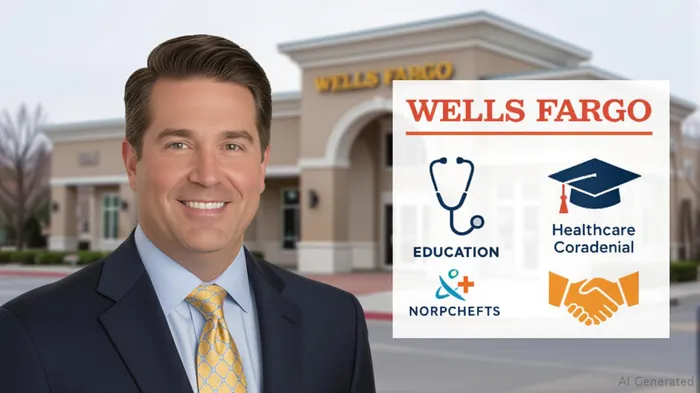
Ruby's Sector-Specific Experience: A Strategic Fit
Ruby's career has been laser-focused on the HHN sectors. At Bank of AmericaBAC--, he managed a 10-state team serving hospitals, senior living communities, and nonprofits, while his JPMorganJPM-- tenure included 20 years in healthcare and education finance. This hands-on experience equips him to address the unique needs of these sectors, such as funding for aging infrastructure in universities, telehealth expansion in healthcare, and community-driven nonprofit initiatives.
Wells Fargo's HHN division is part of its Specialized Industries group, which oversees sector-specific teams for healthcare, technology, government, and education. Ruby's role will directly boost the bank's ability to tailor financial solutions, from loans for nonprofit hospitals to treasury management for universities. His leadership could unlock cross-selling opportunities, such as linking commercial banking services with investment advisory products for endowments—a key growth area for fee-based income.
The $40B Buyback: Fueling Shareholder Value
Wells Fargo's $40 billion buyback program, set to begin after its current repurchase cycle concludes, is a critical catalyst for valuation growth. With shares outstanding reduced by 22% since 2019, the buyback will further amplify earnings per share (EPS) growth. Analysts project EPS to reach $1.62 by Q4 2025, a 17% rise from 2024's $1.23.
The buyback also supports a lower share count, making the stock more attractive to investors. At its current valuation—trading at a forward P/E of .99X versus the industry average of 4.58X—Wells Fargo offers a margin of safety. The $40B program, combined with a dividend hike to $0.45 per share (up 12.5%), underscores management's confidence in its capital position post-regulatory relief.
Near-Term Catalysts: Margin Stabilization and Regulatory Lift
The removal of the $1.95 trillion asset cap in June 2025 is a game-changer. This cap, imposed after the fake-account scandal, had constrained Wells Fargo's lending and fee-generating activities. With the cap gone, the bank can expand into high-margin areas like corporate banking and capital markets.
Net interest margin (NIM) stabilization is another key metric. Despite flat Fed rates at 4.25-4.5%, Wells Fargo's NIM is expected to grow modestly in 2025 due to stabilized deposit costs and strong loan demand in commercial real estate and healthcare.
Long-Term Drivers: Fee-Based Income and Strategic Partnerships
Ruby's appointment ties into Wells Fargo's broader push to diversify revenue beyond net interest income (NII). Fee-based income—driven by credit cards, wealth management, and investment banking—is critical. For example:
- Credit Cards: New co-branded agreements, such as with Volkswagen and Audi, have driven $17 billion in incremental spend since 2021.
- Wealth Management: A 10% annual growth in deposits and investment balances in its Premier segment highlights progress in high-value client acquisition.
- Corporate Banking: Ruby's focus on HHN sectors could unlock cross-selling opportunities in foreign exchange and trade finance for universities and nonprofits operating globally.
Cost discipline further supports margins. Wells Fargo aims to save $2.4 billion annually through branch closures, IT modernization, and headcount reductions—a strategy that frees up capital for growth and buybacks.
Risks and Considerations
- Regulatory Lingering: Eight consent orders remain active, though their resolution is a priority. The Zelle fraud case ($870 million) adds near-term uncertainty.
- Economic Sensitivity: A recession could pressure loan demand and asset quality, though HHN sectors are inherently stable.
- Interest Rate Risks: The Fed's pause on hikes limits NII growth, but lower rates later in 2025 could boost refinancing activity.
Investment Thesis: Buy with a 12–18 Month Horizon
Wells Fargo's strategic moves—Ruby's sector leadership, regulatory relief, and the $40B buyback—position it to outperform peers. The stock's $66.23 price as of July 7, 2025, offers a 30% upside to the $86.45 consensus target. Key triggers include:
1. Q2 Earnings (July 15): Strong NIM trends and loan growth will validate management's guidance.
2. Regulatory Finalization: The Federal Reserve's confirmation of the reduced stress capital buffer (2.5% by August 2025) will solidify capital flexibility.
3. Buyback Activation: Once initiated, the program will reduce shares and amplify EPS growth.
Recommendation: Buy Wells Fargo shares ahead of Q2 results. Hold for 12–18 months to capture the $86.45 target, with a risk management strategy of exiting if NIM declines or asset quality weakens.
In conclusion, Tim Ruby's sector expertise, coupled with the buyback and regulatory tailwinds, make Wells Fargo a compelling buy for investors seeking exposure to stable, high-growth sectors. The HHN division's potential and capital return initiatives form a robust foundation for sustained value creation.





Comentarios
Aún no hay comentarios