
Why Wells Fargo's Buy Rating on D.R. Horton Signals Growth in a Stabilizing Housing Market
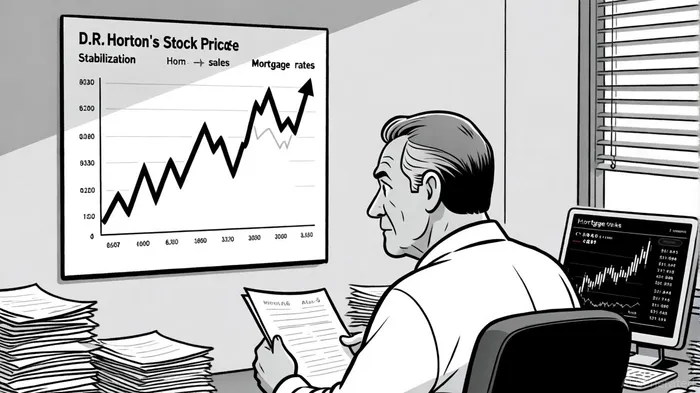
A Housing Market on the Cusp of Stabilization
The U.S. housing market has shown early signs of stabilization in late 2025, though progress remains uneven. Existing home sales, while still sluggish, , , according to U.S. existing home sales. Inventory levels have also improved, , per that report. These metrics suggest a gradual shift toward equilibrium, albeit from a historically tight baseline.
Mortgage rates, a critical lever for market activity, , according to a Finance Commerce piece. While still elevated, the decline has spurred modest inventory growth, offering a glimmer of hope for buyers and builders alike. According to an NAHB report, this trend could catalyze a "soft landing" scenario, where affordability pressures ease without triggering a sharp correction.
Sector-Wide Headwinds: Affordability and Builder Caution
Despite these positive signals, the homebuilding sector faces persistent headwinds. D.R. , driven by lower average selling prices (ASPs) and affordability constraints, according to a Yahoo Finance preview. , . Nationally, , , as the NAHB report notes.
High mortgage rates and regulatory hurdles in land development have further compounded challenges. As noted in the NAHB report, , reflecting builders' reluctance to commit to long-term projects amid policy uncertainty. These dynamics highlight a sector struggling to balance inventory management with demand stimulation.
D.R. Horton's Strategic Resilience
Wells Fargo's bullish stance hinges on D.R. Horton's ability to navigate these challenges through disciplined execution and strategic differentiation. The company's focus on maintaining sales pace in a competitive market has drawn institutional attention, with Lyell Wealth Management LP and Virginia Retirement Systems increasing stakes in Q2 2025 (Lyell Wealth Management LP; ). Notably, Berkshire Hathaway's recent investment in DHI has amplified investor optimism, though analysts caution that near-term risks-such as margin pressures-remain unmitigated, according to analysis.
Regionally, D.R. Horton has capitalized on pockets of strength. In Central Indiana, for example, , driven by demand in suburbs like Fishers and Carmel, as the NAHB report shows. This regional performance underscores the company's agility in targeting markets with strong fundamentals, such as school quality and infrastructure access.
Conclusion: A Case for Selective Optimism
Wells Fargo's "Buy" rating on D.R. Horton reflects a calculated bet on the homebuilder's undervalued positioning and operational resilience. While the broader sector contends with affordability challenges and regulatory headwinds, D.R. Horton's strategic focus on high-growth regions and disciplined cost management positions it to outperform. However, investors must remain cognizant of macroeconomic risks, including potential rate hikes or policy shifts that could disrupt the fragile stabilization underway.
As the housing market inches toward equilibrium, D.R. Horton's ability to adapt to evolving conditions will be critical. For now, the company's stock appears to offer a compelling case for growth-a thesis that Wells Fargo and its institutional backers are clearly betting on.





Comentarios
Aún no hay comentarios