
Weibo's Concentrated Ownership: A Double-Edged Sword for Growth and Governance?
As of June 2025, Weibo CorporationWB-- (NASDAQ: WB) remains a microcosm of corporate governance challenges and opportunities. With SINA Corporation (36%) and private equity firms (28%) collectively owning 64% of the company, the stakes are high for minority investors. This concentrated ownership structure shapes not only strategic decisions but also the balance between stability and stagnation. Let's dissect how this dual influence could drive—or hinder—Weibo's future.
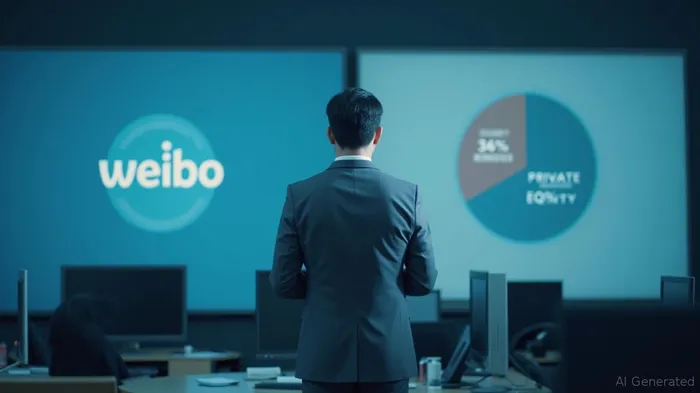
The Case for Strategic Stability
The dominance of SINA and private equity offers clear advantages. SINA's long-term stake (a slight decline from 36.2% in late 2024) suggests a commitment to Weibo's ecosystem, particularly as it remains the controlling shareholder of SINA itself. This alignment ensures continuity in core strategies, such as maintaining Weibo's position as China's premier social media platform for news and celebrity engagement.
Meanwhile, the 28% held by private equity (including firms like BlackRock and Vanguard) brings financial firepower and operational discipline. These firms often prioritize returns, which could push Weibo to streamline costs or explore new revenue streams—such as e-commerce integrations or AI-driven ad solutions. The 17.22% rise in Weibo's stock price since early 2024 () hints at investor confidence in this dynamic.
The Risk of Decision-Making Bottlenecks
However, concentrated ownership can also stifle agility. SINA's decreasing stake—part of a broader trend of divesting non-core assets—raises questions about its future involvement. If SINA reallocates capital elsewhere, Weibo may lose its most influential strategic partner. Similarly, private equity's profit-driven mindset could lead to short-termism, such as cutting R&D budgets to boost quarterly earnings.
The data underscores this tension. While Wellington Management increased its holdings by a staggering 1,641.88% (a sign of confidence in long-term value), BlackRock reduced its stake by 6.63%, signaling caution. This divergence highlights the fragility of institutional support when major shareholders' priorities clash.
Minority Investors: Riding the Wave or Swimming Against Currents?
For minority shareholders, the risks are twofold. First, corporate governance opacity persists: insiders own less than 1% of shares directly, suggesting decisions are made behind closed doors. Second, if SINA or private equity choose to sell, minority investors could face abrupt valuation shifts. The 12% public ownership leaves little power to influence outcomes.
Yet opportunities exist. If SINA and private equity align on growth initiatives—such as expanding into Southeast Asia or monetizing user-generated content—Weibo could capitalize on its 214 institutional investors (holding 76 million shares) to fuel liquidity. The nascent AI-driven ad tech space, for instance, could be a lever for differentiation.
Investment Takeaways
- Monitor Stakeholder Moves: Track SINA's capital reallocation and private equity's voting patterns. A sudden sale by either could trigger volatility.
- Watch Institutional Sentiment: Rising stakes by firms like Goldman Sachs (up 4.18%) or Saba Capital (up 5.89%) signal optimism, while declines by BlackRock indicate caution.
- Assess Strategic Execution: Can Weibo balance SINA's ecosystem ties with private equity's profit focus? Success here could unlock a NASDAQ outperform.
Final Verdict
Weibo's concentrated ownership is a high-wire act. It offers the stability of aligned major shareholders but risks governance rigidity. For now, the stock's upward trajectory suggests investors bet on strategic cohesion. However, minority shareholders must remain vigilant: a misstep in balancing SINA's vision with private equity's pragmatism could tip the scales from opportunity to overexposure.
Investment Advice: Hold with a medium-term horizon (1–3 years), but set strict stop-losses. Allocate no more than 5% of a portfolio to Weibo unless clear governance reforms or growth pivots emerge. The path to sustainable returns hinges on transparency—and that's a big ask in this ownership structure.







Comentarios
Aún no hay comentarios