
This Week's Catalysts: Venezuela Oil Control and the Credit Card Cap
President Trump's executive order last week is a direct, high-stakes intervention into Venezuela's oil wealth. Signed on January 9, the order declares a national emergency to block any legal claims on Venezuelan oil revenues held in U.S. Treasury accounts. Its stated goal is to prevent these funds from being seized by creditors or used to empower "malign actors" like Iran, while preserving them for U.S. foreign policy objectives. This isn't just a legal maneuver; it's the opening act for a planned commercial operation.
The immediate financial catalyst is the administration's plan to sell 30 million to 50 million barrels of Venezuelan oil to the United States. President Trump has claimed control over the profits from these sales, with Energy Secretary Chris Wright confirming the U.S. will oversee the production and sales "indefinitely." The stated rationale is twofold: to drain a growing accumulation of crude in storage and to keep revenue flowing after the capture of Nicolás Maduro. This creates a direct, temporary supply of crude for U.S. markets, but the mechanism is unconventional and carries significant risk.
The setup presents a potential mispricing opportunity, but it's a high-risk one. On one hand, the U.S. is effectively guaranteeing a buyer for a large volume of crude, which could provide a floor for Venezuelan benchmark prices in the near term. On the other, the entire operation hinges on a fragile geopolitical and legal foundation. The order asserts the funds are sovereign property of Venezuela, yet the U.S. intends to control their sale and profit. This creates a legal gray area that could attract challenges from creditors or other claimants, potentially derailing the sales. Furthermore, the plan's success depends on Venezuela's cooperation and the ability to move and refine the oil, which remains uncertain.
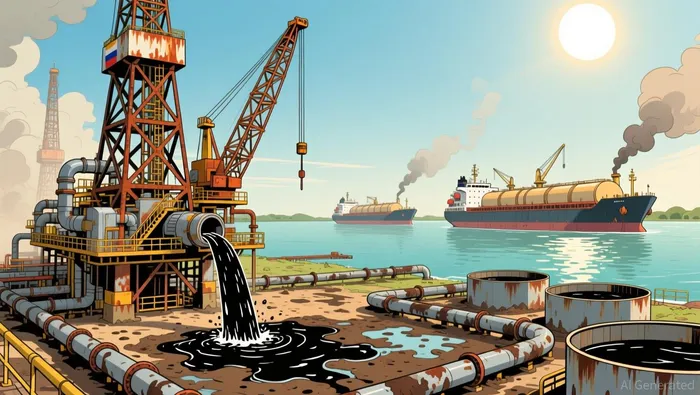
The bottom line is that this is an event-driven play on control, not production. The immediate impact is a potential, large-scale, government-directed crude supply hitting U.S. markets. The reward is the strategic control over a valuable asset and its proceeds. The risk is that the legal and diplomatic scaffolding is too thin to support the operation, leading to volatility or a complete stall. For now, the market is watching to see if the promised barrels materialize and who exactly gets to keep the cash.
The Credit Card Cap: A Political Signal with Clear Market Risks
President Trump's call for a one-year, 10% cap on credit card interest rates is a direct, politically motivated event. Announced on Friday, the proposal aims to take effect on January 20, the anniversary of his return to the White House. The stated rationale is affordability, but the move is a clear response to mounting political pressure over the cost of living. This isn't a new idea; Trump floated it during the 2024 campaign. What is new is the timing and the administration's apparent shift from last year's stance, when it joined banks in blocking a Biden-era rule to cut credit card fees.
The immediate market risk here is twofold. First, the proposal itself is a direct threat to a significant revenue stream. Credit card interest rates are a major profit driver for financial institutions. Capping them at 10% would force a structural reduction in earnings for banks that rely heavily on this segment. Second, the banking industry has issued a unified and stark warning. The major trade groups, representing banks of all sizes, say a cap would reduce credit availability and be devastating for millions of American families and small business owners. They argue it would drive consumers toward more costly, less regulated alternatives, potentially worsening financial inclusion.
The bottom line is that this is a high-impact political signal with clear downside for the financial sector. The proposal is unenforceable without specific legislative or regulatory action, but its announcement alone creates uncertainty. It signals a potential shift in regulatory philosophy and could pressure banks to adjust their lending standards preemptively. For investors, the risk is a potential earnings headwind and a regulatory overhang that could dampen sector sentiment. The market is watching to see if this becomes a serious policy initiative or fades as another populist tweet.
The Strategic Context: Aggressive Policy and Unpredictability
This week's moves on Venezuela and credit cards are not isolated events. They are the latest actions in a broader, more aggressive foreign policy and domestic agenda. The administration is signaling a decisive break from multilateral engagement, withdrawing from 66 international organizations identified as wasteful or contrary to U.S. interests. This unilateral retreat creates a vacuum and a clear message: the U.S. will act alone, often through executive fiat, to advance its objectives.
Energy Secretary Chris Wright's statement that the U.S. intends to maintain significant control over Venezuela's oil industry indefinitely is a textbook example of this new approach. It's a direct, commercial intervention into a sovereign nation's resources, justified by national security but executed through a commercial operation. This isn't the cautious, backchannel diplomacy of the first term. As POLITICO's analysis notes, this administration's foreign policy is more aggressive, more unpredictable and more willing to accept the risk of domestic and global backlash.
The strategic context is one of recalibrating U.S. power. The Venezuela oil control is a test of unilateral action in the Western Hemisphere, while the credit card cap is a domestic policy lever aimed at voters. Both are tools to assert control-over resources abroad and over financial flows at home. The common thread is a willingness to accept significant friction for perceived strategic gain. This creates a high-risk environment for markets, where policy can shift abruptly based on political calculus rather than established norms. The bottom line is that the administration is rewriting the rules, and its unpredictability is the new baseline.
Catalysts and Risks: What to Watch Next
The immediate next steps for both events will reveal whether they are serious policy initiatives or political theater. For the Venezuela oil control, the critical watchpoint is the official details on the 30 million to 50 million barrel sale. Investors must monitor for clarity on the legal authority underpinning the sale and the pricing mechanism. The energy secretary's mention of active dialogue with Venezuela's leadership and a planned White House meeting with oil executives this week are key signals. The primary risk here is a backlash from Venezuela's creditors and international partners, which could destabilize the entire revenue control scheme. If the U.S. faces legal challenges over the seized funds, the commercial operation could stall, turning a potential supply floor into a costly diplomatic stalemate.
For the credit card cap, the focus shifts to whether the proposal gains traction with Congress or regulatory bodies. President Trump's call for a one-year, 10% cap lacks specifics on enforcement, but the banking industry's unified warning is clear. The joint statement from major trade groups, which says a cap would reduce credit availability and be devastating for millions of American families, sets the stage for a fierce lobbying battle. Track bank stock reactions and any legislative or regulatory moves in the coming weeks to gauge if this becomes a binding rule or fades.
The tactical checklist for investors is straightforward. First, watch for the official sale plan and legal framework for the Venezuelan oil. Second, monitor for any formal legislative or regulatory action on the credit card cap. Third, track bank stock performance and industry lobbying efforts. The bottom line is that both events are high-impact catalysts with clear, near-term risks. The Venezuela play hinges on a fragile legal and diplomatic foundation, while the credit card cap threatens a core bank revenue stream. In both cases, the immediate setup is one of high uncertainty, where the next official details will determine if the event creates value or triggers negative consequences.







Comentarios
Aún no hay comentarios