

Webuild's €531M Win: Is the Smart Money Buying or Selling?
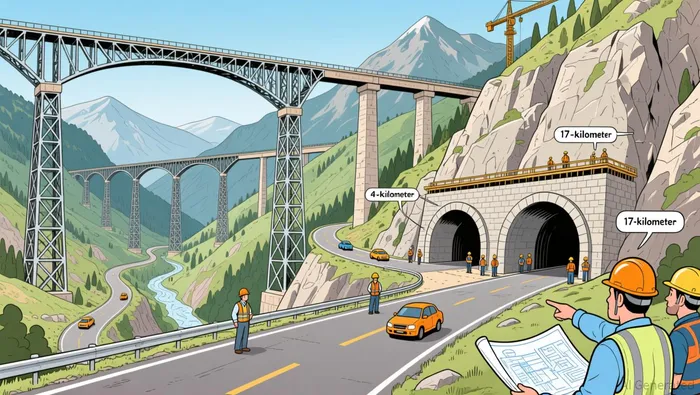
This is a solid, strategic win. Webuild has secured a €531-million contract to build Lot 1 of the SS106 Jonica state road in Calabria. The project is a complex engineering challenge, involving 15 viaducts, 3 overpasses, and a 1.4-kilometre twin-tube tunnel over a 17-kilometre stretch. That aligns perfectly with the company's core expertise, especially given it's already deep in the region with the Third Mega Lot, which is nearing 80% completion.
The real scale is in the portfolio. This single contract is part of a much larger consolidation. Webuild now has 20 projects across Southern Italy, with a total awarded value of approximately €16 billion. The company is building a total of about 55 kilometres of new road and rail infrastructure in the region, a massive commitment that cements its dominance. It's a classic case of scale reinforcing scale.
Yet the market's reaction was muted. Shares ticked up just 1.5% on the news. That quiet pop suggests the smart money may have already priced this in. For a company with such a concentrated, high-value backlog in a single region, this deal likely represents an expected extension of an existing project rather than a surprise new opportunity. The strategic fit is clear, but the element of surprise-and thus the potential for a stock pop-was missing.
The Smart Money Signal: Stock Price, Insiders, and Analysts
The market's verdict on the deal was a shrug. Shares in Webuild climbed just 1.5% to €3.48 on the news. That muted reaction is the first clue. It suggests the smart money had already priced in this type of regional expansion. For a stock that has been on a steady climb, the deal looks like an expected step, not a catalyst.
Zoom out, and the picture is one of significant, if gradual, appreciation. The stock has roughly doubled in value over the past two years, moving from around €2.02 in January 2024 to about €3.57 in January 2026. This isn't a speculative frenzy; it's a measured rally fueled by a growing backlog and execution. The recent price action, trading in a tight band around €3.55, shows the stock is consolidating after that run-up. The question for new money is whether the easy gains are behind it.
Analyst sentiment offers a bullish counterpoint. The consensus view points to further upside, with a one-year price target around €4.26 and an average target of €4.30. That implies roughly 25% more upside from recent levels. The rationale likely hinges on the sheer scale of the €16 billion backlog and the company's ability to convert it into profits. In other words, the smart money in the analyst community sees value in the long-term contract pipeline.
Yet, the most critical signal-the insider's own wallet-remains a blank slate. The latest data shows insufficient information to determine if insiders have bought more shares than they have sold in the past three months. This isn't a green light or a red flag; it's a lack of data. In a company with such concentrated regional exposure, insider activity would be a key indicator of whether management believes the stock is fairly valued or if they are positioning to exit before the next cycle. The silence here is telling. It means we can't gauge the alignment of interest between the boardroom and the shareholders.
So, where does that leave us? The smart money in the analyst community is buying the story of scale and backlog. But the smart money in the boardroom? We can't say. The stock's steady climb and the muted deal pop suggest the market is pricing in execution, not surprise. For now, the setup is one of cautious optimism, where the real signal is the absence of a clear insider signal.
Institutional Accumulation and Execution Risk
The stock's steady climb over the past two years suggests the smart money may be accumulating. The share price has roughly doubled, moving from around €2.02 in January 2024 to about €3.57 in January 2026. That measured rally, without the volatility of a speculative pump, often signals patient capital building a position. For a company with a concentrated, high-value backlog, this gradual accumulation could be a bet on the execution of that pipeline. The recent consolidation near €3.55 shows the stock is pausing to digest that run-up, setting the stage for the next move.
Yet, that move faces a clear risk: the project's own complexity. The SS106 Jonica contract is not a simple road build. It features 15 viaducts and a 1.4km twin-tube tunnel, a profile that is a classic recipe for cost overruns and delays. Construction in mountainous Calabria, especially with such a tunnel, introduces geological uncertainties and logistical hurdles. The fact that the main Mega Lot is only 80% complete after a long build-out is a reminder that these projects are inherently chancy. For institutional holders, the skin in the game is the potential for margin pressure if these complexities bite.
The catalyst to resolve these uncertainties is coming soon. Webuild has already published its 2026 corporate events calendar. This calendar is a major event for investors, as it will provide the detailed timelines and financial impact projections that the market currently lacks. The smart money will be watching for any updates on the SS106 Jonica schedule and budget. Until those details emerge, the stock's path will be dictated by the tension between the institutional accumulation already priced in and the execution risks embedded in the engineering specs. The calendar is the next signal.







Comentarios
Aún no hay comentarios