
Webster, NY's Strategic Economic Development: Real Estate and Infrastructure-Driven Value Creation in Post-Industrial Markets
Infrastructure as the Catalyst for Industrial Growth
The cornerstone of Webster's success lies in its infrastructure-driven approach. A $9.8 million FAST NY grant, awarded to the Webster Community Coalition for Economic Development, Inc., has been pivotal in redeveloping a 300-acre former Xerox brownfield into a high-tech industrial zone. This funding enabled critical upgrades, including road realignment, sewer system expansion, and electrical grid modernization, creating shovel-ready sites for advanced manufacturing and logistics. The result? Industrial vacancy rates plummeted to 2%, far below the national average of 6.5%, while nearly one million square feet of industrial space was added by 2025.
The strategic location of Webster further amplifies its appeal. The town is bisected by NY Route 104, a state highway with nine interchanges, and is home to the 1,400-acre North East Area for Technology (NEAT) industrial zone. NEAT is equipped with 34 kV and 115 kV electrical power and a high-pressure natural gas main, making it ideal for energy-intensive industries. Additionally, the Eastside Water Treatment Plant provides 50 million gallons per day of water capacity, with 15–20 MGD reserved for industrial use. These infrastructure upgrades have attracted major private investments, including the $650 million fairlife® dairy plant, which is projected to create 250 jobs by 2025. 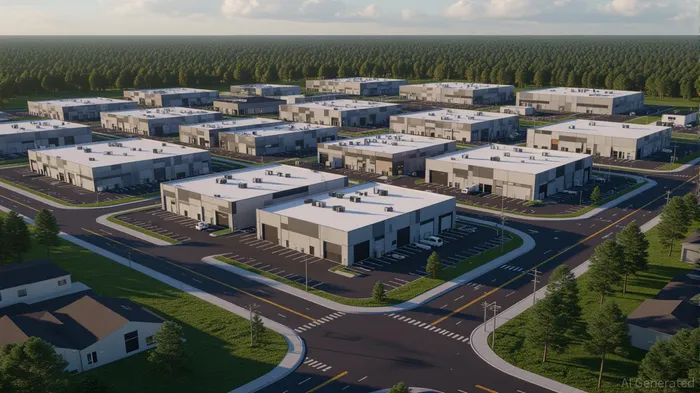
Real Estate Growth and Economic Resilience
Webster's industrial renaissance has directly fueled residential real estate growth. Median home prices have surged by 10.1% annually, driven by the influx of high-paying jobs and improved quality of life. The NY Forward Program has further bolstered this trend by allocating $4.5 million to revitalize the Village Central Business District, enhancing walkability and commercial appeal. These efforts align with Governor Kathy Hochul's broader strategy to create "shovel-ready sites" for advanced manufacturing and renewable energy sectors.
Economic resilience is evident even during sector transitions. Despite a 2.32% dip in employment in 2023, median household income rose by 4.31%, reflecting a shift toward higher-paying jobs in industries like dairy processing and logistics. The town's proximity to I-390 and the Rochester International Airport also strengthens its position as a logistics hub, ensuring long-term demand for industrial real estate.
Future Outlook and Sustainable Development
Looking ahead, Webster is poised to maintain its momentum through continued infrastructure modernization. Plans for wastewater system upgrades and the 2027 Townwide Revaluation aim to ensure equitable property assessments and support future development. Academic research on institutional economics underscores the importance of managing transaction costs and fostering public-private collaboration-principles that have guided Webster's success.
By 2035, demand for modern, adaptable spaces in sectors like e-commerce and renewable energy is expected to drive further industrial real estate growth. With its strategic location, robust infrastructure, and forward-thinking policies, Webster exemplifies how post-industrial towns can leverage targeted investments to create lasting value.
Conclusion
Webster's transformation from a post-industrial town to a thriving economic hub highlights the power of infrastructure-driven development. By prioritizing brownfield redevelopment, public-private partnerships, and strategic planning, the town has not only revitalized its industrial base but also elevated its residential real estate market. As national and state-level initiatives continue to align with local efforts, Webster stands as a blueprint for sustainable, value-creating economic development in the post-industrial era.







Comentarios
Aún no hay comentarios