
Webster, NY's Infrastructure-Driven Economic Renaissance: A Strategic Industrial Real Estate Opportunity
Infrastructure as the Catalyst for Industrial Revitalization
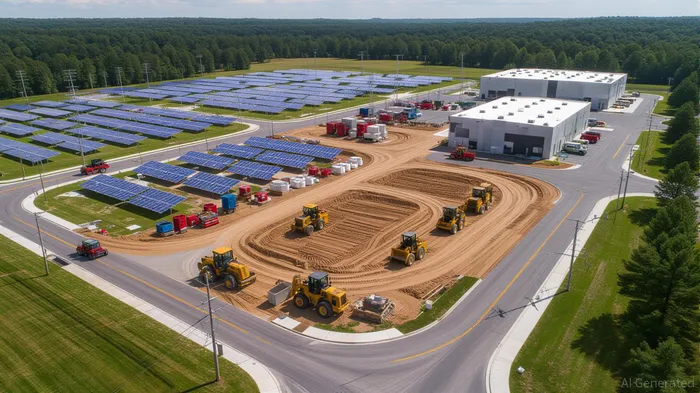
The FAST NY grant has been pivotal in positioning Webster as a hub for advanced manufacturing. According to a report by , the funding is being allocated to critical infrastructure upgrades, including road construction, sanitary sewer system expansions, and electrical master planning at the Northeast Area for Technology (NEAT). These improvements are designed to make the site "shovel-ready," enabling rapid development of 300 acres of land and over one million square feet of industrial space. The upgrades include 34 kV and 115 kV power lines, which are essential for energy-intensive industries such as semiconductor production and food processing.
 The infrastructure investments have already begun to yield results. Data from indicates that Webster's industrial vacancy rate has plummeted to 2%, while residential property values have risen by 10.1% annually. This dual impact underscores the symbiotic relationship between industrial development and residential real estate growth, a trend often observed in cities that prioritize infrastructure-led revitalization.
Xerox Campus Redevelopment: A Case Study in Brownfield Transformation
The redevelopment of the former Xerox campus is central to Webster's economic renaissance. officials, the site is being rebranded as NEAT, a mixed-use industrial and technology park. The $9.8 million FAST NY grant is complemented by a $4.5 million NY Forward Program award, which supports broader community revitalization efforts, including roadway dedications and strategic planning according to project updates.
A key milestone in this transformation is the $650 million fairlife® dairy facility, a project expected to create 250 jobs by 2025. This private-sector investment, coupled with EPA-approved site remediation and a planned 20-acre solar garden, highlights the town's commitment to sustainability and ESG compliance. The solar garden, in particular, is a strategic move to attract eco-conscious manufacturers and align with state renewable energy goals.
Municipal Policy Alignment: Expanding Industrial Capacity
Webster's municipal boundary adjustments and zoning reforms have further amplified its industrial potential. According to , the town has expanded its industrial area to 1,400 acres, creating a contiguous high-growth corridor. This expansion, combined with the Brownfield Opportunity Area designation, has made Webster a magnet for advanced manufacturers and logistics firms. The Reimagine Webster Master Plan, supported by state funding and public-private partnerships, envisions a mixed-use ecosystem that integrates residential, commercial, and industrial components.
The alignment of policy and infrastructure is evident in the town's ability to attract over $1 billion in private investment since 2023. This includes not only the fairlife project but also renewable energy ventures and high-tech manufacturing firms. The result is a diversified industrial base that reduces reliance on single industries and enhances long-term economic resilience.
Economic Outcomes and Future Prospects
The combined impact of infrastructure upgrades, brownfield redevelopment, and policy alignment is reshaping Webster's economic landscape. By 2025, the town is projected to see over one million square feet of new industrial space, with energy-intensive industries forming the backbone of its growth. The success of Webster's model is also influencing state-level initiatives, as the town's progress serves as a blueprint for other municipalities seeking to revitalize underutilized industrial sites.
For investors, Webster presents a compelling opportunity. The low industrial vacancy rate, rising residential values, and state-backed infrastructure projects create a stable environment for both short-term gains and long-term value appreciation. The town's focus on sustainability and ESG compliance further enhances its appeal to a new generation of investors prioritizing environmental and social impact.
Conclusion
Webster, NY, exemplifies how strategic infrastructure investment and municipal policy can drive industrial real estate growth. The FAST NY grant, Xerox campus redevelopment, and boundary adjustments have collectively created a high-growth corridor that attracts private capital and fosters economic diversification. As the town continues to implement its long-term vision, it offers a rare convergence of industrial, residential, and environmental value-a testament to the power of aligned public and private efforts in shaping the future of urban development.







Comentarios
Aún no hay comentarios