
Webster, NY's $9.8M FAST NY Grant and Xerox Campus Redevelopment: A Blueprint for Infrastructure-Driven Industrial Real Estate Value Creation
The Webster-Xerox Redevelopment: A Strategic Infrastructure Overhaul
The FAST NY grant funds critical infrastructure upgrades near the Xerox campus, including road dedication, road reconstruction, multimodal connectivity, and electrical master planning according to project plans. These improvements are designed to repurpose the site for advanced manufacturing, logistics, and mixed-use development. Key phases align with a 2025–2026 timeline, such as the demolition of the 600 Ridge Road site in August 2025 and its redevelopment in 2026. The project also integrates with the West Webster Hamlet Revitalization Project, which aims to enhance walkability and community amenities to support long-term economic growth according to planning documents.
The collaboration between WEDA, the Village of Webster, Xerox CorporationXRX--, and the Town of Webster highlights a public-private partnership model that leverages state funding to address legacy infrastructure gaps. For instance, upgrades to sewer systems and electrical grids will not only support industrial tenants but also make the area more attractive for residential and commercial development according to project plans.
Infrastructure as a Catalyst for Real Estate Value
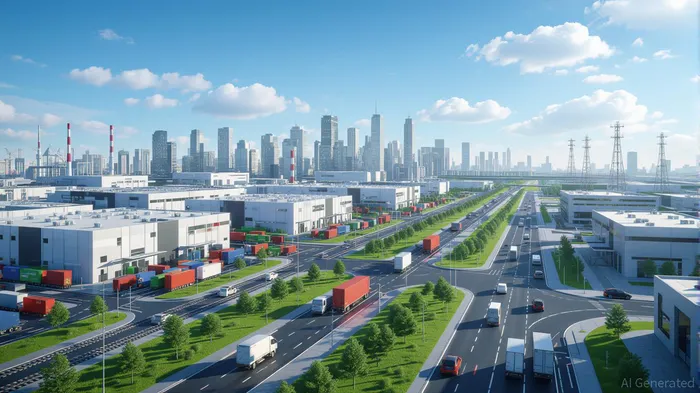 While Webster-specific data on property value increases is currently limited, global and national case studies demonstrate a consistent pattern: infrastructure investments directly correlate with industrial real estate appreciation. For example, the extension of Washington, D.C.'s Metro Silver Line spurred development in Northern Virginia, driving property values upward along the transit corridor. Similarly, India's Mumbai Metro has increased property values near stations by 20–25%. These examples illustrate how improved accessibility and utility infrastructure reduce operational costs for businesses and enhance desirability for residents.
In the U.S., analyses show that infrastructure spending-such as road repairs and transportation expansions-can generate a $400 billion GDP boost and 3 million jobs annually with a $250 billion investment. For industrial real estate, this translates to heightened demand for properties near upgraded infrastructure, as businesses prioritize locations with reliable logistics and utilities. The Delhi-Mumbai Industrial Corridor (DMIC), for instance, has driven rapid urbanization and property price surges along its route, transforming peripheral areas like Gurgaon and Noida into thriving commercial hubs.
Webster's project mirrors these dynamics. By addressing bottlenecks in transportation and utilities, the FAST NY-funded upgrades will likely attract firms in semiconductors, renewable energy, and advanced manufacturing-sectors prioritized in New York's industrial strategy. This, in turn, could create a self-reinforcing cycle: improved infrastructure attracts businesses, which generate jobs and tax revenue, further fueling demand for commercial and residential real estate.
Risks and Considerations for Investors
Despite the optimism, investors must remain cautious. Infrastructure projects often face delays, cost overruns, or unmet expectations, which can dampen returns. For example, environmental remediation at brownfield sites like the Xerox campus may add unforeseen costs. Additionally, overvaluation risks exist if market demand for industrial space lags behind infrastructure completion.
However, the alignment of Webster's project with state and federal industrial priorities-such as the CHIPS Act and clean energy incentives-suggests a strong policy tailwind. Early-stage investments in properties near the Xerox campus or the West Webster Hamlet could yield outsized returns as the area's infrastructure matures and demand for high-quality industrial space grows.
Conclusion: A Strategic Opportunity in Upstate New York
Webster's Xerox campus redevelopment exemplifies how targeted infrastructure spending can catalyze industrial real estate value creation. By learning from global precedents and leveraging state funding, the project positions Webster as a magnet for advanced manufacturing and logistics firms. For investors, the key takeaway is clear: areas undergoing infrastructure-driven revitalization, particularly those aligned with high-growth sectors, offer compelling long-term opportunities-provided risks are carefully managed.
As the 2025–2026 timeline unfolds, Webster's transformation will serve as a litmus test for the broader potential of infrastructure to reshape regional economies.





Comentarios
Aún no hay comentarios