
Web3 Identity for AI and Robotics: Unlocking the Automation Economy's Infrastructure Plays
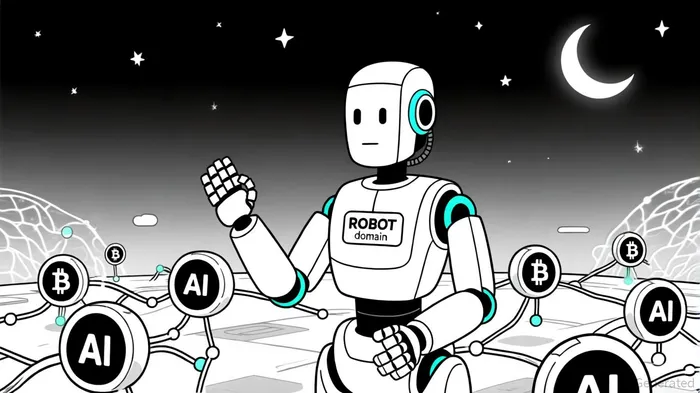
The convergence of artificial intelligence (AI), robotics, and Web3 infrastructure is reshaping the automation economy, creating a new frontier for decentralized identity solutions. As intelligent systems become increasingly embedded in daily life and industrial workflows, the need for secure, verifiable, and interoperable digital identities has never been more urgent. This article identifies early-stage infrastructure plays poised to capitalize on this transformation, drawing on recent developments in blockchain-based identity protocols, AI-driven smart contracts, and decentralized robotics networks.
The Rise of On-Chain Identities for Intelligent Systems
In 2025, the launch of the .ROBOT domain by Unstoppable Domains and the 0G Foundation marks a pivotal moment in Web3 identity innovation. This Web3-only domain provides a universal identity layer for humanoid robots, industrial cobots, AI agents, and automation platforms, enabling them to authenticate, interact, and coordinate across decentralized ecosystems[1]. Built on the 0G Foundation's decentralized AI operating system—which boasts 50 GB/s throughput and connectivity to 19 million wallets—the .ROBOT domain addresses scalability and security challenges in the robotics market, projected to grow from $74B in 2025 to $185B by 2030[2].
The significance of such infrastructure lies in its ability to establish trustless, on-chain identities for non-human entities. For instance, Tesla's Optimus and Unitree's G1 humanoid robots now leverage embedded AI and blockchain to perform complex tasks in dynamic environments[3]. By anchoring their identities to immutable ledgers, these systems can securely share data, execute smart contracts, and participate in decentralized marketplaces without relying on centralized intermediaries.
AI-Driven Identity Protocols: A New Layer of Trust
While blockchain provides the foundation for decentralized identity, AI is enhancing its functionality. AONY, an AI-driven on-chain identity protocol, combines decentralized identity (DID) standards with behavioral analytics and reputation scoring to create dynamic, transferable digital identities[4]. This approach allows AI agents and robots to adapt their identity profiles based on real-time interactions, improving trust and interoperability in Web3 ecosystems. AONY's Q3 2025 launch on major exchanges positions it as a key player in redefining how users and machines engage with decentralized platforms[4].
Similarly, projects like SingularityNET and Cortex are enabling AI model execution within blockchain smart contracts, creating autonomous decentralized applications (dApps) that can process data, make decisions, and transact without human intervention[5]. These innovations are critical for industries like DeFi, where AI-enhanced smart contracts can analyze real-time data to execute nuanced financial operations[1].
Decentralized Robotics Networks: The Future of Collaboration
The integration of Web3 and robotics is also giving rise to decentralized robot networks. Platforms like Robonomics Network and Ocean Protocol allow robots to act as autonomous economic agents, performing tasks, receiving payments, and sharing data via smart contracts[3]. For example, a fleet of delivery drones could autonomously negotiate routes, optimize energy consumption, and settle payments using blockchain-based agreements, reducing reliance on centralized logistics providers.
XMAQUINA, a DAO structured as a "Robotics Bank," is accelerating this shift by pooling capital to co-own real-world machine assets and invest in robotics startups[6]. By democratizing access to automation technologies, XMAQUINA aims to create a decentralized machine economy where individuals collectively govern physical AI systems. Its focus on acquiring equity in robotics companies and launching sub-DAOs for specific ventures underscores the growing institutional interest in this space[6].
Challenges and Opportunities in the Automation Economy
Despite its promise, the integration of AI, robotics, and Web3 faces hurdles. Public blockchains' transparency conflicts with AI's need for privacy, necessitating solutions like federated learning and zero-knowledge proofs[1]. Additionally, managing large-scale robotic systems requires decentralized infrastructure to avoid bottlenecks. Projects like Aethir and elizaOS are addressing these challenges by leveraging blockchain for distributed computing and collaborative workflows[3].
The economic potential, however, is staggering. Morgan StanleyMS-- estimates the humanoid robot market could reach $5 trillion by 2050, while the DePIN (Decentralized Physical Infrastructure Network) market is projected to grow from $20B to $3.5T by 2028[3]. This growth is driven by the need for real-time, low-latency processing that centralized cloud infrastructures cannot provide.
Investment Thesis: Prioritizing Infrastructure Innovation
For investors, the key is to target projects building foundational infrastructure rather than application-layer solutions. Early-stage opportunities include:
1. .ROBOT Domain Ecosystem: Supporting decentralized identity for AI/robotics through Unstoppable Domains and 0G Foundation.
2. AONY's AI-Driven Identity Protocol: A critical layer for dynamic, trust-based interactions in Web3.
3. XMAQUINA's Robotics Bank: Democratizing ownership of automation assets via DAO governance.
4. Decentralized Compute Networks: Projects like Aethir and elizaOS enabling scalable, secure AI training for robotics.
These plays align with the broader trend of Web3 infrastructure enabling the automation economy, where trustless collaboration between humans, AI, and machines becomes the norm.
Conclusion
The fusion of AI, robotics, and Web3 is not just a technological shift—it is an economic revolution. By investing in early-stage identity infrastructure, developers, and decentralized networks, stakeholders can position themselves at the forefront of this transformation. As the automation economy matures, the winners will be those who build the rails for a world where machines have identities, rights, and responsibilities.







Comentarios
Aún no hay comentarios