
Weathering the Storm: How Typhoons Disrupt IPO Timelines and Market Sentiment in Capital Markets
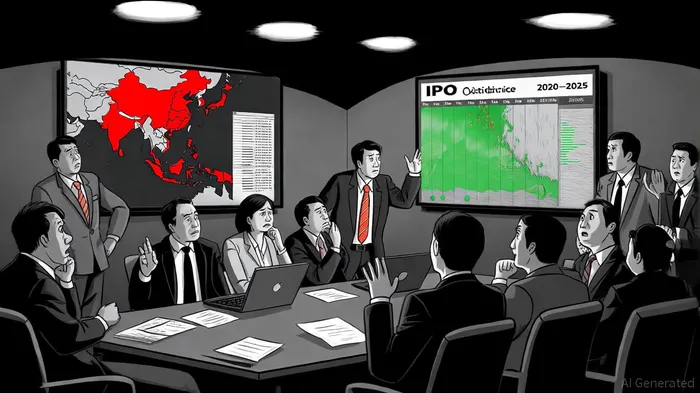
Natural disasters, particularly typhoons, have emerged as critical yet underappreciated risks in capital markets. While their direct impact on infrastructure and supply chains is well-documented, their indirect effects on Initial Public Offering (IPO) timelines and investor sentiment remain underexplored. Recent research and market trends reveal that typhoons can disrupt IPO activity through operational, financial, and psychological channels, compelling companies and investors to adopt robust risk assessment frameworks and strategic timing approaches.
Typhoons as Catalysts for IPO Delays
The physical and economic toll of typhoons often forces companies to delay public listings. For instance, Zijin Gold International Co., a Chinese mining firm, faced a potential $3.2 billion IPO delay in September 2025 due to typhoon disruptions in its operations[3]. Such delays are not isolated incidents. Studies show that typhoons reduce corporate R&D expenditure and patent applications by up to 15% in affected regions[2], undermining innovation—a key metric for investor confidence. When companies are unable to demonstrate consistent growth or operational resilience post-disaster, they often postpone IPOs to avoid underperformance.
Market volatility exacerbates this dynamic. Typhoons create uncertainty in sectors like manufacturing, transportation, and real estate, leading to short-term declines in stock market indices[3]. For example, the Chinese stock market historically experiences a 3–5% drop during typhoon events, with recovery taking 2–4 weeks[3]. This volatility deters IPOs, as companies seek stable windows to price shares optimally. In Q2 2025, the U.S. IPO market saw a 20% decline in activity mid-quarter due to typhoon-like disruptions, mirroring the impact of geopolitical shocks[1].
Market Sentiment and Investor Behavior
Typhoons also shape investor sentiment through psychological and informational channels. Research indicates that typhoon strikes increase analyst forecast dispersion by 12%, reflecting heightened uncertainty about corporate performance[4]. This dispersion reduces investor trust, particularly in high-growth sectors like AI and renewable energy, where valuations are already precarious. For example, the 2023 IPO of Kenvue underperformed partly due to market skepticism, a sentiment amplified by concurrent typhoon-related disruptions in its supply chain[6].
Retail investor participation further complicates the landscape. In typhoon-affected regions, retail investors often adopt risk-averse strategies, reducing demand for newly listed stocks[5]. This dynamic was evident during Typhoon In-Fa's 2021 closure of China's Ningbo-Zhoushan ports, which disrupted global supply chains and led to a 10% drop in IPO subscription rates in the following month[5].
Risk Assessment and Timing Strategies
To mitigate typhoon-related risks, companies must integrate advanced risk assessment frameworks. A Bayesian network-based model, for instance, uses historical typhoon data to predict supply chain disruptions and operational downtime[5]. Similarly, GIS-based resilience assessments help firms evaluate geographic vulnerabilities, enabling proactive adjustments to IPO timelines[5]. Moody'sMCO-- catastrophe modeling tools, which simulate coastal flooding and storm impacts, are increasingly adopted by firms in typhoon-prone regions to stress-test financial resilience[5].
Timing strategies are equally critical. Companies in vulnerable sectors should align IPOs with typhoon off-seasons or employ "window shopping" tactics to capitalize on periods of low volatility[1]. For example, EY's 2025 IPO trends highlight firms in energy and infrastructure that secured funding by timing their listings during typhoon lulls[4]. Conversely, those delaying IPOs during typhoon seasons often face higher capital costs, as seen in the 2024 case of LG Electronics postponing its Indian unit's IPO amid market instability[4].
Conclusion
Typhoons are no longer just environmental hazards—they are systemic risks in capital markets. Their ability to disrupt IPO timelines and distort market sentiment underscores the need for integrated risk management and strategic timing. As climate change intensifies typhoon frequency and severity, firms must treat natural disasters as core components of their IPO readiness plans. Investors, meanwhile, should scrutinize companies' disaster resilience frameworks when evaluating new listings. In an era of growing uncertainty, the ability to "weather the storm" will separate successful IPOs from those left adrift.







Comentarios
Aún no hay comentarios