
Weathering the Storm: How French Wheat Shortfalls Could Fuel a Commodity Rally
The French countryside, a cornerstone of global wheat production, faces a growing crisis as climate-driven volatility reshapes agricultural yields. With France's soft wheat crop rated at 68% "good to excellent" as of June 16—a figure that has fluctuated between 69-74% in recent weeks—the nation's harvest is now the focal point of a tightening global grain market. This article explores how deteriorating conditions, compounded by persistent drought and rising demand, could push wheat prices above $8.50/bushel and create compelling opportunities in wheat futures and agribusiness equities.
The Climate Crossroads: Drought and Declining Yields
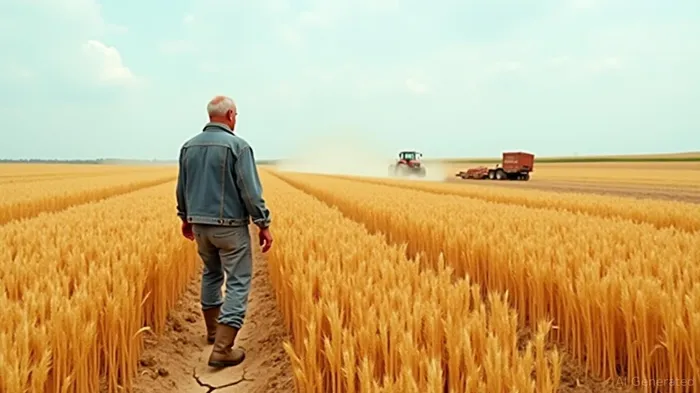
France's soft wheat, a staple for global flour markets, is under siege. While recent FranceAgriMer reports show a marginal improvement to 70% "good to excellent" as of June 9, this remains below the five-year average and a stark contrast to the 62% rating at the same stage in 2024. The culprit? A relentless dry spell in northern France, a critical production zone, where rainfall deficits of up to 50% below average have parched soils.
The European Commission's MARS bulletin underscores the regional divide: while southern Europe benefits from abundant rain, northern regions like Germany and France face their driest February-April period in nearly a century. For France's winter wheat—a crop already delayed by autumn rains—the timing couldn't be worse. Critical growth stages, such as ear formation, coincide with these dry conditions, risking irreversible yield losses.
Global Supply Tightening: Why $8.50 Is the New Baseline
France's struggles are part of a broader pattern. The EU's 2025 wheat harvest is projected to rebound to 134.3 million tonnes—up from a 10-year low—but this assumes perfect weather. Persistent drought in northern Europe, coupled with Ukraine's rapeseed export competition and India's surging palm oil purchases (diverting land from grains), could squeeze global supplies further.
The International Grains Council estimates that global wheat stocks will fall to 276 million tonnes by end-2025, a 5% decline from 2024. With China's demand for high-quality milling wheat rising and Black Sea exports remaining volatile, prices are primed to surge. A sustained breach of $8.50/bushel—a level not seen since 2022—could catalyze speculative buying and hedging activity.
Investment Playbook: Traders, Processors, and Equipment Makers
Agricultural Traders (Louis Dreyfus, Glencore): These firms benefit directly from supply tightness. Louis Dreyfus, a dominant player in French wheat trading, could see margins expand as premiums for high-quality grain rise.
Processors (Archer-Daniels-Midland, ADM): Millers like ADM, which relies on consistent wheat supplies for flour production, may face input cost pressures, but their vertically integrated operations will outperform peers with less control over supply chains.
Agricultural Equipment (CNH Industrial): As farmers invest in drought-resistant machinery and precision irrigation systems, CNHI—the parent of Case IH and New Holland—stands to gain. Its share price has lagged behind peers but could rebound with renewed demand for climate-resilient equipment.
Risks: Policy Interventions and Climate Uncertainty
The biggest headwinds are political. Governments may impose export curbs or subsidies to stabilize domestic prices, as seen in India's 2023 wheat ban. Additionally, a sudden rainfall could alleviate stress in key regions, though the EU's MARS report notes that soil moisture deficits are now “irreversible” in many areas.
Yet, the structural case for scarcity remains unshaken. Climate models predict more frequent droughts and erratic weather patterns, making France's 2025 woes a harbinger of systemic risks. Investors ignoring these trends risk being left behind in a world where every bushel counts.
Conclusion: Planting Seeds for the Next Rally
French wheat's plight isn't just a seasonal blip—it's a symptom of a global food system under strain. For investors, the path forward is clear: position in futures contracts, traders, and equipment makers poised to capitalize on scarcity. While policy risks loom, the structural shift toward climate-driven volatility ensures that wheat's upward trajectory is far from over.
In the words of an old farming proverb: “The weather is always right to plant something.” For investors, that something is now French wheat—and the companies thriving in its shadow.







Comentarios
Aún no hay comentarios