
Wealth Tax Proposals and Capital Flight in California: Assessing Risks and Opportunities for Tech and Venture Capital Investors
The proposed California Billionaire Tax Act, a one-time 5% levy on net assets exceeding $1 billion, has ignited a storm of legal, political, and economic debate. Set for a potential November 2026 ballot, the tax's retroactive application-targeting residents as of January 1, 2026-has already prompted preemptive relocations and strategic restructurings among the ultra-wealthy. For investors in tech and venture capital, the implications are profound, spanning capital flight, legal uncertainty, and shifts in regional innovation hubs.
Capital Flight and Investor Behavior: A Preemptive Exodus
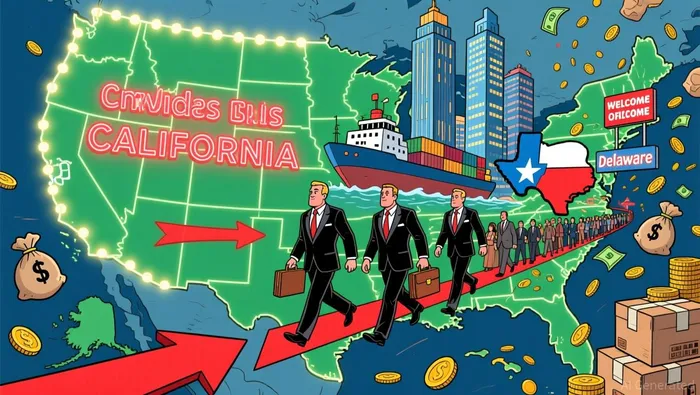
The retroactive nature of the tax has left little time for billionaires to adjust their residency or liquidity strategies. Prominent figures like Google co-founders Larry Page and Sergey Brin, PayPal founder Peter Thiel, and venture capitalist David Sacks have already shifted operations to states like Texas and Delaware, leveraging favorable corporate laws and lower tax burdens. According to a report by , California has reportedly lost $1 trillion in billionaire wealth due to the proposed tax, with critics like Chamath Palihapitiya warning of a mass exodus that could undermine the state's innovation ecosystem.
This migration is not merely symbolic. High-net-worth individuals are restructuring business entities, liquidating illiquid assets, and relocating personal residences to avoid the tax. For example, Elon Musk moved TeslaTSLA-- and SpaceX to Texas, while CoinbaseCOIN-- shifted its incorporation from Delaware to Texas, signaling a broader trend of firms seeking jurisdictions with pro-business policies. Such moves could erode California's dominance in venture capital and tech, as capital and talent redirect to states like Texas, which offers no corporate income tax and a deregulated energy market.
Legal and Political Challenges: A Constitutional Quagmire
The tax's retroactive application has drawn sharp criticism from legal experts and political leaders. Governor Gavin Newsom has vowed to oppose the measure, arguing it risks violating due process and the Dormant Commerce Clause, which restricts states from enacting laws that unfairly burden interstate commerce. Legal challenges are expected to delay or block implementation, creating uncertainty for investors. As noted by , the tax's constitutionality is a "significant hurdle," with opponents likely to exploit procedural loopholes to stall its enforcement.
This uncertainty has already influenced behavior. Billionaires are accelerating relocations and asset sales, while startups face a "chilling effect" as founders worry about liquidity constraints. For instance, some tech founders may be forced to conduct down rounds or take on debt to meet tax obligations, complicating fundraising and talent retention.
Impact on Venture Capital and Startups: Liquidity Constraints and Innovation Risks
The proposed tax could force billionaires to liquidate portions of their holdings to pay the 5% levy, which is payable over five years. This creates a "double tax event," as founders may face both capital gains taxes and the wealth tax. For early-stage startups, reduced access to capital could stifle innovation, particularly in sectors like AI and biotech that rely heavily on California-based investment. highlights, the departure of $500 billion in wealth could lead to a decline in tax revenue from income, sales, and real estate, further straining public services. While supporters argue the tax will fund healthcare and education, critics warn it risks undermining the long-term health of California's innovation economy.
Opportunities in Other States: The Rise of Texas and Delaware
The migration of capital and talent to Texas and Delaware presents both risks and opportunities. Texas, in particular, has emerged as a formidable alternative, with 40% of 2025 reincorporation cases shifting there. The state's pro-business policies, including no corporate income tax and a deregulated power market, have attracted firms like Coinbase and Dropbox. Similarly, Delaware's legal system remains a key incorporation hub for 70% of tech companies, though its dominance is waning.
For investors, this shift suggests a diversification of venture capital ecosystems. While California's tech sector may weaken, new hubs in Texas and Miami could emerge, supported by favorable regulatory environments and growing infrastructure. However, the long-term viability of these regions depends on sustained investment and the ability to replicate California's culture of innovation.
Conclusion: Balancing Risks and Opportunities
The California Billionaire Tax Act represents a pivotal moment for investors in tech and venture capital. While the tax aims to address wealth inequality and fund public services, its retroactive application and legal uncertainties risk triggering capital flight and stifling innovation. Investors must weigh the short-term revenue gains against the long-term consequences of reduced liquidity, legal battles, and the erosion of California's innovation ecosystem.
Opportunities lie in the rise of alternative hubs like Texas and Delaware, where pro-business policies and regulatory flexibility could attract displaced capital. However, these regions must prove their ability to sustain innovation and talent. For now, the debate underscores a broader tension between progressive taxation and economic dynamism-a tension that will shape investment strategies for years to come.





Comentarios
Aún no hay comentarios