
The Weakening USD and Its Implications for Non-US Equities
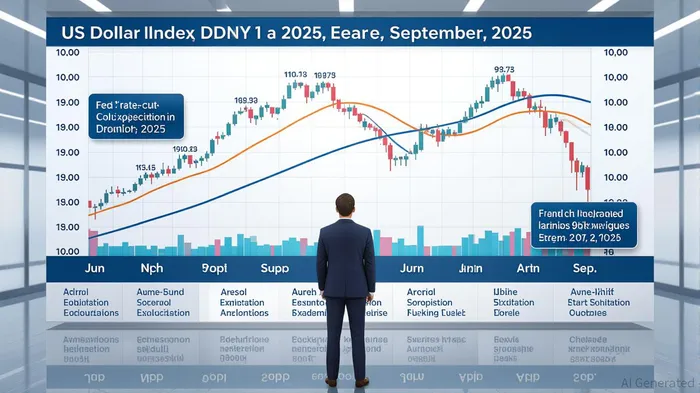
The U.S. dollar's decline in 2025 has reshaped global investment dynamics, creating both challenges and opportunities for non-U.S. equities. The DXY index, which reached a peak of 110.17 in January 2025, has since fallen to 97.78 as of September 10, 2025, reflecting a 3.93% drop over the past year [1]. This weakening is driven by a dovish shift in U.S. monetary policy, global central bank actions, and structural trade tensions. For investors, the implications are clear: a reevaluation of portfolio allocations and a strategic pivot toward non-U.S. markets.
The Drivers of a Weakening USD
The Federal Reserve's anticipated rate cut in September 2025—priced in at 80–87% probability—marks a pivotal shift after 18 months of rate stability [2]. This decision follows a cooling labor market, with unemployment rising to 4.2% in July 2025 and downward revisions to prior job growth figures. While inflation remains above the 2% target (core inflation at 2.9%), the Fed's balancing act between growth and price stability has reduced the dollar's appeal.
Globally, dovish monetary policies have narrowed interest rate differentials. Central banks in Europe and emerging markets have cut rates in response to weaker trade flows and U.S. tariff policies, prompting capital to flow into the yen, euro, and other currencies [3]. Meanwhile, long-term valuation metrics suggest the dollar is overcorrecting, with analysts projecting a 10%–20% decline against major currencies over the medium term [4].
Strategic Rebalancing: Non-US Equities in Focus
The dollar's weakness has catalyzed a rotation into non-U.S. equities, particularly in Europe and emerging markets. International stocks have outperformed U.S. counterparts in 2025, aided by currency translation effects that boost foreign earnings for dollar-based investors [5]. For example, Asian and Central and Eastern European (CEE) markets are benefiting from dovish monetary easing, high real interest rates, and a disinflationary environment [6].
Europe's anticipated fiscal expansion, though delayed, is seen as a long-term tailwind for equity markets. Meanwhile, emerging markets are attracting inflows as investors seek higher growth potential amid U.S. market uncertainty. This shift reflects a broader diversification strategy, with global investors addressing geographic imbalances and hedging against U.S. market leadership risks [7].
Risks and Considerations
Despite the opportunities, volatility persists. Trade tensions and tariff-related costs remain headwinds, complicating supply chain adjustments and corporate earnings. Additionally, while the dollar's decline is structural, short-term fluctuations could reintroduce uncertainty, particularly if the Fed's rate cuts prove insufficient to curb inflation [8].
Conclusion
The weakening U.S. dollar and dovish global monetary environment are redefining investment paradigms. For non-U.S. equities, the combination of favorable currency dynamics, policy support, and structural growth factors presents a compelling case for strategic rebalancing. However, investors must remain vigilant to geopolitical and macroeconomic risks. As the dollar's dominance unwinds, a diversified, regionally balanced approach will be critical to navigating the evolving landscape.







Comentarios
Aún no hay comentarios