
The Weakening U.S. Labor Market: What Investors Should Be Watching
The U.S. labor market, once a pillar of post-pandemic resilience, is showing signs of strain. According to the BLS news release, August 2025 saw a meager addition of just 22,000 nonfarm jobs, with the unemployment rate holding steady at 4.3%-a level not seen since 2021. While this stability might initially appear benign, the underlying trends tell a more complex story. The labor force participation rate remains stagnant at 62.3%, and the employment-population ratio has not budged from 59.6%, according to the Employment Situation summary. These metrics suggest a labor market that is not merely cooling but fracturing under the weight of structural and cyclical pressures.
Macroeconomic Signals: Inflation, Policy, and Consumer Sentiment
The Federal Reserve's recent 25-basis-point rate cut in September 2025 underscores the central bank's acknowledgment of these challenges, according to a CompanySights report. Yet, the Fed's hands are tied by a stubborn April PCE inflation rate of 2.59%, which remains above its 2% target. This inflationary backdrop, coupled with a slowing labor market, creates a precarious balancing act for policymakers. On one hand, rate cuts aim to stimulate job creation and stabilize wages, which rose by 0.3% in August, according to the BLS news release. On the other, inflationary pressures persist, driven by tariff-related cost increases and a resilient but uneven consumer sector.
Consumer confidence, a critical barometer for economic health, has deteriorated sharply. The September 2025 index fell to 94.2, the lowest since April 2025, as households grappled with inflation expectations of 5.8% and a declining perception of job availability, according to a PR Newswire release. This erosion of confidence is not merely anecdotal-it signals a potential slowdown in spending, which accounts for nearly 70% of U.S. GDP.
Sector Positioning: Winners and Losers in a Fragmented Market
The labor market's fragmentation is most evident in sector-specific trends. Healthcare remains a relative bright spot, adding 31,000 jobs in August 2025, according to the BLS news release. For investors, this sector's resilience-coupled with undervalued stocks in biotechnology and specialty drugs-presents a compelling case for long-term positioning, per the Fidelity health-care outlook. However, the gains are not universal.
Government employment, both federal and state, is under siege. August's data revealed a 15,000-job loss in federal roles and a net decline of 1,000 state and local jobs, as the CompanySights report notes. These cuts, part of broader fiscal retrenchment, threaten to destabilize a public-sector workforce that still exceeds its 2020 peak by 650,000 jobs. For investors, this signals a need to reassess exposure to government-contracted services and infrastructure-related equities.
Meanwhile, mining and energy sectors face a dual challenge. Employment in mining, quarrying, and oil and gas extraction fell by 6,000 jobs in August, per the BLS news release, while broader industry data shows a decline from 626,000 to 617,000 jobs between April and July 2025, according to the BLS natural resources page. These losses are exacerbated by slowing global demand and the transition to renewable energy. Investors in cyclical sectors must weigh the long-term implications of these shifts against short-term volatility.
Strategic Implications for Investors
The interplay of these macro signals and sector dynamics demands a nuanced approach. First, investors should prioritize sectors with structural tailwinds, such as healthcare and technology-driven industries, which continue to add jobs despite the broader slowdown, as noted in the Fidelity health-care outlook. Second, defensive positioning in government-related assets may require caution, given the sector's vulnerability to policy-driven retrenchment highlighted by CompanySights. Third, the Fed's data-dependent policy stance means that inflation and wage growth will remain critical watchpoints. A sustained drop in core PCE inflation-currently at 2.52% annually per April PCE data-could unlock further rate cuts, potentially boosting equities in the near term.
Conclusion
The U.S. labor market is at a crossroads. While headline unemployment remains low, the underlying trends-stagnant participation, sectoral divergence, and policy uncertainty-paint a picture of a market in transition. For investors, the key lies in aligning portfolios with the forces reshaping the economy: structural shifts in labor demand, the Fed's evolving policy framework, and the uneven recovery across industries. As the fourth quarter unfolds, the ability to navigate these interconnected signals will separate the resilient from the reactive.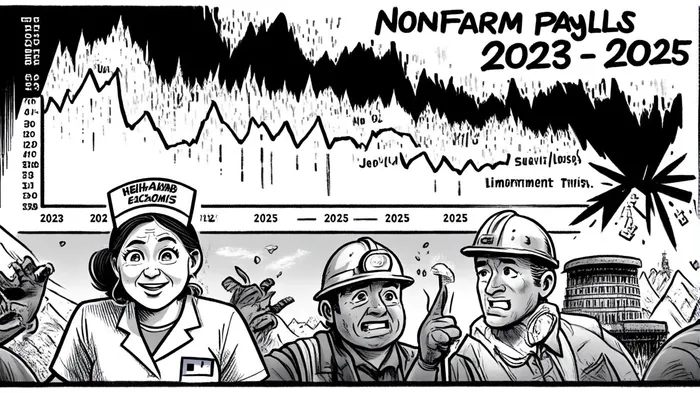







Comentarios
Aún no hay comentarios