
The Weakening U.S. Labor Market and Implications for Fed Rate Cuts
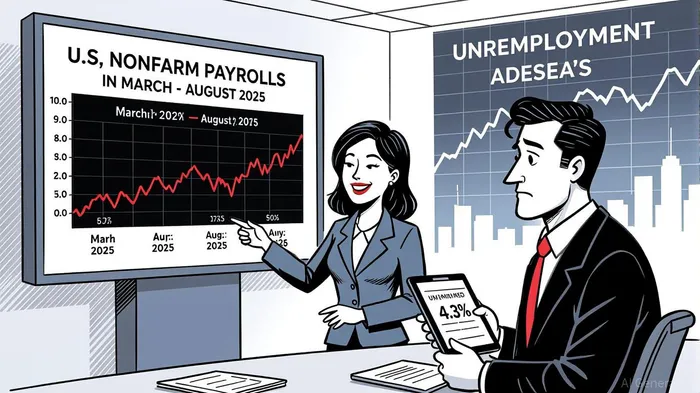
You've got to be kidding me. The U.S. labor market is flashing red, and the is running out of time to pivot. . But the real story isn't just about the headline number. It's about the structural rot revealed by the BLS's preliminary benchmark revisions, . This isn't a temporary blip; it's a seismic shift in how we view the labor market.
Structural Deterioration: The Labor Market Is Weaker Than We Thought
The March 2025 revision was the largest downward adjustment in BLS history, erasing nearly a year's worth of job growth[2]. , , . These aren't cyclical corrections—they're signs of a labor force that's shrinking due to reduced immigration and early retirements[1]. The result? , .
. It's a statistical mirage. , the Fed is staring at a [1]. , forcing the Fed into a reactive, rather than proactive, stance[2].
The Fed's Dilemma: Rate Cuts vs. Inflationary Risks
Here's the rub: The Fed's dual mandate—maximum employment and stable prices—is now in direct conflict. While the labor market's deterioration screams for rate cuts, , with tariffs and services inflation (healthcare, . But let's not kid ourselves—this is a , not a transient one.
The Fed's September meeting is now a make-or-break moment. , but the data screams for aggressive action. . Why? Because the labor market isn't just cooling—it's collapsing under the weight of its own revisions.
Why This Matters for Investors
The implications are clear: The Fed is going to pivot, and it's going to pivot hard. If you're still holding cash or underweight in cyclical sectors, you're missing the boat. , .
But here's the twist: A rate-cutting cycle isn't just good for bonds and gold. It's a tailwind for small-cap stocks, financials861076--, and sectors tied to consumer spending. The key is to position for a Fed that's finally ready to act, not one stuck in denial.
The Bottom Line
The U.S. labor market isn't just weak—it's been for months. The BLS revisions have forced a reckoning, and the Fed has no choice but to respond. If you're waiting for a “clean” inflation number before adjusting your portfolio, you're playing catch-up. .
This is the moment to act—before the market catches up to the reality of a cooling labor market and a Fed that's finally ready to pivot.







Comentarios
Aún no hay comentarios