
The Weakening U.S. Labor Market and Its Implications for Equities and Inflation
The U.S. labor market, once a pillar of economic resilience, has shown signs of strain in 2025. According to the Bureau of Labor Statistics, nonfarm payrolls grew by a modest 64,000 jobs in November 2025, with little net change since April of the same year. The unemployment rate, now at 4.6%, reflects a four-year high, while the labor force participation rate remains stagnant at 62.5%. Sector-specific trends highlight uneven recovery: health care and construction added 46,000 and 28,000 jobs, respectively, but the federal government continued to shed positions, losing 6,000 in November alone.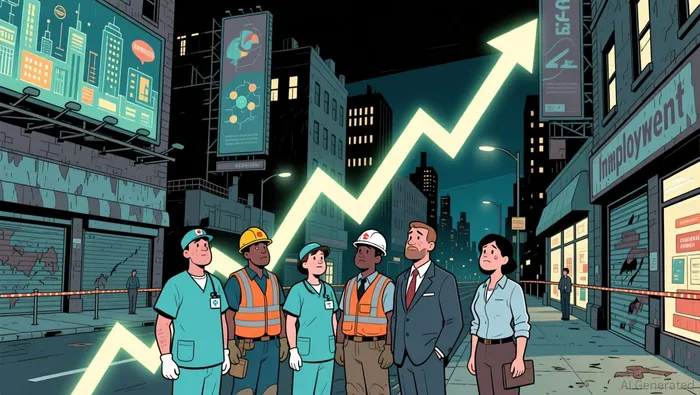 These dynamics underscore a labor market that is shifting, not collapsing-a critical distinction for investors navigating a slowing economy.
Inflation: Sticky but Moderating
Inflation, though elevated, has shown signs of moderation. The U.S. inflation rate for the 12 months ending in September 2025 stood at 3.0%, up slightly from 2.9% in August. Core inflation, which excludes volatile food and energy components, remained steady at 3.1%. However, structural pressures persist. Higher tariffs, now at 90-year highs, have driven up prices for household goods, apparel, and services like medical care and transportation. Consumer price expectations, as measured by the October 2025 Survey of Consumer Expectations, remain anchored at 3.2% for one-year-ahead inflation. This stickiness in inflation expectations complicates the Federal Reserve's balancing act between supporting growth and curbing price pressures.
Equities: Resilience Amid Uncertainty
Despite weak labor data, U.S. equities have defied gravityG--. The S&P 500 closed Q3 2025 up over 8%, with year-to-date gains nearing 15%. This resilience is fueled by strong corporate earnings, particularly in the technology sector, and a broadening rally into small-cap and international markets. However, valuations remain stretched, especially in tech, where price-to-earnings ratios hover near historical peaks. The Federal Reserve's anticipated rate cuts-market participants now price in at least two 25-basis-point reductions by year-end-have provided a tailwind. Yet, the looming impact of tariffs and the One Big Beautiful Bill Act's delayed fiscal stimulus introduce volatility.
Strategic Asset Allocation: Navigating the New Normal
For investors, the interplay of a weakening labor market, sticky inflation, and resilient equities demands a recalibration of strategic asset allocation. Three themes emerge:
Diversification and Inflation Hedges: Gold, up nearly 30% since mid-2025, has become a favored hedge against policy uncertainty and inflationary pressures. Similarly, real assets like infrastructure and real estate offer protection against a low-yield environment, as central banks globally pivot toward rate cuts.
AI-Driven Capital Expenditure: Nearly half of 2025's GDP growth has been attributed to AI-related investments, signaling a structural shift in economic drivers. Portfolios should overweight sectors poised to benefit from automation and productivity gains, such as semiconductors and cloud computing.
Adaptability in a Fragmented Recovery: With consumer spending weakening and immigration-driven labor supply growth slowing, investors must prioritize assets with low correlation to traditional equities and bonds. This includes alternative investments like private credit and venture capital, which offer exposure to innovation cycles while mitigating macroeconomic risks.
Conclusion
The U.S. labor market's weakening trajectory, coupled with inflationary pressures and a resilient equity market, paints a complex picture for 2025. While the Federal Reserve's policy response and fiscal stimulus provide near-term optimism, long-term success hinges on strategic adaptability. Investors who prioritize diversification, embrace inflation hedges, and align with structural growth trends-such as AI-driven productivity-will be best positioned to navigate the uncertainties of a slowing economy.







Comentarios
Aún no hay comentarios