
Waymo and Uber Revolutionize Austin's Ride-Hailing Scene
Generado por agente de IAWesley Park
martes, 4 de marzo de 2025, 7:15 am ET1 min de lectura
GOOGL--
As the South by SouthwestSWX-- (SXSW) festival approaches, Austin is gearing up for a transportation revolution. Waymo, the self-driving technology company owned by Alphabet Inc.GOOGL--, has partnered with UberUBER-- to launch robotaxi rides in the city. This collaboration marks a significant milestone in the autonomous vehicle (AV) industry and is set to transform the local ride-hailing market.
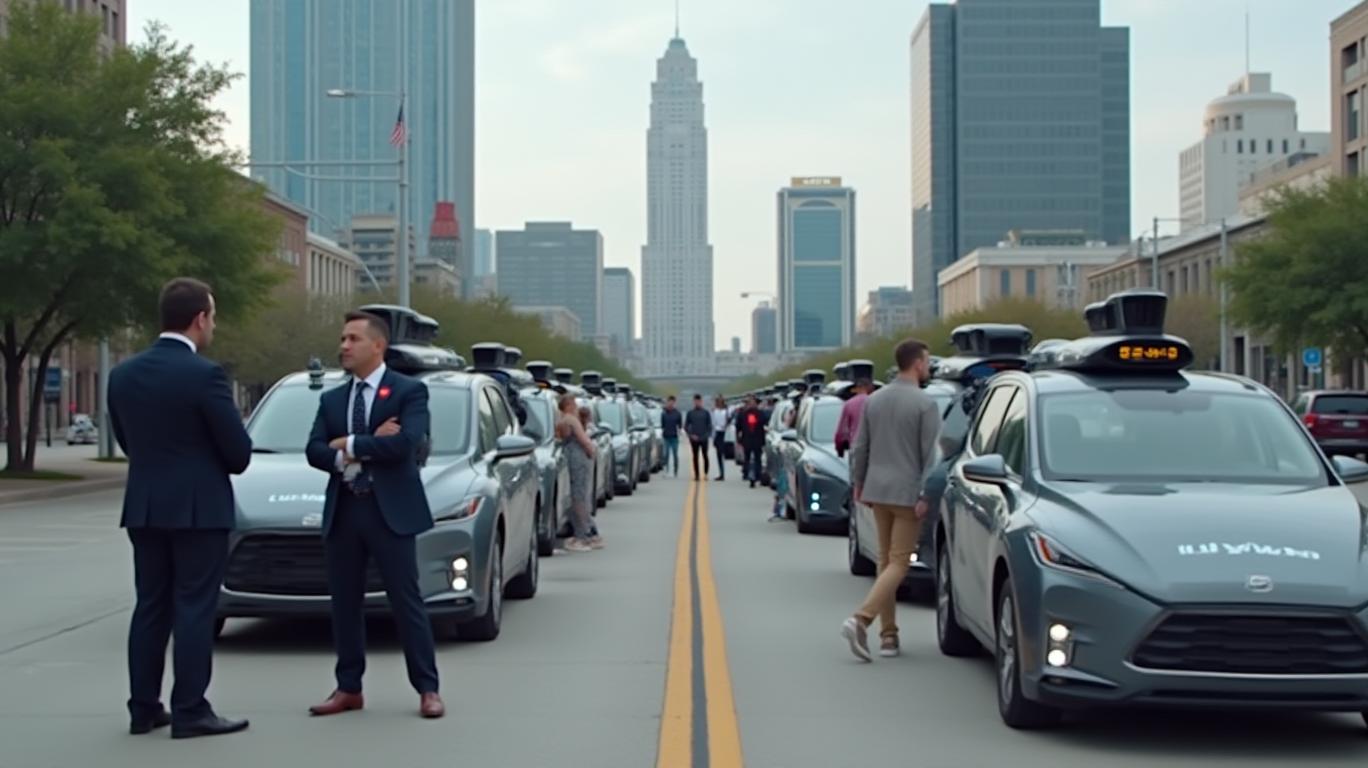
The partnership between Waymo and Uber is a game-changer for Austin residents, offering a more efficient, sustainable, and potentially safer alternative to traditional taxis and ride-hailing services. Waymo's fleet of fully autonomous, electric vehicles will operate within a 37-square-mile area in Austin, covering popular destinations and neighborhoods like Hyde Park, Downtown, and Montopolis. Riders can request a Waymo vehicle through the Uber app at no additional cost, making the service accessible and affordable.
However, the introduction of robotaxi services in Austin is likely to have an impact on the local job market, particularly for taxi and ride-hailing drivers. As Waymo's fleet grows and becomes more prevalent in the city, there may be a decrease in demand for human-driven taxis and ride-hailing services, leading to potential job losses for drivers in these sectors.
To mitigate potential job losses, local authorities, educational institutions, and industry partners can collaborate to provide retraining and upskilling programs for displaced drivers. These programs can help drivers acquire new skills and transition into other industries or roles within the transportation sector, such as fleet management, maintenance, or customer support. Additionally, temporary income support and encouragement of entrepreneurship can help displaced workers manage the transition period and explore new opportunities.
In conclusion, the launch of Waymo and Uber's robotaxi service in Austin is a significant step towards a more sustainable and efficient transportation future. As the service gains traction, it is essential to address the potential impact on the local job market and support displaced workers through retraining, upskilling, and income support programs. By embracing this change and investing in the future, Austin can lead the way in the autonomous vehicle revolution.
SWX--
UBER--
As the South by SouthwestSWX-- (SXSW) festival approaches, Austin is gearing up for a transportation revolution. Waymo, the self-driving technology company owned by Alphabet Inc.GOOGL--, has partnered with UberUBER-- to launch robotaxi rides in the city. This collaboration marks a significant milestone in the autonomous vehicle (AV) industry and is set to transform the local ride-hailing market.
The partnership between Waymo and Uber is a game-changer for Austin residents, offering a more efficient, sustainable, and potentially safer alternative to traditional taxis and ride-hailing services. Waymo's fleet of fully autonomous, electric vehicles will operate within a 37-square-mile area in Austin, covering popular destinations and neighborhoods like Hyde Park, Downtown, and Montopolis. Riders can request a Waymo vehicle through the Uber app at no additional cost, making the service accessible and affordable.
However, the introduction of robotaxi services in Austin is likely to have an impact on the local job market, particularly for taxi and ride-hailing drivers. As Waymo's fleet grows and becomes more prevalent in the city, there may be a decrease in demand for human-driven taxis and ride-hailing services, leading to potential job losses for drivers in these sectors.
To mitigate potential job losses, local authorities, educational institutions, and industry partners can collaborate to provide retraining and upskilling programs for displaced drivers. These programs can help drivers acquire new skills and transition into other industries or roles within the transportation sector, such as fleet management, maintenance, or customer support. Additionally, temporary income support and encouragement of entrepreneurship can help displaced workers manage the transition period and explore new opportunities.
In conclusion, the launch of Waymo and Uber's robotaxi service in Austin is a significant step towards a more sustainable and efficient transportation future. As the service gains traction, it is essential to address the potential impact on the local job market and support displaced workers through retraining, upskilling, and income support programs. By embracing this change and investing in the future, Austin can lead the way in the autonomous vehicle revolution.

Divulgación editorial y transparencia de la IA: Ainvest News utiliza tecnología avanzada de Modelos de Lenguaje Largo (LLM) para sintetizar y analizar datos de mercado en tiempo real. Para garantizar los más altos estándares de integridad, cada artículo se somete a un riguroso proceso de verificación con participación humana.
Mientras la IA asiste en el procesamiento de datos y la redacción inicial, un miembro editorial profesional de Ainvest revisa, verifica y aprueba de forma independiente todo el contenido para garantizar su precisión y cumplimiento con los estándares editoriales de Ainvest Fintech Inc. Esta supervisión humana está diseñada para mitigar las alucinaciones de la IA y garantizar el contexto financiero.
Advertencia sobre inversiones: Este contenido se proporciona únicamente con fines informativos y no constituye asesoramiento profesional de inversión, legal o financiero. Los mercados conllevan riesgos inherentes. Se recomienda a los usuarios que realicen una investigación independiente o consulten a un asesor financiero certificado antes de tomar cualquier decisión. Ainvest Fintech Inc. se exime de toda responsabilidad por las acciones tomadas con base en esta información. ¿Encontró un error? Reportar un problema




Comentarios
Aún no hay comentarios