
Waymo's NYC Gambit: Can Regulatory Hurdles Turn into Market Gold?
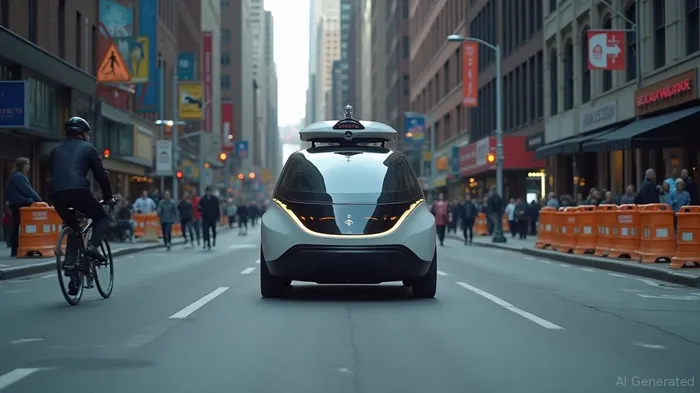
The streets of New York City, with their chaotic traffic, unpredictable pedestrians, and labyrinthine construction zones, have long been considered the ultimate test for autonomous vehicle (AV) technology. Now, Waymo—Alphabet's self-driving subsidiary—seeks to conquer this urban behemoth, positioning itself at the center of a high-stakes race to dominate the $7 trillion mobility market. But as Waymo navigates New York's regulatory thicket, the question remains: Will its NYC expansion become a catalyst for autonomous adoption, or a cautionary tale of overreach?
The Regulatory Gauntlet: Laws vs. Reality
New York State's current law mandates a human driver in autonomous test vehicles—a rule Waymo must comply with until legislative changes pass. This creates a paradox: Waymo's testing in Manhattan will initially require a “trained specialist” behind the wheel, negating the economic benefit of fully driverless operations. Yet the company is pushing aggressively to amend this law, leveraging partnerships with groups like the National Federation of the Blind and MADD NY to build political support.
The legislative battlefield is defined by two competing bills:
1. Senate Bill S7956 requires human operators for large autonomous vehicles (e.g., trucks), prioritizing safety and employment.
2. Assembly Bill A4901A aims to legalize driverless AVs under strict conditions, such as “minimal risk” fail-safes and mandatory insurance.
Both bills remain stalled in committees, reflecting lawmakers' reluctance to gamble with public safety. For Waymo, the path forward hinges on convincing regulators that its technology can handle NYC's chaos—think sudden subway grates, erratic pedestrians, and snow-covered streets—without human intervention.
Alphabet's stock (GOOGL) has risen steadily despite Waymo's losses, reflecting investor confidence in its long-term vision. Tesla's (TSLA) volatile trajectory underscores the market's skepticism toward its robotaxi ambitions without proven autonomy.
Market Potential: NYC as the Tipping Point
Securing NYC would grant Waymo access to a dense, lucrative market of 8.8 million daily commuters. Its existing 1,500-vehicle fleet in less complex cities like Phoenix and SF generates 250,000 weekly rides—proof of scalability. But NYC's unique challenges could elevate Waymo's technology to a new tier of capability, making it the gold standard for urban AVs.
Competitors like Tesla and China's Pony.ai trail behind. Tesla's teleoperator-based model faces logistical hurdles in dense cities, while Waymo's partnerships with Toyota and Zeekr (its 2026 fleet expansion to 2,500 vehicles) signal a manufacturing edge. However, Waymo's $4.1 billion AlphabetGOOG-- segment loss in 2024 highlights the financial risks of this high-stakes game.
Investment Implications: Ride the Wave or Stay on the Sidelines?
Investors face a binary bet:
- Bull Case: Waymo's NYC success validates its global expansion strategy. A4901A's passage could unlock a $6 billion annual revenue stream in NYC alone, boosting Alphabet's valuation.
- Bear Case: Legislative delays, technical failures (e.g., abrupt stops or software glitches), or public backlash could derail momentum, reinforcing Waymo's status as a costly “moonshot.”
Investment Takeaway:
- Optimists should consider Alphabet (GOOGL) as a proxy, focusing on Waymo's long-term dominance in AV software and data.
- Cautious investors might wait for clearer legislative wins and concrete NYC deployment timelines before committing capital.
- Avoid speculative plays in smaller rivals like Mobileye (MBLY) or NIO (NIO), which lack Waymo's scale and Alphabet's financial buffer.
Final Analysis
Waymo's NYC expansion is a litmus test for the autonomous vehicle revolution. If it can navigate regulatory politics and prove its technology in the world's most demanding urban environment, it could redefine mobility—driving up Alphabet's valuation and unlocking a global market. But failure here could cement AVs as a niche novelty, sidelining Waymo's ambitions for years. Investors would be wise to monitor two key milestones:
1. Legislative progress: Does A4901A pass by year-end?
2. Technical validation: Can Waymo's vehicles operate flawlessly in NYC's 2026 winter trials?
The stakes are high, but so is the prize. For now, Waymo's NYC gamble is the most critical chapter in the AV saga—and investors would be remiss to ignore it.





Comentarios
Aún no hay comentarios