
Waymo's Exponential Scale vs. Tesla's Software Beta in the Autonomous Race
The autonomous race is now a test of who can best ride the exponential adoption curve. Waymo is building the infrastructure for that curve, while Tesla's Full Self-Driving remains a beta system on a much smaller scale.
Waymo is in the early phase of exponential scaling. Its fleet of around 2,500 robotaxis is the largest driverless fleet in the world, and it is systematically expanding. The company has set a hard target to more than quadruple its ride service over the next year, aiming for at least a million paid rides per week by the end of 2026. This isn't just growth; it's a planned, data-driven expansion into new U.S. cities and international markets like the U.K. and Japan. This systematic rollout is powered by a flywheel of continuous improvement, where real-world driving and simulation refine its AI for each new urban environment. 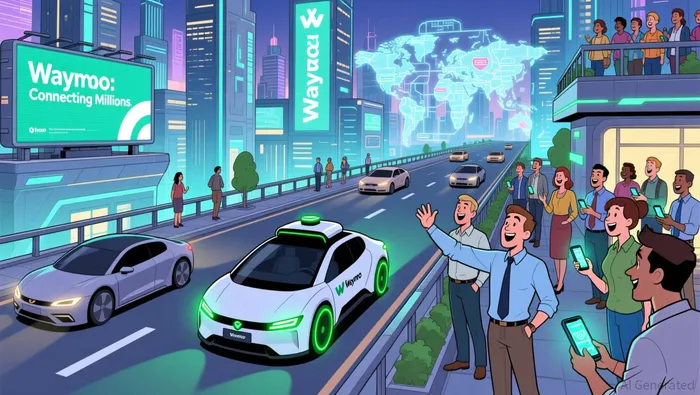 The goal is to create a generalizable, safe driver that can be deployed at scale, moving the entire industry toward the steep part of the adoption S-curve.
Tesla's position is fundamentally different. Its FSD system is still a Level 2 ADAS feature operating in a public beta. Adoption is far from exponential. While TeslaTSLA-- reports a global attach rate of about 12%, the real metric is behavioral. Estimates suggest only a small fraction of owners are regular, high-frequency users who rely on the system daily. This creates a much smaller base of data and a slower feedback loop for AI refinement. Tesla is not building a commercial robotaxi network; it is testing a consumer software product, which limits the scale and safety validation achievable.
The contrast is stark. Waymo is constructing the rails for the autonomous future, with a clear path to a million rides per week and a fleet that could reach 10,000 vehicles. Tesla is still in the beta phase, where the software is the product and the user base is a testing ground. For investors, this is about positioning in the technological paradigm shift. Waymo is building the infrastructure layer for a new mobility paradigm, while Tesla's bet is on a software upgrade to an existing one.
The Infrastructure Layer: Building the Rails for the Next Paradigm
The true test of a company's long-term position in the autonomous race is not its current fleet size, but the fundamental infrastructure it is building to scale. Waymo is constructing a vertical stack, while Tesla is leveraging a horizontal, distributed network.
Waymo is building the rails from the ground up. Its strategy is a closed-loop system: it designs its own generalizable Waymo Driver, integrates it into purpose-built vehicles, and manufactures them in a dedicated U.S. factory. This vertical integration is key. The new autonomous vehicle factory in Metro Phoenix with Magna is not just about volume; it's about control and consistency. It ensures the hardware and software are engineered as a single unit, designed for the specific demands of a commercial robotaxi service. This allows Waymo to scale its fleet systematically, targeting over 2,000 more fully autonomous I-PACE vehicles in the coming year. The goal is a standardized, safe driver that can be deployed across diverse cities like Atlanta and Miami, creating a replicable operational model.
Tesla's infrastructure is the opposite-a massive, distributed hardware fleet. It has over five million cars sold, each acting as a data-gathering node for its FSD software. This provides an unparalleled volume of real-world driving data, which is the fuel for its AI. However, this fleet lacks dedicated, purpose-built autonomous infrastructure. The vehicles are consumer sedans, not designed for continuous, high-utilization service. The data advantage is real, but it comes with friction: the software is a beta feature on a consumer product, and the feedback loop is slower and less consistent than Waymo's controlled environment.
The critical metric here is the quality and consistency of the driving experience. Waymo operates with a clear safety baseline. Its paid trips each week are conducted by a system that is not just software but a fully integrated, commercially deployed service. Its safety data, while not yet public in a comparative report, is built on a foundation of controlled, consistent operation. Tesla's safety reports, by contrast, are still in a comparative phase. The Vehicle Safety Report tracks collisions with FSD engaged, but the system's role in each event is not assessed for fault. This reflects the beta nature of the product: it is being tested in a vast, uncontrolled environment, not yet operating as a standardized service.
In the end, infrastructure defines the S-curve. Waymo is building the dedicated tracks for a new train. Tesla is trying to upgrade the existing rail network with a new engine. For exponential scale, the vertical stack offers a clearer, more controlled path.
Financial and Strategic Implications: Valuation of the S-Curve Position
The technological S-curve defines the financial trajectory. Waymo's position suggests a high-margin, scalable service, while Tesla's path is a smaller, uncertain revenue stream dependent on a future software transition.
Waymo's model is built for exponential economics. Estimates indicate the company makes at least $20 per ride, a figure that implies a premium, subscription-like service. With its current volume of over 1 million rides per week, that translates to more than $20 million a month. At a million rides per week, the annualized revenue target hits about $1 billion-a milestone for the early-stage robotaxi market. This isn't just revenue; it's the foundation of a scalable, high-margin infrastructure business. The planned fleet expansion to 10,000 vehicles is a direct investment to capture that exponential growth, turning each new city into a new profit center. The financial driver here is clear: scale the fleet, scale the revenue, and leverage the flywheel of data and operational experience.
Tesla's financial reality is the opposite. Its FSD revenue is a small, uncertain stream. The company faces a persistent challenge in converting its massive hardware base into a software subscriber base. Despite a global attach rate of about 12%, estimates suggest only a small fraction of owners are regular, high-frequency users. This creates a bottleneck. The revenue from FSD is not yet a major contributor to the bottom line, and the path to monetization remains tied to the slow, uncertain process of converting beta testers into paying subscribers. The financial model is still in the pre-scale phase, where growth is limited by adoption friction, not by production capacity.
The paradigm shift is defined by autonomy, and the two companies are building different kinds of rails. Waymo is constructing the 'first-party' infrastructure for a robotaxi network, with a clear, funded path to scale. Tesla's path to a 'Robotaxi Network' is entirely dependent on regulatory approval and a future, unproven software transition from its current beta system. Elon Musk's history of optimistic timelines, dismissed as "corporate puffery" in a recent court ruling, underscores the uncertainty. While Tesla aims to spread FSD globally in 2026, the financial implication is a long runway of investment before any meaningful revenue from autonomous rides. For investors, this is a choice between a company building the rails for the next mobility paradigm and one still testing the engine on the existing tracks.
Catalysts and Risks: What to Watch in 2026
The S-curve analysis hinges on near-term execution. For Waymo, the catalyst is proving its model works in new markets. The company is launching in five new U.S. cities: Miami, Dallas, Houston, San Antonio, and Orlando, with operations starting today in Miami. This is the first major test of its "generalizable Driver" outside its established hubs. Success here validates the flywheel of continuous improvement, showing the AI can adapt to diverse urban environments with consistent safety. The real validation, however, comes in 2026 with the company's first international operations in the U.K. and Japan. Entering these new regulatory and cultural landscapes will be the ultimate stress test for its replicable playbook. The primary risk here is regulatory and public acceptance in these unproven markets.
For Tesla, the catalyst is standardization. The company is pushing to standardize FSD globally, with a potential launch in UNECE countries as early as the first quarter of 2026. This would be a massive expansion of its beta testing ground. Simultaneously, Tesla aims to scale its robotaxi pilot without safety monitors, a key step toward true autonomy. The financial model depends on this transition from beta to a global software product. The primary risk is the software's ability to achieve true autonomy. Despite Musk's optimistic history, recent court rulings have dismissed his timelines as "corporate puffery," highlighting the regulatory and technical hurdles ahead. The company must demonstrate its system can operate safely and reliably at scale, not just in a controlled pilot.
The bottom line is that 2026 will separate the infrastructure builders from the beta testers. Waymo's path is about controlled, consistent expansion into new cities and countries. Tesla's path is about global software rollout and scaling its pilot. The first company to successfully navigate its catalysts while managing its core risks will be best positioned to capture the exponential growth of the autonomous paradigm.





Comentarios
Aún no hay comentarios