
Is D-Wave Quantum (QBTS) Poised to Capitalize on the Quantum Computing Mainstream Breakthrough?
The quantum computing industry is at a pivotal inflection point in 2025, with commercialization efforts accelerating across hardware, software, and hybrid solutions. Among the key players, D-Wave QuantumQBTS-- (QBTS) has emerged as a standout contender, leveraging its proprietary quantum annealing technology and strategic partnerships to position itself at the forefront of the sector. This analysis evaluates whether D-WaveQBTS-- is uniquely equipped to capitalize on the mainstream adoption of quantum computing, focusing on its strategic momentum, financial health, and competitive differentiation.
Strategic Momentum: Partnerships and Real-World Deployments
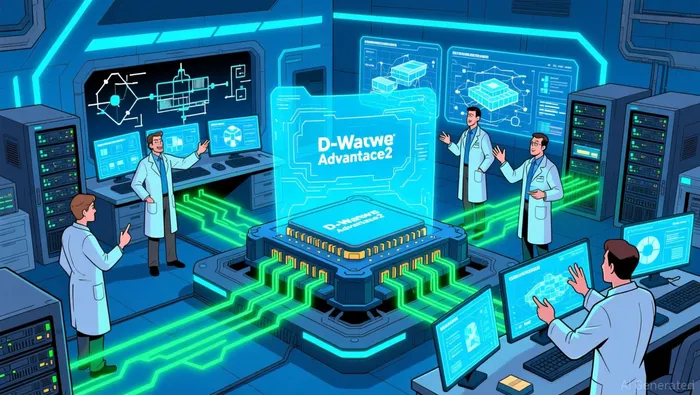
D-Wave's 2025 has been defined by a series of high-impact partnerships and deployments that underscore its leadership in quantum commercialization. In October, Swiss Quantum Technology SA (SQT) signed a €10M agreement to deploy D-Wave's Advantage2 system in Europe, a 4,400+ qubit quantum computer optimized for energy efficiency and optimization tasks. This system will support Italy's Q-Alliance initiative, a critical step in advancing quantum research and digital transformation in the region. Similarly, in November, D-Wave and Davidson Technologies announced the operational deployment of the Advantage2 system at Davidson's Huntsville, Alabama headquarters, where it will address mission-critical U.S. government applications in national defense and logistics optimization. These deployments highlight D-Wave's ability to translate quantum capabilities into tangible, industry-specific solutions.
The company's visibility has also surged through high-profile events. At SC25, D-Wave showcased its hybrid quantum-HPC integration, demonstrating how quantum-classical collaboration accelerates industrial problem-solving. Looking ahead, D-Wave plans to highlight its quantum-AI advancements at CES 2026, a platform that could significantly broaden its appeal to mainstream industries like manufacturing and telecommunications. Such strategic moves position D-Wave as a bridge between cutting-edge research and practical, scalable applications.
Financial Health: Growth Amid Challenges
D-Wave's Q3 2025 financial results reflect both progress and caution. Revenue doubled year-over-year to $3.7 million, with cash reserves reaching a record $836.2 million-a 2,704% increase from Q3 2024. However, the company reported a net loss of $140 million, largely driven by a non-cash warrant liability charge of $121.9 million. Excluding this charge, adjusted net loss improved year-over-year, suggesting underlying operational progress. While the financials highlight the challenges of scaling a nascent technology, D-Wave's robust cash position provides flexibility to invest in R&D and expand its customer base.
The broader quantum computing market is experiencing rapid growth, with a projected compound annual growth rate of 32.7% through 2029, driven by venture capital inflows and institutional investments like JPMorgan Chase's $10 billion quantum commitment. D-Wave's focus on quantum annealing-a technology already deployed in real-world scenarios-positions it to benefit from this growth, particularly in optimization-heavy sectors.
Competitive Positioning: Differentiation in a Crowded Field
D-Wave's competitive edge lies in its specialized approach to quantum annealing, which excels in optimization and sampling problems. This contrasts with gate-based models pursued by IBM and Google, which prioritize universal quantum computing. IBM's Nighthawk processor and roadmap for fault-tolerant systems by 2029 highlight its long-term vision, while Google's Willow chip achieved a 13,000× speed advantage in molecular simulations. However, D-Wave's Advantage2 systems are already operational in production environments, offering a tangible value proposition for clients seeking immediate ROI.
Quantum Computing Inc. (QUBT), another peer, faces significant financial headwinds despite technical momentum. QUBT's Q3 2025 revenue of $384,000 was dwarfed by expenses exceeding $10 million, leading to an ebitmargin of -12,124.7%. In contrast, D-Wave's revenue growth and strategic partnerships suggest a more sustainable path to commercialization. Analysts project D-Wave to achieve a 73% compound annual revenue growth through 2030, underscoring confidence in its ability to scale.
Risks and Considerations
Despite its strengths, D-Wave faces challenges. The non-cash warrant liability charge in Q3 2025 raises questions about accounting practices and future profitability. Additionally, gate-based competitors like IBM and Google may eventually dominate the market with more versatile systems. However, D-Wave's early mover advantage in quantum annealing and its focus on hybrid solutions mitigate these risks. The company's energy-efficient systems and sub-second response times also align with industry demands for practical, scalable quantum applications according to Nasdaq analysis.
Conclusion: A Strong Case for Mainstream Breakthrough
D-Wave Quantum is well-positioned to capitalize on the quantum computing mainstream breakthrough, driven by strategic partnerships, real-world deployments, and a robust cash position. While financial challenges and competition persist, its differentiated approach to quantum annealing and hybrid technology offers a clear path to commercial viability. As the industry matures, D-Wave's ability to deliver immediate value in optimization and AI will likely solidify its role as a key player in the quantum era.







Comentarios
Aún no hay comentarios