
Can D-Wave (QBTS) Prove Real-World Quantum Adoption Is Reaching an Inflection Point?
Financials: A Tale of Two Metrics
D-Wave's Q3 2025 results highlight a 100% year-over-year revenue surge to $3.7 million, , according to a D-Wave report. These figures underscore robust demand for its quantum annealing systems, particularly in industrial and government sectors. A €10 million booking for 50% capacity of its Advantage2™ quantum computer in Italy, part of the Q-Alliance initiative, further signals institutional confidence, as reported in the same D-Wave report.
Yet, the company's net loss of $140 million-largely due to non-cash warrant remeasurement charges-casts a shadow over its profitability, according to the D-Wave report. This discrepancy between revenue growth and profitability is not uncommon in nascent tech sectors, but it raises questions about the sustainability of D-Wave's business model.
Real-World Deployments: From Theory to Practice
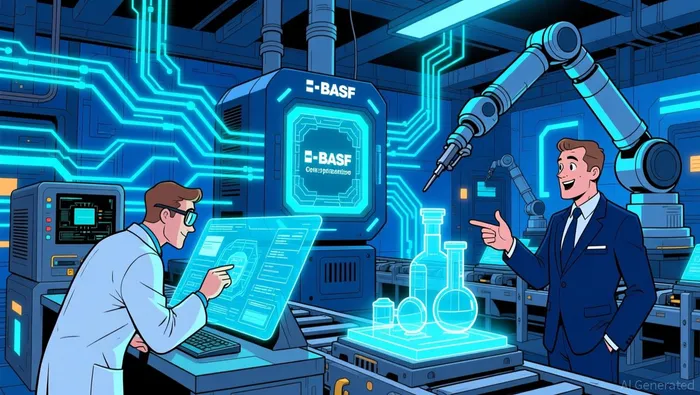
D-Wave's most compelling evidence of operational adoption lies in its industrial partnerships. The company's collaboration with BASF achieved a breakthrough in manufacturing efficiency, , according to a CityBuzz report. This proof-of-concept, as noted by BASF's quantum lead , demonstrates hybrid-quantum computing's ability to outperform classical systems in complex optimization tasks, as reported in the CityBuzz report.
Similarly, the deployment of an Advantage2™ system at Davidson Technologies in Huntsville, Alabama, marks a step toward integrating quantum computing into defense applications, according to a D-Wave Q3 presentation. These projects suggest that D-Wave's technology is moving beyond theoretical research and into mission-critical operations.
However, the distinction between bookings and active deployments remains critical. , only a fraction of these represent operational systems. The €10 million Italian contract, for instance, is slated for 2026 deployment, as noted in the D-Wave report. This lag between commitment and implementation highlights the sector's reliance on future expectations rather than present-day utility.
Industry Context: Hype vs. Reality
, driven by cloud-based QCaaS and government investments, according to a Quantum Market report. Competitors like IBM, AWS, and Rigetti are expanding access to quantum systems via cloud platforms, while D-WaveQBTS-- focuses on hardware and hybrid solutions.
Yet, D-Wave's market share remains opaque. While it boasts 153 commercial customers in 2024 and partnerships with entities like Volkswagen and Lockheed Martin, its revenue pales against the scale of tech giants, as noted in a Grok analysis. The company's success in niche optimization problems does not yet translate to widespread adoption.
Strategic Risks and Opportunities
D-Wave's Q3 results reflect both progress and vulnerability. The BASF project and Italian contract validate its technology's potential, but the company's reliance on large, one-time revenue boosts (e.g., the Jülich Supercomputing Centre deal), as reported in the CityBuzz report, exposes it to volatility. Additionally, high error rates and infrastructure costs remain barriers to scaling, as noted in the Quantum Market report.
On the other hand, D-Wave's focus on hybrid quantum-classical systems positions it to capitalize on incremental adoption. As noted by CEO , hybrid models bridge the gap between current capabilities and future quantum supremacy, according to the CityBuzz report. This approach may appeal to industries seeking immediate ROI without waiting for fully error-corrected systems.
Conclusion: Inflection Point or Hype Cycle?
D-Wave's Q3 2025 results suggest the company is navigating a pivotal phase in quantum adoption. The BASF collaboration and Advantage2™ deployments demonstrate tangible value, while the surge in bookings and cash reserves indicate growing market confidence. However, the gap between speculative commitments and operational reality remains wide.
For investors, . Until then, D-Wave's progress may reflect both a genuine inflection and the enduring allure of quantum hype.





Comentarios
Aún no hay comentarios