
WaterBridge Infrastructure's NYSE Debut: A Strategic Bet on the Booming U.S. Water Infrastructure Sector
The U.S. water infrastructure sector is undergoing a transformation driven by aging systems, climate pressures, and regulatory shifts. According to a report by PSMarketresearch, the market size for U.S. water infrastructure and management was valued at USD 120.2 billion in 2024 and is projected to grow at a compound annual growth rate (CAGR) of 5.3%, reaching USD 179.6 billion by 2032 [1]. This expansion is fueled by the urgent need to replace 45-year-old infrastructure, mitigate contamination risks, and adapt to climate-driven disruptions like droughts and floods [1]. Against this backdrop, WaterBridgeWBI-- Infrastructure's NYSE debut on September 17, 2025, marks a pivotal moment for a company strategically positioned to capitalize on these trends.
A Business Model Built for Stability and Growth
WaterBridge Infrastructure, a midstream water management firm, has carved out a niche in the Delaware Basin, the most active oil and gas region in North America. The company's operations include gathering, transporting, recycling, and disposing of produced water, supported by a “take-or-pay” contract model that ensures steady revenue regardless of drilling activity fluctuations [3]. This structure insulates the firm from the volatility of the energy sector, a critical advantage as E&P companies face cyclical production challenges.
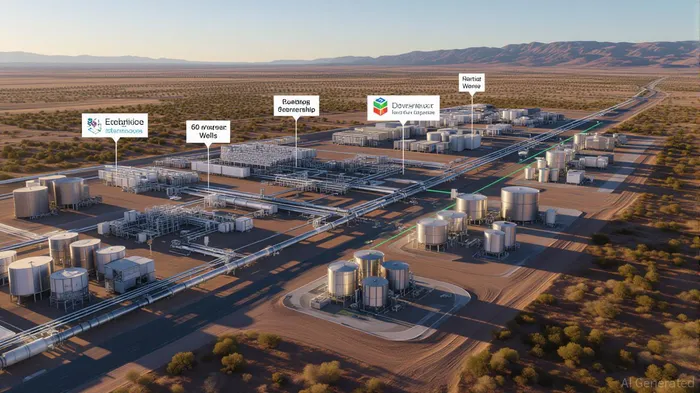
The company's infrastructure—spanning 1,200 miles of pipeline, 60 disposal wells, and advanced recycling facilities—positions it as a one-stop solution for water management. Its recent $634 million IPO, upsized to 31.7 million Class A shares, underscores investor confidence in its scalability [3]. With over $400 million in estimated 2024 revenue, WaterBridge is leveraging its capital to expand its pipeline network, drill new disposal wells, and acquire complementary assets [1].
Strategic Alignment with ESG and Regulatory Trends
Environmental, social, and governance (ESG) considerations are reshaping the energy sector, and WaterBridge is at the forefront of this shift. The company's focus on water recycling aligns with regulatory pressures to reduce freshwater consumption and mitigate seismic risks associated with saltwater disposal. For instance, Texas has tightened seismic review protocols for disposal wells, pushing operators toward recycling solutions [4]. WaterBridge's recycling capabilities not only address these concerns but also reduce clients' environmental footprints, enhancing its value proposition for E&P companies like ChevronCVX--, Devon,DVN-- and EOG ResourcesEOG-- [4].
Moreover, the American Society of Civil Engineers' (ASCE) 2025 Infrastructure Report Card, which gave drinking water systems a C- and wastewater systems a D+, highlights the sector's dire need for innovation [3]. WaterBridge's investments in automation and digital monitoring systems—aimed at improving operational efficiency and system reliability—position it to meet these demands [1]. Such technologies are critical in an industry where infrastructure failures can lead to costly environmental and reputational risks.
Financial and Regulatory Tailwinds
The Bipartisan Infrastructure Law's allocation of over $50 billion for water projects and the American Water WorksAWK-- Association's (AWWA) emphasis on doubling investments in sustainable technologies further bolster WaterBridge's growth trajectory [1]. The company's Speedway project, a flagship initiative involving dual 30-inch pipelines to transport water from seismically sensitive zones, exemplifies its ability to align with both regulatory and market demands [4].
Financially, WaterBridge's IPO proceeds will be used to reduce debt and fund expansion, a strategy that mirrors broader industry trends. As stated by the AWWA, utilities are increasingly prioritizing long-term sustainability, with ESG-driven investments expected to surge in the coming years [1]. WaterBridge's debt reduction and strategic acquisitions will likely enhance its credit profile, enabling it to secure favorable financing for future projects.
Conclusion: A Compelling Investment in a Resilient Sector
WaterBridge Infrastructure's NYSE debut reflects its strategic alignment with the U.S. water infrastructure sector's growth drivers. By combining a stable revenue model, ESG-focused operations, and regulatory foresight, the company is well-positioned to benefit from the $625 billion in required infrastructure upgrades over the next two decades [2]. As climate pressures and aging systems intensify, WaterBridge's role as a critical partner for E&P companies and a leader in sustainable water management will likely drive long-term value creation.





Comentarios
Aún no hay comentarios