
Watches of Switzerland Group PLC (WOSGF): Assessing Sustainable Growth Amid Strong H1 2026 Earnings
The Watches of Switzerland Group PLC (WOSGF) has delivered a robust first-half performance in fiscal 2026, with revenue rising 10% to £845 million in constant currency terms. This growth, driven by a 20% surge in U.S. sales and resilient UK operations, underscores the company's ability to navigate macroeconomic headwinds. However, the critical question for investors remains: Can this momentum translate into sustainable long-term growth, particularly in light of evolving trade dynamics and capital efficiency metrics?
Financial Performance and Margin Pressures
WOSGF's H1 2026 results reflect a strategic focus on high-margin markets and product lines. U.S. revenue, now accounting for nearly 60% of the group's Adjusted EBIT, surged to £409 million, fueled by broad-based demand across brands and categories. The UK market, meanwhile, demonstrated resilience, with revenue growing 2% to £436 million despite a challenging retail environment according to company data.
Profitability, however, faced headwinds. Adjusted EBIT fell to £66–68 million, with margins contracting by approximately 50 basis points year-on-year, primarily due to the 39% tariff on Swiss imports imposed in August 2025. This tariff, a significant drag on margins, highlights the vulnerability of WOSGF's supply chain to geopolitical shifts. Fortunately, recent U.S.-Switzerland negotiations reduced the tariff to 15%, a development CEO Brian Duffy has described as a "positive shift for the sector". While this adjustment should alleviate margin pressures in the near term, investors must monitor whether such trade agreements remain stable in an era of rising protectionism.
Capital Efficiency and Strategic Investments
WOSGF's capital efficiency metrics suggest a disciplined approach to resource allocation. Return on Capital Employed (ROCE) improved to 17.3% in H1 2026, reflecting efficient deployment of capital and strong profitability. Free cash flow also surged by 71% year-on-year to £48 million, a testament to the company's ability to convert revenue into liquidity.
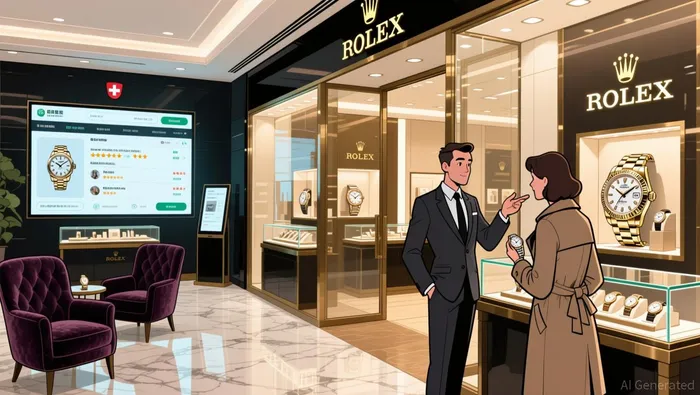
These metrics are underpinned by strategic investments in both physical and digital infrastructure. The group has completed key showroom developments, including the relocation of flagship boutiques and the expansion of Mappin & Webb Cambridge. In the U.S., three new Roberto Coin mono-brand boutiques are set to open in high-profile locations such as New York and Las Vegas, enhancing the brand's luxury jewelry footprint. Such initiatives not only diversify revenue streams but also reinforce WOSGF's position as a curator of premium brands.
Digital transformation has further bolstered capital efficiency. Online revenue grew 16% year-on-year, driven by localized U.S. e-commerce teams and website improvements. This shift aligns with broader industry trends, as luxury consumers increasingly demand seamless omnichannel experiences.
Long-Term Strategic Initiatives and Growth Drivers
WOSGF's long-term strategy hinges on three pillars: U.S. expansion, brand diversification, and the Certified Pre-Owned (CPO) business. The U.S. remains a focal point, with the group leveraging its exclusive Rolex distribution rights and expanding CPO availability across all U.S. agencies. The CPO segment, in particular, has proven to be a high-growth lever, offering price-sensitive consumers access to premium brands without cannibalizing new sales.
Brand acquisitions, such as Roberto Coin and Hodinkee, have also added depth to WOSGF's portfolio. Roberto Coin's wholesale sales rose 16% in constant currency, demonstrating the success of its integration. Hodinkee, a digital platform with a loyal following, complements WOSGF's physical retail model by driving engagement and brand loyalty.
Risks and Mitigants
Despite these strengths, risks persist. The U.S. tariff reduction, while welcome, does not eliminate the threat of future trade disruptions. Additionally, economic uncertainties-such as inflation and interest rate volatility-could dampen luxury spending. However, WOSGF's geographic diversification (with the UK and U.S. markets performing well) and its focus on high-loyalty brands like Rolex provide a buffer against such shocks.
Moreover, the company's debt-to-equity ratio of 1.20 suggests a moderate leverage profile, allowing room for strategic acquisitions or capital returns without overextending balance sheets.
Conclusion: A Model of Sustainable Growth?
WOSGF's H1 2026 results and capital efficiency metrics paint a compelling case for long-term growth. The company's ability to adapt to trade policy shifts, invest in digital infrastructure, and expand its brand portfolio positions it well to capitalize on the luxury market's resilience. While margin pressures and macroeconomic risks remain, WOSGF's strategic agility and strong cash flow generation suggest that its growth trajectory is not merely cyclical but structurally sound. For investors seeking exposure to a luxury retailer with a clear path to sustainable value creation, WOSGF offers an intriguing proposition.







Comentarios
Aún no hay comentarios