
Washington Sets April 9 as Target Date to End the War, Markets React to Middle East Developments
U.S. President Donald Trump announced that Washington has set April 9 as the target date to end the war in the Middle East. The goal comes amid ongoing tensions over the Strait of Hormuz, a vital global energy artery, where disruptions have caused significant supply shocks. Trump cited productive diplomatic talks with Iran as a key reason for the delay in military action against Iranian energy infrastructure.
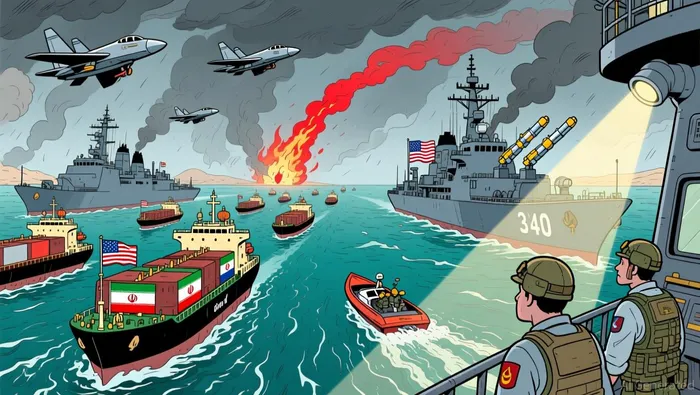
The Israeli military confirmed it conducted strikes in Tehran, aligning with U.S. efforts to de-escalate the conflict. These developments follow Trump’s postponement of strikes for five days, which had previously driven oil prices higher and U.S. Treasury yields above 4.40%. Trump's announcement led to a decline in oil prices and a modest rally in U.S. stocks.
Iran's foreign ministry denied participating in ceasefire talks with the U.S., dismissing Trump's comments as a tactic to lower energy prices and delay military plans. Meanwhile, the Israeli military confirmed ongoing operations in the capital, emphasizing the high-stakes nature of regional tensions.
Why Did This Happen?
The U.S. has faced mounting pressure to find a diplomatic solution after weeks of heightened hostilities between U.S. and Israeli forces and Iran. Trump's delay in military action reflects ongoing negotiations and a desire to avoid further destabilizing global energy markets. This comes as the conflict enters a fourth week with no clear resolution in sight.
Goldman Sachs analysts have raised their 2026 oil price forecasts due to prolonged disruption of flows through the Strait of Hormuz, the largest-ever supply shock for the global crude market. Brent crude is now expected to average $85 a barrel in 2026, up from a previous forecast of $77.
How Did Markets React?
The postponement of military action by Trump and the announcement of productive talks with Iran led to a drop in the 10-year U.S. Treasury yield by 0.079 basis points to 4.331%. This decline came after yields had surged above 4.40% following Trump's earlier threats to strike Iranian energy infrastructure.
Oil prices also dropped, with Brent crude falling below $100 a barrel. However, Goldman Sachs expects energy markets to remain volatile for months as hostilities continue and supply disruptions persist. The bank estimated that over 800 million barrels of crude production could be lost due to the current situation.
Meanwhile, investors remain cautious about the geopolitical landscape. The Israeli military's reported strikes in Tehran, combined with Iran's denial of ceasefire talks, highlight the uncertainty and volatility that investors must navigate.
What Are Analysts Watching Next?
Analysts are closely monitoring the potential impact of ongoing hostilities on global economic activity. High oil prices are seen as a tax on the global economy rather than a pure inflationary driver, as energy demand remains inelastic. The resulting reduction in disposable income may affect consumer spending and economic growth according to Seeking Alpha.
Cybersecurity firms are also drawing attention as the increased use of AI raises the stakes for endpoint, identity, and cloud security. Companies like CrowdStrike, Palo Alto Networks, and SentinelOne are gaining traction as enterprises seek to secure AI-driven operations.
SentinelOne, in particular, has introduced on-premises AI security solutions for highly regulated and air-gapped environments. These solutions aim to provide robust defense without relying on cloud infrastructure, addressing growing concerns about data sovereignty and cybersecurity in geopolitical hotspots.
Astrix Security has also enhanced its AI agent discovery and policy enforcement tools, allowing enterprises to monitor and control AI agent behavior in real time. These innovations reflect the growing need for AI governance as enterprises adopt more autonomous systems.
As the situation in the Middle East remains fluid, investors will continue to watch diplomatic developments, energy market dynamics, and the evolution of AI-driven cybersecurity solutions for further insights into the geopolitical and economic landscape.





Comentarios
Aún no hay comentarios