
Warren Buffett's Timeless Playbook: Lessons from the WSJ's Early Insights
The Wall Street Journal’s early coverage of Warren Buffett, dating back to the 1960s and 1970s, offers a rare glimpse into the formative years of one of the world’s most celebrated investors. Through interviews and analyses, the WSJ chronicled Buffett’s evolution from a young money manager to the architect of Berkshire Hathaway’s empire. These articles reveal a philosophy rooted in patience, discipline, and a deep understanding of business fundamentals—principles that remain as relevant today as they were decades ago.
The Long Game: Prioritizing Time Over Timing
Buffett’s disdain for short-term performance pressures was clear from the start. In a 1977 WSJ interview, he described closing his investment partnership as a “tremendous relief,” freeing him from the obligation to “lead the league in hitting every year.” This shift underscored his belief that compounding wealth over decades requires avoiding the noise of quarterly results.
Between 1965 and 2023, Berkshire’s stock rose from $18 to over $460,000—a 200,000% increase—compared to the S&P 500’s 14,000% gain. This stark contrast illustrates the power of Buffett’s long-term focus.
Hands-Off Management: Trusting the Operators
Buffett’s hands-off approach to acquisitions was another pillar of his strategy. He sought companies run by founders who “forget they sold the business to me,” allowing them to act as “proprietors.” This philosophy ensured operational autonomy, a key factor in Berkshire’s success.
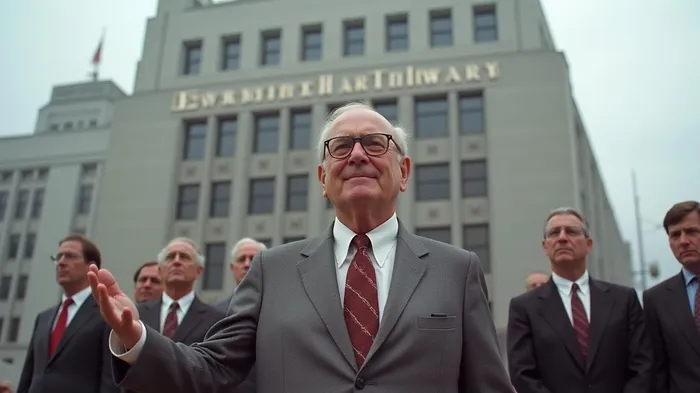
Early investments like See’s Candies (purchased in 1972) exemplified this. Buffett let founder Katharine GrahamGHM-- run the business, trusting her instincts to capitalize on chocolate demand—a decision that turned a $25 million bet into a multibillion-dollar asset.
Durable Moats: The Secret to Outlasting Competition
The WSJ highlighted Buffett’s focus on businesses with “unique products, low capital needs, and pricing power”—a formula he refined through failures. His 1970s loss in Vornado, a discount retailer, taught him to avoid industries plagued by cutthroat competition.
While Vornado’s stock cratered and traditional retailers like Macy’s stagnated, Berkshire’s portfolio of moat-heavy companies (e.g., Geico, Coca-Cola) thrived. This underscores Buffett’s lesson: Avoid value traps in low-margin, crowded industries.
Inflation? Just a Distraction
Despite the 1970s’ inflationary pressures, Buffett’s focus was always on business quality, not macro trends. He dismissed Gottesman’s inflation-hedging narrative, insisting his picks were based on enduring advantages—like monopolistic toll bridges or media franchises.
The Cost of Mistakes: Retail’s Eternal Struggle
Buffett’s Vornado loss ($3 million in losses by 1974) became a cautionary tale. He later noted that discount retailers faced an “over-stored” market and relentless competition—a dynamic now amplified by Amazon.
Amazon’s rise to a $2 trillion valuation, while Macy’s market cap fell from $8 billion in 2000 to $2 billion today, validates Buffett’s skepticism toward retail’s structural challenges.
Conclusion: Time-Tested Principles for Modern Investors
The WSJ’s early Buffett coverage reveals a timeless playbook:
1. Think decades, not quarters. Berkshire’s 200,000% return since 1965 is proof that compounding beats short-term trading.
2. Trust proven leaders. Hands-off management allowed Berkshire subsidiaries to grow organically, avoiding bureaucratic inefficiencies.
3. Seek moats, not mere cheapness. Companies with pricing power (e.g., Microsoft, Apple) have outperformed low-margin retailers by a landslide.
4. Avoid zero-sum games. Retail’s ongoing struggles and Buffett’s early losses there warn against industries where competitors erode margins.
Today, investors can apply these lessons to sectors like tech (e.g., Microsoft’s cloud dominance) or consumer staples (e.g., Coca-Cola’s global reach)—businesses with Buffett-like moats. As the WSJ’s archives remind us, success isn’t about timing the market but understanding the businesses beneath it.
In Buffett’s own words: “It’s far better to be approximately right than precisely wrong.” A mantra as true now as it was in the 1970s.







Comentarios
Aún no hay comentarios