
War and Reconstruction: How Military Tensions Are Fueling Defense and Infrastructure Investment Opportunities
The Ukraine-Russia conflict has become a catalyst for seismic shifts in global defense spending and infrastructure needs, creating fertile ground for investors to capitalize on two key themes: defense modernization and post-conflict reconstruction. With military budgets reaching ColdCOLD-- War-era levels and geopolitical risks intensifying, the stage is set for strategic investments in aerospace/defense firms and insurers with exposure to reconstruction plays. While volatility persists, the long-term demand for resilience-driven equities is undeniable.
Defense Spending Surge: A New Era of Military Modernization
Global military expenditure hit a record $2.718 trillion in 2024, a 9.4% annual surge—the fastest growth since the Cold War's end. Europe led the charge, with spending jumping 17% to $693 billion, driven by NATO members prioritizing readiness amid Russia's aggression. Germany's defense budget soared by 28% to $88.5 billion, while Poland's rose 31% to $38 billion. Even Ukraine, despite a GDP burden of 34% allocated to defense, is fueling demand for tactical systems like drones and cybersecurity tools.
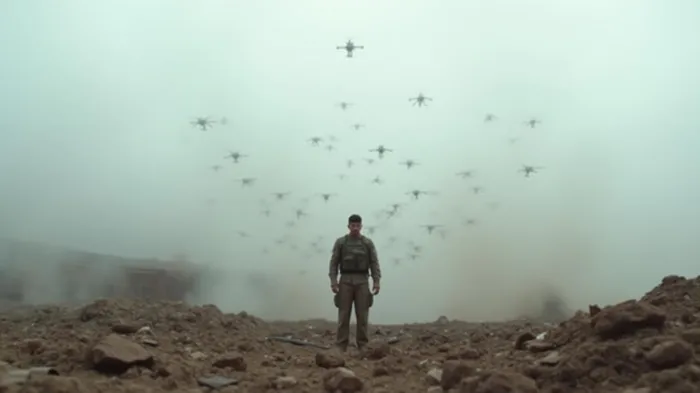
Drones: The Game-Changer of Modern Warfare
The conflict has proven that drones are the new artillery. Ukraine's FPV drones, produced at a rate of 200,000 monthly, have disrupted Russian supply lines, prompting NATO to adopt similar “drone wall” strategies. Key beneficiaries include:
- Lockheed Martin (LMT): Leading in hypersonic systems and drone swarms, its stock rose 28% since 2022.
- Northrop Grumman (NOC): Secured $12.6 billion in 2024 contracts for autonomous drones and cyber defense.
- Milrem Robotics (EDGE Group) and STM (Turkey): Suppliers of low-cost, high-impact systems.
Cybersecurity: The Silent Frontline
Hybrid warfare demands robust digital defenses. The EU's €2 billion AI initiative and quantum computing investments aim to secure military systems, while Palo Alto Networks (PANW) and CrowdStrike (CRWD) are critical to NATO's cyber resilience. PANW's revenue surged 35% in 2024 as demand for enterprise solutions boomed.
Infrastructure Reconstruction: Betting on Resilience
Post-conflict reconstruction in Ukraine will require trillions in investment, creating opportunities for insurers and firms specializing in critical infrastructure.
The Rebuilding Play
- Ukraine's GDP, already strained at 34% allocated to defense, will necessitate massive reconstruction funding.
- Insurers with geopolitical risk hedging: Firms like Allianz (ALV) and Swiss Re (SWX:SREN) are well-positioned to underwrite reconstruction bonds or insure infrastructure projects.
- Construction and engineering giants: Bechtel and ACS Group could benefit from rebuilding energy grids, roads, and urban centers.
The Risks and the Reward
Short-term volatility is inevitable. Energy/commodity markets face turbulence due to Russia's sanctions evasion, while defense stocks may see dips during ceasefire negotiations. However, the structural demand for modernization and reconstruction is clear:
- Drones and cybersecurity: Multi-decade trends driven by Ukraine's lessons and rising global tensions.
- Geopolitical hedging: Insurers and construction firms with exposure to resilient infrastructure will thrive as conflicts disrupt traditional markets.
Invest Now: Prioritize Resilience and Innovation
Investors should allocate to firms leading in asymmetric warfare technologies and infrastructure resilience:
1. Defense Innovators: LMT, NOC, PANW, and CRWD for drone swarms and cyber defense.
2. Reconstruction Plays: ALV, SWX:SREN, and engineering firms for post-conflict rebuilding.
3. Hedge with commodities: Nickel (for drone batteries) and gold (GLD) to mitigate supply chain risks.
The Ukraine conflict has rewritten the rules of global security and infrastructure. Those who invest in resilience-driven equities today will capture the rewards of a world reshaped by war and reconstruction.
Act now—before the next escalation drives prices higher.





Comentarios
Aún no hay comentarios