
Walmart's Tech Turnaround: Can Automation Secure Its Retail Crown?
Walmart's recent announcement of cutting 1,500 corporate jobs while pouring $500 million into AI and robotics marks a pivotal shift in its century-old strategy. The move aims to future-proof the retail giant against rising costs, supply chain volatility, and tech-driven competitors like AmazonAMZN--. But will this bold pivot to automation deliver the cost efficiencies and competitive edge WalmartWMT-- needs to dominate in an evolving retail landscape? Let's dissect the strategy, risks, and implications for investors.
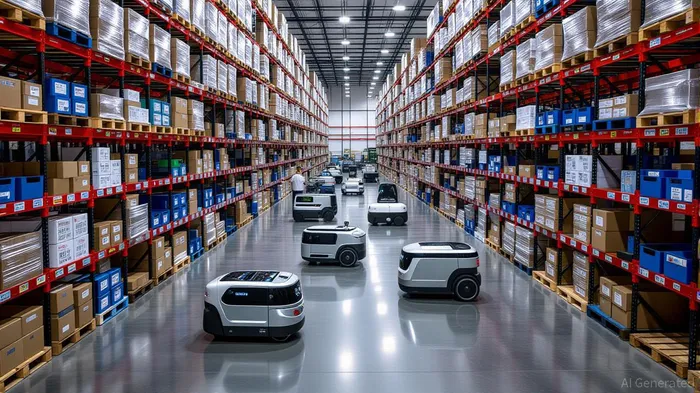
The Automation Play: Cost Cuts or Strategic Bet?
Walmart's restructuring isn't just about layoffs—it's a calculated reallocation of resources toward technology. By eliminating 1,500 largely white-collar roles in its Arkansas headquarters and tech hubs, Walmart aims to redirect capital toward automation tools like robotic inventory systems, predictive analytics platforms, and AI-powered customer service. The $500 million investment is paired with a pledge to retrain 50,000 cashiers into tech-centric roles, such as robot supervisors and data analysts, ensuring a workforce capable of managing the new systems.
The immediate cost savings are measurable. By year-end 2025, automated fulfillment centers are projected to slash operating costs by 30% compared to manual operations. Over 65% of Walmart's stores will receive goods from high-tech distribution centers, where machine learning optimizes delivery routes and stock levels. These efficiencies could help Walmart maintain its razor-thin margins in a sector where Amazon's dominance has pushed pricing pressures to unprecedented levels.
Competitive Positioning: Staying Ahead of the Curve
Walmart's automation push isn't just about cost—it's a bid to redefine retail's omnichannel future. By integrating AI into inventory management and customer experience, Walmart aims to match Amazon's speed while leveraging its unparalleled physical store network. For instance:
- AI Chatbots and Checkout Systems: Reducing reliance on human customer service and speeding up transactions.
- Agentic AI Simulations: Testing store layouts and demand scenarios in virtual environments to minimize real-world missteps.
- Symbotic Robotics: Deployed in 400 stores, these systems automate inventory tracking, cutting waste and improving restocking accuracy.
The company's scale is its secret weapon. Walmart can afford to invest in cutting-edge robotics and AI that smaller rivals can't, potentially widening the competitive gap. This is critical as e-commerce giants like Amazon and DoorDashDASH-- encroach on its core grocery and home goods markets.
Risks and Roadblocks
While the strategy is visionary, execution is fraught with challenges.
Workforce Transition: Retraining 50,000 employees is no small task. If programs fail to equip workers with the right skills, Walmart could face labor shortages or morale issues. Already, laid-off employees have criticized the abruptness of cuts, and Bentonville's local economy has felt the sting.
Tech Overreach: Overloading stores with automation could backfire. For example, if robots malfunction or AI recommendations misfire, customer trust in Walmart's reliability could erode.
Competitor Response: Amazon and Target are doubling down on their own AI investments. Walmart's success hinges on moving faster than rivals without compromising its low-price ethos.
Consumer Sentiment: As automation reduces human interaction, Walmart risks alienating customers who value personalized service—a key advantage of smaller retailers.
Investment Takeaways: A Long-Term Play with Near-Term Hurdles
For investors, Walmart's strategy is a high-risk, high-reward bet. The long-term vision—lower costs, higher efficiency, and tech-driven scale—aligns with retail's future. If executed well, Walmart could reclaim its pricing power and outpace rivals in omnichannel retailing.
However, near-term headwinds loom:
- Stock Volatility: Layoffs and automation rollouts could spook investors in the short term, as seen in Walmart's stock dip following the May announcement.
- Profitability Lag: Cost savings from automation may not materialize quickly enough to offset restructuring costs.
Recommendation: Hold Walmart stock with a long-term horizon. While risks exist, the company's dominance in supply chain infrastructure and its willingness to invest in automation position it well for a post-pandemic retail era. Investors should monitor key metrics:
- Retention rates of retrained employees.
- Cost-per-unit declines in fulfillment centers.
- E-commerce growth (currently stagnant at 2.5%).
Final Word
Walmart's automation gamble isn't just about survival—it's a bid to redefine retail's DNA. If it succeeds, the Bentonville giant could regain its crown as the industry's cost leader. If it falters, investors may see a repeat of Target's struggles in the mid-2010s. For now, Walmart remains a buy for those willing to bet on its scale and resolve.





Comentarios
Aún no hay comentarios