
Walmart's Tariff Tragedy: How Rising Costs Are Ushering in a Retail Profit Crisis
The U.S.-China tariff war has reached a breaking point, and WalmartWMT-- (WMT) is at the epicenter of a storm that threatens to upend discretionary retail profitability. With 30% tariffs now permanently embedded in the cost structure of Chinese imports—impacting $130 billion in electronics and toys—Walmart’s inability to absorb these costs has forced aggressive price hikes. The ripple effects are clear: rival retailers like Best Buy (BBY) and Mattel (MAT) face a brutal choice—raise prices and lose customers or maintain prices and watch margins collapse.
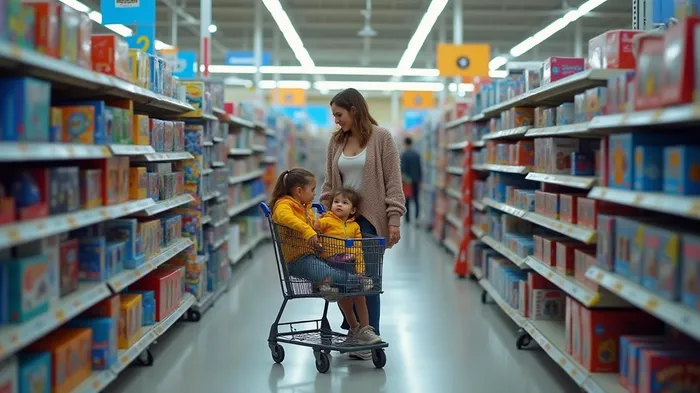
The Tariff Tsunami: Electronics and Toys Bear the Brunt
Walmart sources 80% of its toys from China, where 30% tariffs (20% base + 10% temporary) have erased any pricing flexibility. Toy prices have surged 14–16%, pricing low-income households out of the market. Consider Mattel, whose Barbie dolls now cost 16% more post-tariff—a direct hit to discretionary spending. Meanwhile, electronics like TVs and gaming consoles face similar margin erosion, but Walmart has carved out exemptions for critical items like smartphones (via carve-outs in the April trade deal).
The Domino Effect on Competitors
Best Buy, heavily reliant on electronics, cannot compete with Walmart’s scale in absorbing tariffs. Its gross margins have shrunk to 21%—down from 24% in 2023—as it struggles to offset 15% tariff-driven cost increases. Mattel, meanwhile, faces a double whammy: tariffs on Chinese imports and retaliatory duties on its U.S. exports to China, squeezing margins to just 8%—a historic low.
Consumer Behavior: Discretionary Spending in Freefall
The data is stark. Post-tariff, households are cutting back on non-essentials:
- Toy purchases dropped 9% in Q1 2025, with low-income families reducing spending by 18%.
- Electronics sales fell 7%, as consumers delay upgrades to avoid inflated prices.
Investment Imperatives: Pivot or Perish
Investors must urgently reassess exposure to retailers lacking tariff mitigation strategies:
1. Avoid pure-play discretionary retailers: Companies like BBY and MAT are trapped in a margin-squeeze death spiral.
2. Favor tariff-insulated sectors: Auto retailers (e.g., AutoZone) and healthcare providers (e.g., CVS) face minimal tariff exposure.
3. Back firms with pricing power: Amazon (AMZN) and Target (TGT) are diversifying into private-label goods and reshoring supply chains—strategies shielding them from tariff volatility.
The Bottom Line
The tariff war is no longer theoretical—it’s a profit-annihilating reality. Walmart’s price hikes have created a lose-lose scenario for discretionary retailers. Investors holding BBY or MAT must act now: Either demand a restructuring plan or sell into weakness. The window to pivot to safer havens is closing fast.

Action Now: Sell BBY and MAT. Reallocate to AMZN or TGT, or double down on tariff-proof sectors like industrials (CAT) or energy (XOM). The era of cheap Chinese imports is over—adapt or be crushed.





Comentarios
Aún no hay comentarios