
Walmart or Target: Which Retail Giant Offers the Better Investment Opportunity?
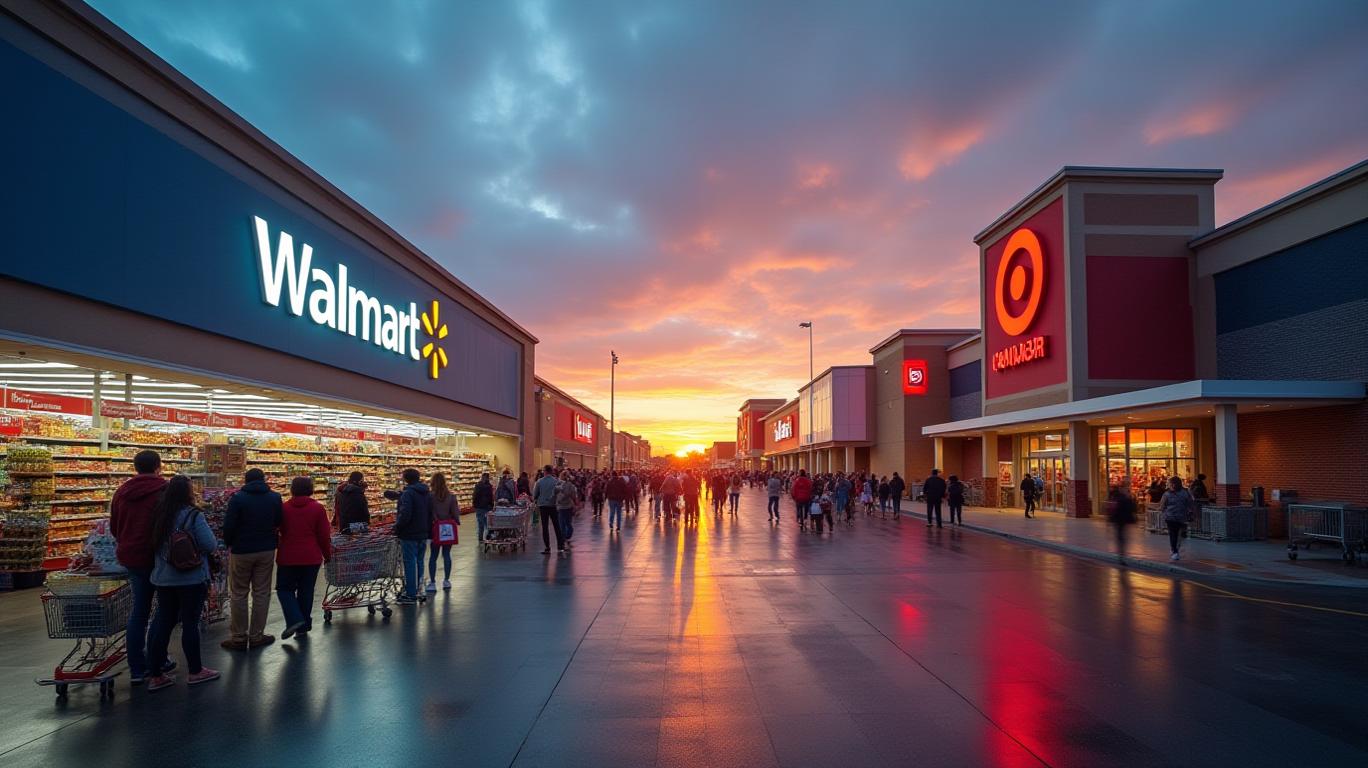
The retail sector’s twinTWIN-- giants, Walmart (WMT) and Target (TGT), have taken starkly different paths in 2025. While Walmart’s stock soars on disciplined execution and e-commerce momentum, Target grapples with strategic missteps and market skepticism. Investors now face a critical decision: Which stock offers the better buy? Let’s dissect their performances and prospects.
Financial Fortitude: Walmart’s Strong Q1 vs. Target’s Struggles
Walmart delivered a standout Q1 2025, with EPS of $0.66 (beating estimates) and revenue of $180.55 billion, fueled by a 3.8% rise in U.S. same-store sales and 22% e-commerce growth. Its focus on essentials like groceries—where it commands 40% market share—shielded it from inflation-driven demand shifts. Analysts project Walmart’s full-year EPS to hit $2.50–$2.60, with Citigroup targeting $120 per share (up from its current ~$92).
Target, however, stumbled. Q1 revenue fell 3.1% to $24.5 billion, while EPS of $2.04 missed estimates. Its stock dropped 10% post-earnings and slid further in April, closing at $92.78—a 22.2% decline year-to-date. Discretionary categories like apparel and home goods lagged, and tariff pressures squeezed margins. Analysts now expect only 3% annual revenue growth, below the retail industry’s 4.6% forecast, with a $145.55 consensus price target reflecting muted optimism.
Valuation: Walmart’s Premium vs. Target’s Discount
Walmart trades at a forward P/E of 17.5x, supported by consistent growth and a 22% YTD stock surge. Analysts cite its $102.37 average price target as conservative, with Telsey Advisory Group forecasting $115. Its balance sheet remains robust, with $3.5 billion in free cash flow (Q1 2025).
Target’s valuation is far more contentious. Its 9.52x forward P/E lags peers like Costco (47.77x) and Dollar General (15.52x). While this discount reflects risks—legal battles over its DEI policy reversal, consumer boycotts, and $12 billion in potential settlement costs—some argue it’s a bargain. However, execution risks loom large, including a 21.3% drop in Q4 operating income and $2 billion in tariff-related profit pressure projected for Q1 2025.
Industry Trends Favoring Walmart’s Resilience
- Essentials vs. Discretionary: Walmart’s focus on groceries and household goods aligns with inflation-driven consumer behavior, where shoppers prioritize necessities. Target’s reliance on discretionary spending—40% of its revenue comes from apparel and home goods—leaves it vulnerable to economic downturns.
- E-Commerce Dominance: Walmart’s U.S. e-commerce grew 22%, while its global platforms (e.g., Flipkart) expanded to 420 million items. Target’s digital sales rose only 8.7% in Q4 2024, and its Target Plus marketplace trails Walmart’s scale.
- Store Strategy: Walmart has modernized 1,400 U.S. stores with trendy private brands like Love & Sports activewear, attracting younger shoppers. Target’s store growth plans (300 new locations over 10 years) face skepticism amid declining foot traffic and brand favorability drops.
Risks and Challenges Ahead
- Walmart’s Weaknesses: While strong in groceries, Walmart struggles in general merchandise (lagging apparel and electronics sales) and faces rising labor/tech costs from store upgrades and price rollbacks.
- Target’s Crossroads: Its $2 billion DEI policy reversal sparked lawsuits and boycotts, erasing $10 billion in market cap. Management must stabilize demand, mitigate tariff impacts, and rebuild trust without alienating its core demographic.
Conclusion: Walmart’s Edge in Uncertain Times
The data favors Walmart as the safer investment. Its resilient earnings, strong e-commerce tailwinds, and disciplined cost management position it to weather macroeconomic headwinds. Analysts’ $120 price target implies 29% upside, while its dividend yield of 1.3% adds stability.
Target, however, remains a high-risk, high-reward play. Its 9.52x P/E suggests potential upside if it can resolve DEI fallout, curb tariff costs, and reignite discretionary demand. Yet, with legal liabilities, consumer backlash, and analyst downgrades (Zacks’ “Hold” rating), it requires a gamble on turnaround execution.

Final Call: For conservative investors, Walmart’s consistent growth and analyst backing make it the clear choice. Target’s stock may rebound if it executes its $15 billion revenue growth roadmap by 2030, but risks remain too elevated for all but the most speculative portfolios.







Comentarios
Aún no hay comentarios