
Walmart's Strategic Response to Trump's Tariffs: A Defensive Play in a Pressured Retail Sector
The retail sector is under siege. With Trump's 2025 tariffs spiking import costs and inflationary pressures tightening like a noose, investors are scrambling to identify companies that can weather the storm. Enter WalmartWMT-- (WMT), a titan of operational discipline and cost management, which has turned the tariff crisis into a strategic advantage. By contrast, rivals like TargetTGT-- (TGT) are floundering, their vulnerabilities exposed by a less cohesive approach. For investors, the lesson is clear: Walmart's agility in mitigating tariff-driven inflation is not just a short-term fix—it's a long-term playbook for outperforming a sector in turmoil.
The Tariff Tsunami and Walmart's Counterpunch
Trump's 2025 tariffs—ranging from 10% to 50% on imports from China, Vietnam, and Mexico—have sent shockwaves through global supply chains. For retailers, the pain is twofold: higher costs and the risk of losing price-sensitive customers to competitors. But WalmartWMT-- has turned this crisis into an opportunity.
Supply Chain Diversification: The First Line of Defense
Walmart's playbook starts with a radical reshaping of its supply chain. By 2025, the company has slashed its reliance on China from 80% in 2022 to 60–70%, redirecting sourcing to Mexico and India. A $6 billion investment in Mexican distribution centers—capitalizing on the USMCA trade deal—has cut transit times and tariffs, while a $10 billion annual import target from India by 2027 adds another layer of insulation. This diversification isn't just about avoiding tariffs; it's about creating redundancy in a world where geopolitical risks are the new normal.
Automation and AI: The Cost-Cutting Powerhouse
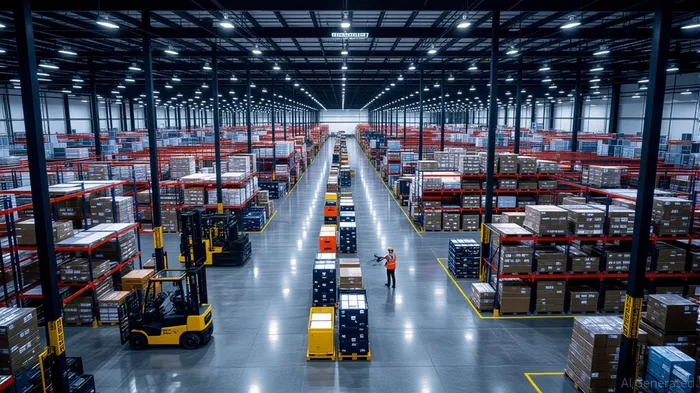
Walmart's second weapon is technology. The company has deployed AI-driven inventory systems and automated logistics, reducing fulfillment costs by 30%. With 45% of e-commerce volume now automated, Walmart has slashed last-mile delivery costs and maintained product availability even during supply chain bottlenecks. This isn't just operational efficiency—it's a moat. Competitors like Target, which rely more on manual processes, are left scrambling to catch up.
Pricing Discipline: The Art of Walking the Tightrope
Here's where Walmart's genius shines. The company has absorbed $10 billion in annual tariff costs by cross-subsidizing low-margin categories (electronics, groceries) with high-margin ones (apparel, private-label products). This has kept U.S. price growth at a mere 1% year-over-year in Q2 2025, versus 6% inflation in the broader economy. By selectively raising prices on premium items like GracoGGG-- car seats and cookware while keeping staples affordable, Walmart has preserved its “Everyday Low Prices” brand promise. It's a masterclass in pricing psychology.
Target's Tariff Woes: A Cautionary Tale
While Walmart is thriving, Target's response to tariffs has been far less elegant. The company reduced its Chinese exposure from 60% to 30% but still faces a Q2 2025 Adjusted EBITDA plunge from $52.2 million to $3.5 million. Its reliance on high-risk contracts (e.g., the $154 million Workforce Hub) and a controversial DEI rollback—triggering lawsuits and a 9% drop in brand favorability—have compounded its challenges.
Target's lack of automation and its inability to absorb costs without sacrificing margins make it a fragile bet. Its Q1 2025 revenue decline of 2.8% underscores the fragility of its model. Meanwhile, Walmart's 4.9% constant-currency sales growth and 43-basis-point gross margin expansion in Q2 2025 highlight the stark contrast.
Financial Resilience: The Bedrock of Long-Term Success
Walmart's financials are a fortress. With $680.99 billion in revenue, 24.85% gross margin, and a 21.67% ROE in FY 2025, the company has the firepower to invest in AI, e-commerce, and store automation while returning capital to shareholders. Its balance sheet, bolstered by $91.01 billion in stockholders' equity and a manageable net debt-to-EBITDA ratio of 1.49x, provides a safety net in volatile times.
Investment Thesis: Why Walmart is the Clear Winner
For investors, the calculus is simple: Walmart's operational agility and pricing discipline make it a defensive play in a pressured sector. Its ability to absorb tariffs while maintaining affordability has insulated it from broader retail weakness, with 50% of sales coming from groceries—a category less sensitive to economic cycles. Meanwhile, Target's exposure to reputational risks and margin compression makes it a riskier proposition.
Actionable Advice
- Buy Walmart (WMT): The stock's 26% e-commerce growth and expanding membership programs (Walmart+ and Sam's Club) offer high-margin tailwinds.
- Avoid Overexposure to Target (TGT): Until the company resolves its DEI backlash and stabilizes margins, it remains a speculative bet.
- Monitor Tariff Developments: Keep an eye on Trump's trade policies in 2026, as further escalations could widen the gapGAP-- between Walmart and its peers.
In a world where tariffs are reshaping global trade, Walmart's strategic foresight and operational rigor position it as the gold standard for retail resilience. For investors seeking stability in a volatile sector, the message is clear: bet on the retailer that turns headwinds into tailwinds.





Comentarios
Aún no hay comentarios