
Walmart's Back-to-School 2025: A Playbook for Margin Expansion Through Private Labels and Operational Precision
The back-to-school (BTS) season is a retail battleground, but Walmart's 2025 strategy suggests it's ready to dominate. By doubling down on private labels and refining operational efficiency, the retail giant is positioning itself to boost margins while undercutting competitors. Let's dissect how Walmart's moves could translate into shareholder value.
The Private Label Play: Dominance Through Affordability
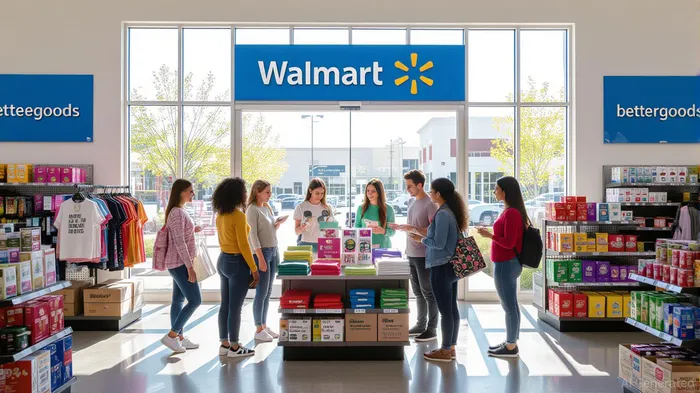
Walmart's private labels are front and center this BTS season, targeting price-sensitive shoppers with Weekend Academy for tweens, Bettergoods for meals, and onn for tech—all designed to displace national brands. Consider Weekend Academy: its $42 head-to-toe outfit (graphic tee, skirt, boots) undercuts fast-fashion rivals like Target's Cat & Jack or Gap's Old Navy. With 70% of Bettergoods items priced under $5, WalmartWMT-- is also carving out space in the $500M+ food segment.
These brands aren't just about volume. Private labels typically carry 30–50% higher margins than national brands, and Walmart's CFO highlighted Bettergoods' $500M sales in under a year as proof of concept. The math is clear: scaling these labels reduces reliance on low-margin third-party suppliers.
Operational Efficiency: A Supply Chain Masterclass
Walmart's margins also benefit from its logistical prowess. The retailer's use of AI-driven demand forecasting and cross-docking ensures rapid inventory turnover, minimizing holding costs. For instance, its RFID tracking system reduces out-of-stocks by 30%, while regional distribution centers cut delivery times to 1 hour in urban areas. These efficiencies are critical during BTS, when last-mile logistics often eat into profits.
This comparison will show Walmart's sustained margin resilience even as peers face cost pressures. Its focus on automation (e.g., robotic warehouses) and partnerships (e.g., StockX for discounted brands) further shields it from rising labor costs.
Sustainability as a Margin Lever
Walmart isn't just cutting costs—it's using sustainability to do so. Bettergoods' eco-friendly packaging and onn's recycled-material devices reduce long-term supply chain risks (e.g., raw material volatility). Meanwhile, electric delivery fleets and zero-emission warehouses align with Project Gigaton, which aims to cut carbon emissions while lowering operational expenses.
Risks and Considerations
The strategy isn't without hurdles. Competitors like TargetTGT-- are also expanding private labels, and inflation could pressure Walmart's low-price guarantees. However, Walmart's scale and Walmart+ student discounts (50% off for college users) create a sticky customer base.
Investment Implications
For investors, Walmart's 2025 BTS strategy offers two clear upside catalysts:
1. Margin Expansion: Look for Q3 earnings to show improved gross margins as private labels scale.
2. Market Share Gains: Dominance in affordability and convenience could steal share from Amazon's Prime Student and Target's owned brands.
Historically, BTS periods have been tailwinds for Walmart's stock. In addition, when Walmart exceeds earnings expectations, its stock has historically performed well, with a 54.55% win rate within three days and a 72.73% win rate over ten days, suggesting a strong short-term catalyst for investors. With private labels and logistics now key differentiators, this cycle could be its strongest yet.
Final Take
Walmart's 2025 BTS strategy isn't just about selling backpacks—it's about redefining retail profitability. By leveraging private labels to boost margins and operational excellence to reduce costs, Walmart is laying the groundwork for sustained outperformance. Investors should watch for margin metrics in Q3 and beyond; if execution holds, this could be a rare value stock poised to outpace peers.





Comentarios
Aún no hay comentarios