
Walmart's OnePay and the Crypto Revolution: How Retail-Driven Innovation is Reshaping Fintech and Blockchain Infrastructure
The retail giant WalmartWMT-- is no longer just a place to buy groceries and household goods-it's now a major player in the financial technology and cryptocurrency ecosystems. Through its fintech arm, OnePay, Walmart is set to launch BitcoinBTC-- and EthereumETH-- trading and custody services by late 2025, leveraging its 150 million weekly U.S. shoppers to drive mainstream adoption of digital assets, according to CNBC. This move, powered by a partnership with crypto infrastructure provider Zerohash, marks a seismic shift in how consumers interact with money, blurring the lines between traditional finance, retail, and blockchain innovation.
The Strategic Power of Walmart's Retail Reach
Walmart's OnePay isn't just another crypto app-it's a superapp in the making. By integrating crypto trading with its existing services - high-yield savings accounts, credit cards, peer-to-peer payments, and even wireless plans, according to Coinpedia - OnePay is positioning itself as a one-stop shop for digital finance. The key differentiator? Walmart's retail dominance. Users will be able to convert their crypto holdings into cash for in-store purchases or to pay off card balances, BeinCrypto reports, creating a direct link between digital assets and everyday spending. This utility addresses one of crypto's long-standing challenges: real-world adoption.
According to a report by CNBC, Walmart's customer base alone could accelerate crypto adoption faster than any pure-play crypto exchange. With 150 million weekly shoppers, OnePay has a built-in audience that traditional fintech platforms like PayPal, Venmo, and Cash App can only dream of. This retail-driven approach isn't just about volume-it's about normalizing crypto as a tool for everyday transactions, much like how mobile payments transformed consumer behavior in China with WeChat Pay.
The Fintech Shake-Up: Competitors Face a New Challenger
The entry of OnePay into crypto trading is sending ripples through the fintech industry. Established players like PayPal and Block's Cash App already offer crypto services, but Walmart's scale and integration with its retail network give it an edge. For example, Venmo's Q3 2025 revenue grew by 20%-data reported by NBCDFW-partly due to enhanced features like its debit card and checkout integration, but it now faces a competitor with a far larger user base and deeper retail ties.
Meanwhile, Cash App's slower growth-just 10% gross profit in the same period-highlights the challenges of competing with a retail giant that can bundle crypto with other financial services. Traditional banks, too, are under pressure. Institutions like Morgan Stanley are only now beginning to offer crypto access through subsidiaries like E-Trade, as noted in a Blockchain.News article, while Walmart's OnePay is already ahead of the curve.
Crypto Infrastructure Providers: Winners in the Walmart Playbook
Zerohash, the Chicago-based crypto infrastructure firm powering OnePay's services, is a prime beneficiary of this move. By providing secure custody and trading APIs, Zerohash is enabling Walmart to bypass the complexities of building in-house crypto capabilities, Cointelegraph reports. The firm's recent $104 million funding round, noted by Coinlineup, underscores investor confidence in its role as a bridge between traditional enterprises and blockchain ecosystems.
This partnership also signals a broader trend: institutional-grade crypto infrastructure is becoming the backbone of mainstream adoption. As Walmart and other retailers enter the space, infrastructure providers like Zerohash, Fireblocks, and others will see increased demand for scalable, compliant solutions. For investors, this represents a critical inflection point-crypto is no longer just a speculative asset but a foundational layer of global commerce.
Regulatory Considerations and the Road Ahead
Walmart's foray into crypto isn't without hurdles. Regulatory scrutiny remains a wildcard, particularly as the SEC tightens its grip on crypto platforms. However, OnePay's compliance-focused approach-leveraging Zerohash's regulated infrastructure and adhering to AML/KYC standards, according to CoinCentral-positions it to navigate these challenges more smoothly than smaller players.
Looking ahead, Walmart's expansion into stablecoins and potential partnerships with payment networks could further disrupt traditional banking. If the company follows Amazon's rumored plans for corporate stablecoins, as discussed on Investopedia, it could reduce reliance on legacy systems and cut transaction costs, forcing banks and fintechs to adapt or risk obsolescence.
Conclusion: A New Era of Retail-Driven Finance
Walmart's OnePay is more than a fintech product-it's a harbinger of a new era where retail and finance converge. By democratizing access to crypto and embedding it into daily transactions, Walmart is redefining what it means to be a financial services provider. For traditional fintechs, the message is clear: innovate or be disrupted. For crypto infrastructure providers, the opportunity is vast. And for investors, this is a moment to watch closely-retail-driven innovation is no longer a niche story; it's the next frontier of finance. 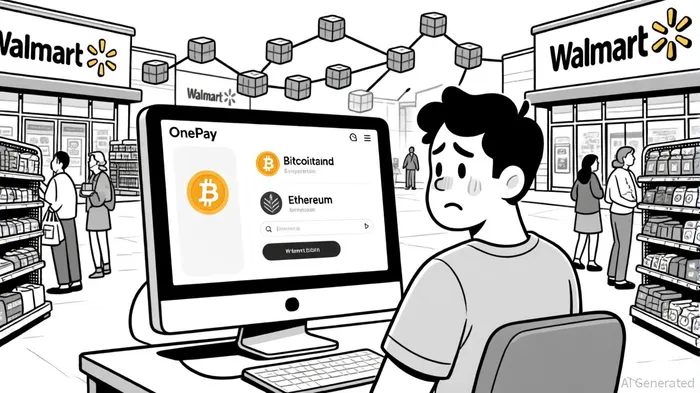





Comentarios
Aún no hay comentarios