
Walmart's Earnings Surge and the Battle for U.S. Retail Dominance
The U.S. retail landscape in 2025 is defined by stark contrasts. Walmart Inc.WMT-- (WMT) has emerged as a standout performer, with its Q3 2025 earnings report underscoring its resilience and competitive advantages. , ,
. These results, coupled with
, highlight Walmart's ability to leverage its scale and pricing power in a challenging economic environment. However, the stock's 2% dip following the report raises questions about market sentiment and whether this is a compelling entry or exit point for long-term investors.
Walmart's Strategic Strengths and Market Position
Walmart's dominance in U.S. retail is underpinned by its grocery business, , and its expanding e-commerce capabilities.
U.S. , . , even as inflationary pressures persist.
Critically, Walmart's strategic focus on pricing and international expansion positions it to outperform peers. For instance,
its grocery dominance-bolstered by competitive pricing and a robust supply chain-has allowed it to capture market share during periods of economic uncertainty. Meanwhile, its international markets, particularly in India and Mexico, continue to drive growth, offsetting slower domestic momentum.
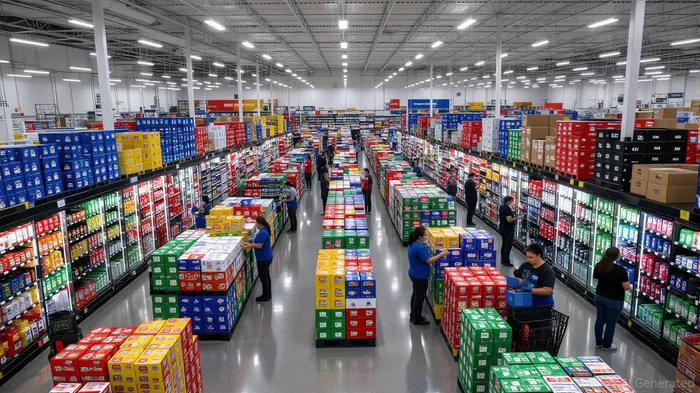
The Retail Rivalry: WalmartWMT-- vs. Target vs. Amazon
Walmart's performance must be contextualized against its key rivals.
Target Corp. has faced a prolonged slump, .
, enhance digital experiences, and expand product variety. While these efforts aim to reverse the trend,
the company's recent price cuts on 8,000 everyday items and a controversial DEI rollback suggest a reactive rather than proactive strategy.
Amazon, meanwhile, remains a formidable competitor.
. Amazon's AI-driven innovations, such as the and , underscore its technological edge. However, Walmart's focus on physical retail and grocery logistics provides a unique counterbalance to Amazon's digital-first approach.
Leadership Transition and Market Sentiment
A key wildcard for Walmart is the impending leadership transition.
's retirement, with set to take over, has introduced uncertainty. While Furner has a strong track record in Walmart's U.S. division, investors may question his ability to maintain the company's momentum in international markets and e-commerce. Additionally,
Walmart's decision to move its listing to Nasdaq-retaining the WMTWMT-- ticker-has been interpreted as a strategic shift to align with broader market trends, though its immediate impact on investor confidence remains unclear.
The stock's post-earnings dip, despite beating expectations, suggests skepticism about Walmart's long-term guidance.
, a modest improvement in a sector where investors demand higher growth. This could indicate that the market is pricing in challenges such as rising labor costs and intensifying competition from Amazon's AI-driven logistics.
Investment Implications
For long-term investors, Walmart's Q3 results present a nuanced picture. On one hand, its financial metrics-strong revenue growth, disciplined margins, and a resilient grocery business-suggest a durable competitive moat. The company's ability to raise guidance, albeit conservatively, and its strategic investments in international expansion and e-commerce further reinforce its long-term potential.
On the other hand, the stock's underperformance relative to its results and the leadership transition introduce risks.
Target's $5 billion investment plan, while ambitious, may take years to yield tangible results, leaving Walmart as the clearer short-term winner in the U.S. retail race. Amazon's technological advancements, however, pose a long-term threat that Walmart must address through innovation.
Conclusion
Walmart's Q3 2025 earnings affirm its position as a leader in U.S. retail, but the stock's mixed performance highlights the need for caution. For investors seeking exposure to the sector,
Walmart's current valuation. However, the leadership transition and Amazon's AI-driven innovations warrant close monitoring.
In the short term, the stock's dip may represent a buying opportunity for patient investors who believe in Walmart's ability to adapt and maintain its dominance. Yet, for those prioritizing growth over stability, the company's conservative guidance and competitive pressures could justify a wait-and-see approach. Ultimately, Walmart's long-term appeal hinges on its capacity to balance operational efficiency with strategic innovation in an increasingly dynamic retail landscape.







Comentarios
Aún no hay comentarios