
WalletConnect v2.0: A Catalyst for Cross-Chain Web3 Adoption and DeFi Growth
Protocol Innovations: Building the Infrastructure for a Multi-Chain Future
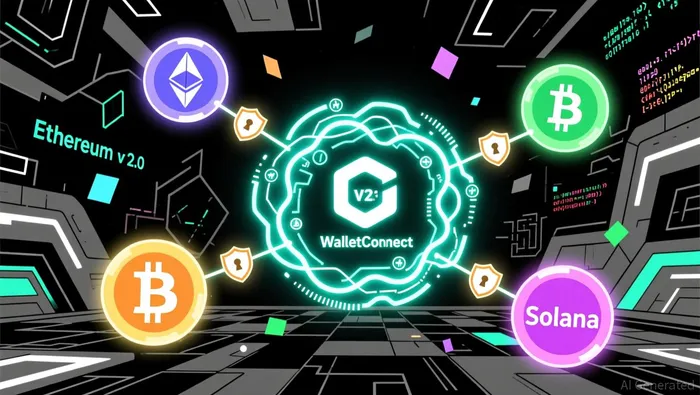
WalletConnect v2.0 redefines blockchain connectivity by addressing key limitations of its predecessor. At its core, the protocol's chain-agnostic architecture-powered by Chain Agnostic Improvement Proposals (CAIPs)-enables seamless interoperability across EthereumETH--, BitcoinBTC--, SolanaSOL--, CosmosATOM--, and PolkadotDOT--, among others according to the WalletConnect blog. This eliminates siloed user experiences, allowing developers to build cross-chain applications while users maintain a unified interface for managing assets and transactions as reported by SecuX Tech.
A pivotal innovation is the introduction of JSON-RPC permissions, which resolve compatibility issues between apps and wallets by defining required API methods upfront according to SecuX Tech. This not only streamlines session establishment but also enhances security by ensuring wallets can validate app requests before granting access. Complementing this is the session expiry mechanism, which limits session durations to seven days by default, mitigating risks of prolonged unauthorized access.
Security is further bolstered by the adoption of Waku 2.0, a decentralized messaging protocol that replaces centralized relay servers. This shift reduces single points of failure and enhances privacy, aligning with Web3's ethos of decentralization. Additionally, the protocol's Smart Sessions feature allows persistent, secure connections across multiple dApps, reducing friction for users who previously faced repetitive authentication hurdles as detailed in Nansen research.
Market Adoption and Strategic Partnerships: Scaling the Network Effect
WalletConnect's growth trajectory underscores its role as foundational infrastructure. By 2025, the network has facilitated over 365 million cumulative connections, linking 52.5 million unique wallets to 76,700 applications. This exponential adoption is driven by both retail and institutional demand, with major fintech platforms like Coinbase, Shopify, and Stripe integrating WalletConnect for seamless crypto payments as reported in Nansen research.
Institutional partnerships have further solidified its credibility. Notable adopters include Fireblocks, Ledger Enterprise, HexTrust, BitGo, and Anchorage Digital, which leverage WalletConnect's secure infrastructure for enterprise-grade solutions as detailed in Nansen research. The launch of WalletConnect Pay-a stablecoin-based point-of-sale system-has expanded its utility beyond DeFi, with Singapore's dtcpay as a flagship partner as detailed in Nansen research.
Financial metrics highlight its disruptive potential. The network's Total Network Volume (TNV) is projected to exceed $400 billion annually by 2025, surpassing transaction volumes of fintech giants like Square and Shopify. This growth is underpinned by a sustainable monetization model that charges applications rather than end users, ensuring scalability without compromising accessibility.
Investment Thesis: A Decentralized Future with Tokenomics and Governance
WalletConnect's strategic roadmap for 2025 introduces a token-driven governance model. The WalletConnect Token (WCT) will enable on-chain governance starting in Q2 2025, allowing token holders to vote on protocol upgrades and network policies. Staking incentives and a decentralized node operator program aim to enhance security and inclusivity, aligning with broader Web3 trends toward community-driven ecosystems as reported in WalletConnect's 2025 vision.
The protocol's focus on decentralization is a key differentiator. By expanding its node operator program and integrating Waku 2.0, WalletConnect reduces reliance on centralized infrastructure, addressing a critical vulnerability in earlier blockchain protocols. This not only strengthens its security profile but also positions it as a resilient infrastructure layer for the onchain economy.
Conclusion: A Strategic Bet on Web3's Infrastructure Layer
WalletConnect v2.0's technical innovations-chain-agnostic interoperability, enhanced security, and user-centric features-address foundational challenges in Web3 adoption. Its rapid market penetration, institutional partnerships, and token-driven governance model create a compelling investment narrative. As cross-chain activity becomes the norm, WalletConnect's role as a universal connectivity layer will only grow in importance. For investors seeking exposure to the next phase of Web3 infrastructure, WalletConnect v2.0 represents a high-conviction opportunity with the potential to scale into a $400 billion+ network.






Comentarios
Aún no hay comentarios