
Wallbox's Strategic Recovery and Re-Listing on NYSE: A Turning Point for EV Charging Infrastructure Growth
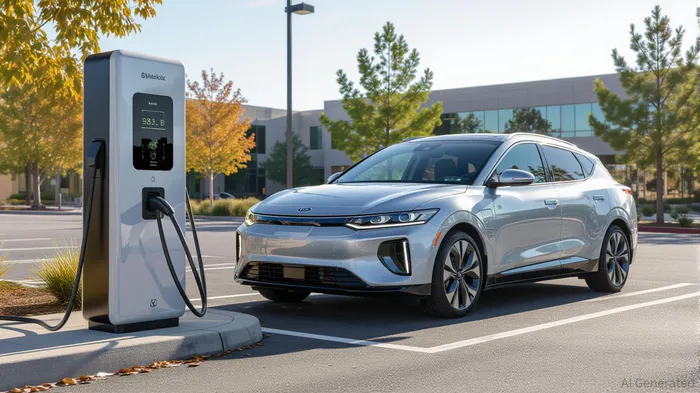
The electric vehicle (EV) charging infrastructure sector is at a pivotal inflection pointIPCX--, driven by global decarbonization mandates and surging consumer adoption. WallboxWBX-- N.V. (NYSE: WBX), a once-troubled but now strategically repositioned player, has emerged as a case study in resilience. After navigating a complex path to NYSE relisting and operational restructuring, the company's 2025 recovery efforts offer a compelling narrative for investors weighing long-term value in a high-growth, high-risk industry.
Operational Resilience: Cost Optimization and Product Innovation
Wallbox's Q2 2025 earnings report underscores a disciplined approach to cost management and margin preservation. Despite a 15% year-over-year revenue decline to €38.3 million, the company achieved a 37.8% gross margin—a 634-basis-point improvement since Q1 2025. This was driven by a 25% reduction in labor and operating expenses, alongside a 35% cut in cash costs. Such efficiency gains are critical for a company that previously faced existential liquidity risks.
The firm's product roadmap further strengthens its competitive edge. The Quasar 2 bidirectional charger, now deployed in California via a partnership with Kia and the University of California, Irvine, represents a leap in energy management technology. This innovation aligns with Wallbox's strategy to diversify revenue streams beyond hardware sales, tapping into software-driven services like vehicle-to-grid (V2G) solutions. Meanwhile, Supernova DC unit sales surged 33% quarter-over-quarter to 140 units, signaling growing demand for fast-charging infrastructure in North America.
Regulatory Compliance and Investor Confidence
The 1-20 reverse stock split executed on July 31, 2025, was a watershed moment. By addressing NYSE's $1.00 minimum share price requirement, Wallbox not only avoided delisting but also signaled a commitment to governance transparency. The move was accompanied by a $15 million private placement with the Spanish government's SETT fund, which provided liquidity while reinforcing the company's alignment with European green energy policies.
Critically, Wallbox's SEC filings in 2025 demonstrated a shift toward risk-aware disclosure. Forward-looking statements now explicitly address macroeconomic headwinds—such as inflation, supply chain bottlenecks, and regulatory shifts in EV subsidies—while outlining mitigation strategies. This transparency, coupled with the debt restructuring agreement with SantanderSAN--, BBVA, and other lenders, has helped stabilize investor sentiment. The company's ability to defer debt payments until May 2026 further insulates it from short-term liquidity pressures.
Market Expansion and Strategic Partnerships
Wallbox's geographic diversification is another pillar of its recovery. North American AC sales grew 21% quarter-over-quarter, while European partnerships, including a hotel deployment agreement with PowerGo and a U.S. fast-charging collaboration with Ensol, expanded its footprint. These alliances are not merely transactional; they reflect a broader strategy to integrate Wallbox's infrastructure into the ecosystems of automakers and energy providers.
The Quasar 2's commercialization, in particular, positions Wallbox to capitalize on the V2G market, which is projected to grow at a 25% CAGR through 2030. By enabling EVs to act as distributed energy resources, Wallbox is future-proofing its offerings against regulatory and technological shifts.
Risks and Long-Term Implications
Despite these strides, risks persist. The EV charging sector remains capital-intensive, with Wallbox's Q2 2025 adjusted EBITDA loss of €7.5 million underscoring ongoing profitability challenges. Macroeconomic factors—such as U.S. federal tax credit rollbacks or European green bond market volatility—could disrupt growth trajectories. Additionally, the company's reliance on supply chain partners for critical components (e.g., semiconductors, battery modules) introduces operational fragility.
For investors, the key question is whether Wallbox's cost discipline and innovation can offset these risks. The company's Q3 2025 guidance—projecting revenue of €38–41 million and a narrowing adjusted EBITDA loss—suggests cautious optimism. However, the path to breakeven remains steep, requiring sustained execution on cost optimization and market penetration.
Investment Thesis
Wallbox's relisting on the NYSE marks a symbolic and substantive turning point. While the company is not without flaws, its operational improvements, strategic partnerships, and technological differentiation position it as a long-term play in the EV infrastructure boom. Investors with a 3–5 year horizon may find value in its discounted valuation, particularly if the firm maintains its current trajectory of margin expansion and debt management.
For risk-averse investors, however, the sector's volatility and Wallbox's historical liquidity issues warrant caution. Diversification across EV infrastructure players—such as ChargePointCHPT-- or A Better Tomorrow—could mitigate exposure to Wallbox's idiosyncratic risks.
In conclusion, Wallbox's recovery is a testament to the power of strategic reinvention in a dynamic industry. Whether it becomes a cornerstone of the EV charging ecosystem will depend on its ability to balance innovation with fiscal prudence—a challenge it appears increasingly equipped to meet.





Comentarios
Aún no hay comentarios