
Wall Street Surges 1% as Powell Signals Early Rate Cuts
On Tuesday, Wall Street surged toward record highs as Federal Reserve Chair Jerome Powell indicated that the central bank could cut interest rates sooner than expected if economic conditions deteriorate. The S&P 500 rose 1% while the Nasdaq 100 climbed 1.5%, positioning itself for its first record close since February. This surge was driven by easing Middle East tensions and constructive monetary policy signals from Powell.
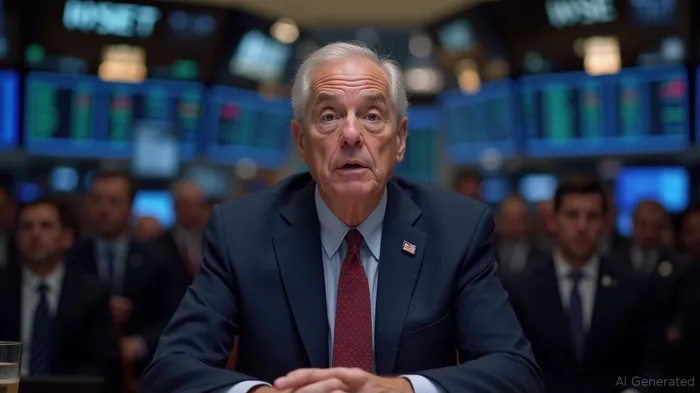
Powell's appearance before the House Financial Services Committee marked a notable shift in Fed communication strategy. He emphasized that while officials remain data-dependent, they stand ready to act if economic conditions warrant intervention. Powell stated that if inflation pressures remain contained, the Fed could cut rates "sooner rather than later." He cautioned against pointing to specific meetings but acknowledged the Fed doesn't need to rush given the economy's current strength. This testimony followed last week's decision to maintain current policy rates, with Powell reiterating the central bank's cautious approach as officials assess the economic impact of tariffs and other policy changes.
Two-year Treasury yields dropped toward their lowest levels since early May following Powell's remarks. Money markets rapidly repriced Fed expectations, with traders now betting on 50 basis points of cuts by December. Consumer confidence data also supported the dovish shift, showing weakening sentiment among households. Bond markets demonstrated resilience despite the rally, with a $69 billion Treasury auction proceeding smoothly. Powell separately indicated that potential changes to capital buffer requirements could enhance banks' roles in Treasury market intermediation.
The geopolitical backdrop improved dramatically as Israel and Iran appeared to honor an unexpected ceasefire agreement. This development came less than 48 hours after direct U.S. military involvement in the conflict. The ceasefire followed American strikes on Iranian nuclear facilities, which themselves came after Iran's measured attack on a U.S. air base. Market participants viewed the Iranian response as deliberately de-escalatory, setting the stage for diplomatic resolution. This de-escalation encouraged investors to pursue risk-on strategies across equity markets.
However, some strategists urged caution despite the positive developments. They noted that while conflict risks have diminished meaningfully, the overall risk-reward equation remains skewed toward caution given elevated market valuations and slowing economic growth. Oil prices plunged on the ceasefire news, reflecting reduced supply disruption concerns. The dollar also weakened as safe-haven demand ebbed across global markets.
Investment professionals offered divergent views on market sustainability despite Tuesday's broad-based gains. Bill Gross, co-founder of Pacific Investment Management Co., predicted a "little bull market" for stocks alongside a "little bear market" for bonds. Gross warned that 10-year Treasury yields would struggle to fall below 4.25% due to fiscal deficits and dollar weakness maintaining inflationary pressures. He argued that artificial intelligence continues driving equity markets higher regardless of Treasury performance or broader economic growth concerns.
The stock market's resilience over recent months has impressed analysts as the S&P 500 recovered sharply from April lows. Equities now trade within 1% of record highs despite ongoing uncertainties around trade policy and geopolitical developments. BarclaysBCS-- strategist Emmanuel Cau suggested that market volatility around geopolitical events typically creates buying opportunities rather than lasting selloffs. He viewed the current environment as potentially bullish for stocks over the medium term, despite elevated valuation concerns.
Market optimism surged as Powell's dovish pivot coincided with Middle East diplomatic progress, driving major indices toward record territory. While Fed flexibility on rate cuts and geopolitical de-escalation boosted investor sentiment, strategists warn that elevated valuations and economic uncertainties require continued caution despite the current rally.







Comentarios
Aún no hay comentarios