
Wall Street Sits Out The Sequel: Navigating 2025's Tariff Turmoil
The second quarter of 2025 has become a pivotal moment for investors, as Wall Street adopts a defensive posture in response to escalating trade tensions and policy uncertainty. Dubbed “the sequel” to 2024’s market volatility, the current environment is marked by profit downgrades, sector-specific headwinds, and a growing recognition that economic risks are no longer theoretical. Let’s dissect the key drivers and implications for investors.
Profit Estimates Plunge as Tariffs Take Center Stage
Analysts slashed second-quarter S&P 500 earnings estimates by 2.4% between March and April—outpacing the 20-year average decline of 1.9%. This reflects a stark shift in sentiment, with trade-war anxieties and tariff impacts at the core. The **** chart underscores the divergence from typical seasonal trends.
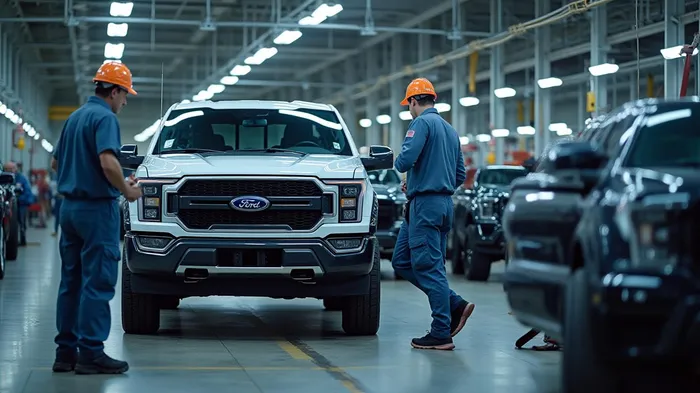
The automotive sector leads the downward revision, as Ford and General MotorsGM-- brace for $5 billion in tariff-related costs. Ford’s withdrawal of financial guidance in April sent a clear warning: supply chain disruptions and rising input prices are now existential threats. shows a 12% decline as investors priced in these risks.
Sector-Specific Fallout: Who’s Winning, Who’s Losing?
- Consumer Discretionary (Toys, Auto):
- Mattel and Hasbro face dual pressures: tariffs on Chinese imports and shifting consumer preferences. Mattel’s efforts to diversify manufacturing away from China predate Trump’s April tariff hikes, leaving a $200 million gap in its cost estimates.
highlights the sector’s fragility, with both stocks down over 15% year-to-date.
Media & Entertainment:
The threat of 100% tariffs on foreign-made movies has sent shockwaves through streaming platforms like Netflix. While not yet implemented, the uncertainty has dampened investor appetite for media stocks.
Tech & Infrastructure:
- Amazon reported no immediate demand slowdown but acknowledged tariff-driven “heightened buying” in select categories. Meanwhile, Atkore—a steel conduit manufacturer—saw earnings rise but faced a 4.78% premarket sell-off due to fears over construction spending slowdowns.
The Recession Probability: 45% and Rising
Goldman Sachs now assigns a 45% chance of recession by mid-2025, citing tariff-induced inflation and capital expenditure delays. The Penn Wharton Budget Model (PWBM) paints an even grimmer picture: tariffs could reduce long-run GDP by 5.1–6.3% and slash average wages by 3.9–5.8% by 2054.
reveals how policy uncertainty, now at pandemic-era highs, directly correlates with economic contraction.
Why Wall Street is “Sitting Out” the Sequel
Investors are adopting three core strategies to navigate this landscape:
1. Sector Rotation: Funds are fleeing tariff-exposed sectors (autos, media) for defensive plays like utilities and healthcare.
2. Cash Accumulation: Money market funds hit $6.8 trillion, signaling a preference for liquidity over risk.
3. Policy Bets: Hedge funds like those managed by Bill Ackman are lobbying for a 90-day tariff pause, betting on diplomatic breakthroughs to stabilize markets.
The Contrarian Play: Is the Bottom in Sight?
Historical data suggests a potential rebound. A 15% market drawdown from peaks has historically yielded 14% average annual returns, while a 20% drop improves to 19%. With investor sentiment hitting a 30-year low (per Bank of America surveys), the contrarian case for buying dips grows stronger.
Conclusion: Between a Rock and a Hard Place
Wall Street’s caution is justified. With GDP forecasts slashed to 1.5–1.7%, recession risks at 45%, and households facing $22,000 lifetime income losses, the path forward is fraught. However, structural tailwinds—like post-recession expansion and Fed rate cuts—offer hope.
Investors should proceed with a barbell strategy:
- Short-term: Hold cash and short volatility (VIX).
- Long-term: Buy quality cyclicals (e.g., small caps, manufacturing) at depressed valuations.
The “sequel” to 2025’s turmoil may yet have a silver lining—for those willing to bet on resilience.
Data sources: Morgan Stanley, Goldman Sachs, Penn Wharton Budget Model, Bank of America, and S&P Global.





Comentarios
Aún no hay comentarios