
Wall Street in Freefall: Can Investors Survive Trump’s War on the Fed?
The stock market is in turmoil this week, and it’s not just about earnings or interest rates—it’s a full-blown political and economic war between President Trump and Federal Reserve Chair Jerome Powell. As tariffs escalate and the Fed’s independence hangs in the balance, investors are caught in the crossfire. Let’s break down what’s happening, what’s at stake, and how to navigate this chaos.
The Market’s Whiplash: Tariffs, Tweets, and Turmoil
The S&P 500 has swung wildly this month—plunging 2.3% on Thursday only to rebound 1.8% the next day. This volatility is no accident. 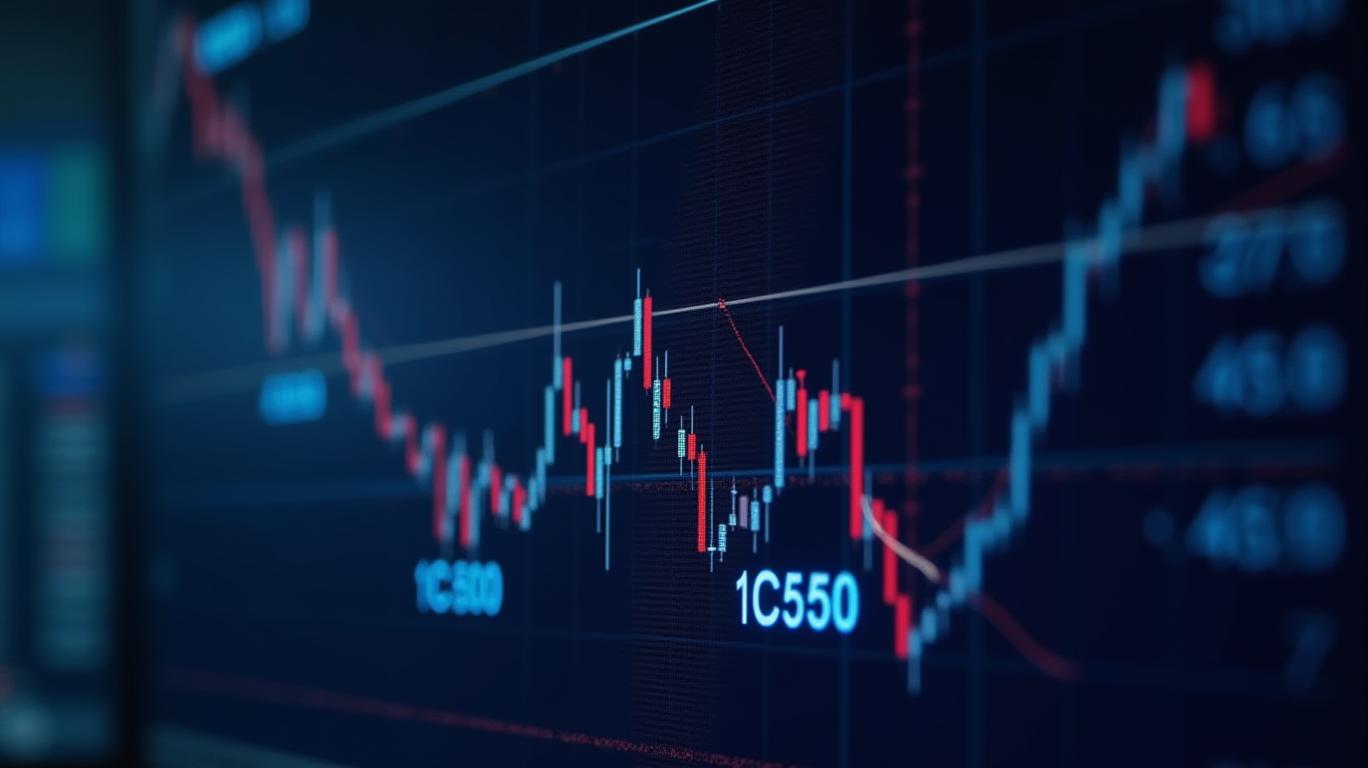 The trigger? Trump’s tariff threats and Powell’s warnings about the economic fallout. The 90-day tariff pause on most countries (excluding China) initially sent stocks soaring—until China retaliated with 125% tariffs of its own. Now, the Dow is down 5% for the year, and the Nasdaq is off 13%, with tech giants like AppleAAPL-- and Tesla leading the charge downward.
Tesla, for example, has plummeted 5% in a single day due to fears its China-based supply chain will bear the brunt of tariffs. Meanwhile, Apple’s shares swung wildly—up 15% one day, down 3% the next—as traders speculated about tariff exemptions for its products. This isn’t investing; it’s Russian roulette with a loaded gun.
The Core Conflict: Trump vs. Powell
The real battle isn’t in the stock market—it’s in the courtroom and the Oval Office. Trump has openly threatened to fire Powell, calling him “the enemy” and accusing him of sabotaging his economic agenda. But here’s the rub: The Fed’s independence is protected by law, and the Supreme Court is set to rule on a case (Trump v. Wilcox) that could weaken those protections. If the Court sides with Trump, the Fed’s ability to control inflation and unemployment could vanish overnight.
Powell, for his part, has warned that Trump’s tariffs are “significantly larger than anticipated,” with inflationary pressures pushing households to pay an extra $4,900 annually. This isn’t just theory—gold hit a record $3,400/ounce this week as investors fled to safety, and the 10-year Treasury yield spiked to 4.59%, its highest in two months.
Sector by Sector: Who’s Winning, Who’s Losing
- Tech: Volatility Central
Tech stocks are ground zero for this trade war. Nvidia, for instance, took a $5.5 billion hit after U.S. export controls on AI chips to China. But not all is doom and gloom—AMD surged 5% after pivoting to non-China markets. The lesson? Look for companies with minimal China exposure or those betting on tariff exemptions. - Small Caps: The Tariff Winners
The Russell 2000, an index of small-cap stocks, jumped 8.7% on the tariff pause. These companies, often less reliant on global supply chains, are outperforming. Levi Strauss, for example, saw a 34% upside potential after analysts praised its limited China ties. - Banks: The Unlikely Heroes
JPMorgan and BlackRock rose despite the chaos, thanks to strong Q1 earnings and Powell’s focus on data-driven policy. But don’t get complacent—bank stocks are still down 15% YTD.
Investor Playbook: Survive and Thrive
- Avoid the Bulletproof Sectors
Stay away from industrials like UnitedHealth and U.S. Steel, which are directly in the crosshairs of tariff disputes. UnitedHealth’s 22% plunge after cutting its earnings forecast shows how quickly political whims can destroy value. - Hoard Cash and Hedge
Gold and Bitcoin are no longer just “hype”—they’re necessities. With the Fed’s credibility under fire, physical assets and crypto are the ultimate safe havens. - Buy the Dip—Strategically
The Nasdaq’s 7.3% weekly gain shows that dips can be buying opportunities. Focus on companies with pricing power (e.g., Coca-Cola) or those insulated from tariffs (e.g., Netflix).
Conclusion: The Fed’s Fate Determines the Market’s Future
The bottom line is this: If the Supreme Court upholds the Fed’s independence, markets could stabilize once tariff impacts are priced in. But if Trump wins the legal battle, expect a “stagflationary shock” that could send stocks into a prolonged slump. The numbers don’t lie—since April 9, the S&P 500 has swung over 2,000 points daily, and the Russell 2000 has seen its best and worst days in years.
Investors need to act now: Diversify into defensive assets, avoid tariff-sensitive sectors, and keep cash reserves. This isn’t a time to gamble—it’s a time to survive. The Fed’s independence isn’t just about central banking; it’s about whether Wall Street can trust anyone in Washington to keep markets intact. And right now, that trust is on life support.
Action stations: Buy gold, sell Tesla, and pray the Fed survives.







Comentarios
Aún no hay comentarios