
VW's Leadership Turmoil: A Crossroads for EV Dominance and Shareholder Value
The Volkswagen Group stands at a critical juncture. Months of leadership turmoil, factory closures, and margin erosion have cast doubt on its ability to execute its TRANSFORM 2025+ strategy, a cornerstone of its electric vehicle (EV) pivot. For investors, the question is stark: Is this turmoil a catalyst for a much-needed strategic reset—or the beginning of a prolonged erosion of shareholder value?
The Storm at Volkswagen’s Helm
VW’s leadership struggles are well-documented. Plans to shutter up to three German factories, coupled with €10 billion in cost-cutting targets, have sparked worker protests and union defiance. Meanwhile, the operating margin has collapsed to 3.7% in Q1 2025, far below the 6% target, while EV software division CARIAD hemorrhaged €755 million in the quarter. These challenges are not just financial—they’re existential for a company betting its future on EVs.
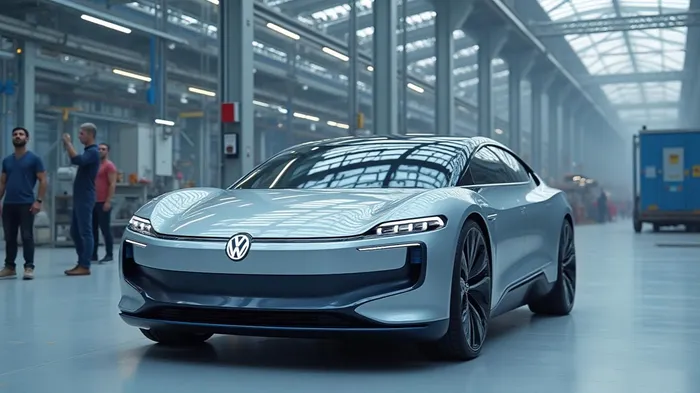
Leadership Instability vs. EV Execution: A Zero-Sum Game?
The auto sector’s EV transition requires laser-focused leadership. Tesla and Rivian have shown that missteps in software, battery supply, or capital allocation can crater valuations. For Volkswagen, the stakes are even higher: its €70 billion EV and battery investment plan relies on disciplined execution.
Yet current turmoil raises red flags:
- Cultural Gridlock: The Zukunft Volkswagen austerity program clashes with decades-old labor agreements, risking operational paralysis.
- Software Stumbles: CARIAD’s losses highlight the difficulty of building in-house EV software—a critical edge in a market dominated by tech giants.
- Geopolitical Risks: U.S. tariffs and China’s EV price wars add volatility to already fragile margins.
Investor Sentiment: Caution or Opportunity?
Volkswagen’s shares have fallen nearly 10% year-to-date as margin concerns dominate headlines. Yet beneath the turmoil lies a paradox:
- EV Demand Surge: Fully electric vehicles now account for 20% of orders in Western Europe, up 64% year-on-year. The ID.7 Tourer and CUPRA Terramar are outperforming in key markets.
- Structural Cost Cuts: Factory closures and wage freezes could free up €3 billion annually by 2026, boosting margins if EV scale advantages materialize.
The question is whether investors should punish the pain of restructuring (today’s turmoil) or reward the prize of a leaner, EV-focused VW (tomorrow’s potential).
Valuation: A Buying Opportunity or a Value Trap?
Volkswagen trades at just 6.2x 2025E EV/EBITDA, a discount to peers like Toyota (7.8x) and BMW (8.5x). This reflects both margin fears and governance risks. However, a bull case hinges on:
1. Margin Turnaround: Achieving a 6.5% operating margin by 2026 via cost cuts and higher EV sales (target: 35% of sales by 2030).
2. Software Turnaround: CARIAD’s losses stabilizing as it partners with tech firms or accelerates licensing deals.
3. Political Compromise: Avoiding strikes that could derail plant closures and efficiency gains.
The Bottom Line: A High-Reward, High-Risk Call
Volkswagen’s leadership turmoil is a double-edged sword. On one side, it underscores the risks of mismanaging a century-old automaker’s transition to EVs. On the other, it creates a once-in-a-decade entry point for investors willing to bet on a restructuring success story.
Action Plan for Investors:
- Buy the Dip: Accumulate shares if the stock falls below €180, near 2023 lows, on near-term margin misses.
- Monitor Key Metrics: Track factory closure progress, CARIAD’s quarterly losses, and EV order growth in China/Europe.
- Avoid the Long Game: Hold for 12–18 months—until restructuring and EV scale effects become clearer.
Volkswagen’s leadership crisis is not just about today’s headlines—it’s about whether the company can trade its legacy as a combustion-engine titan for a future as an EV powerhouse. The answer will determine whether this is a value trap or a generational opportunity.







Comentarios
Aún no hay comentarios