
Vulcan Materials Q1 2025 Earnings: Navigating Growth Amid Sector Challenges
As Vulcan MaterialsVMC-- (VMC) prepares to report its Q1 2025 earnings, investors are balancing optimism about its strategic moves and pricing discipline against lingering sector-specific headwinds. With the construction materials sector facing a mix of public infrastructure tailwinds and private demand headwinds, Vulcan’s results will offer critical insights into its ability to execute its growth agenda. Here’s what to watch for.
Revenue Growth Signals a Turnaround, but Profits Lag
Analysts project Vulcan’s Q1 revenue to reach $1.68 billion, a 8.7% year-over-year increase—a reversal of its 6.4% revenue decline in Q1 2024. This growth is attributed to two key factors: the company’s “Vulcan Way of Selling” pricing strategy and recent acquisitions such as Superior Ready Mix and Wake Stone. These moves have bolstered its aggregates segment, which is expected to grow 10.8% YoY to $1.43 billion in sales, driven by a 3.9% volume rise and 6.8% price increases.
However, profitability remains a concern. The Zacks Consensus Estimate for adjusted EPS is $0.80, flat compared to the prior-year period. Cost pressures—particularly labor shortages and input inflation—could limit margin expansion, even as top-line gains materialize.
Segment Performance: Strength in Aggregates, Weakness in Concrete
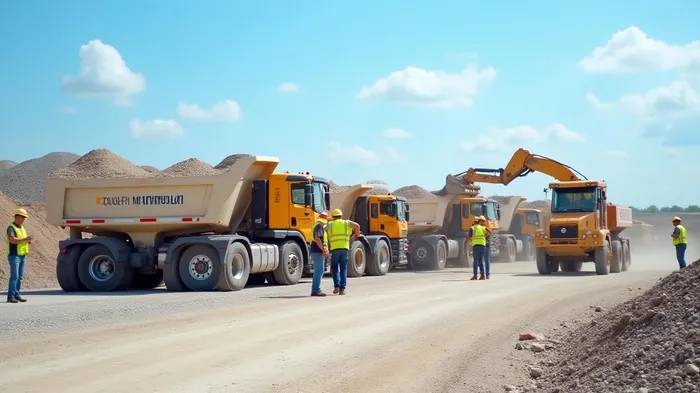
The aggregates segment, which accounts for 74% of 2024 revenue, is the clear driver of growth. The asphalt mix segment is also forecast to rise 5% YoY, benefiting from modest volume and price increases. By contrast, the concrete segment faces a 10.9% revenue drop, reflecting declining private non-residential construction activity and lower shipment volumes. This divergence underscores Vulcan’s reliance on public infrastructure spending, which has been resilient due to federal and state projects.
Analyst Sentiment: Cautiously Bullish, but Risks Loom
The consensus rating of “Strong Buy” (15 of 21 analysts) and a $296.30 average price target (22.5% upside) reflect optimism about Vulcan’s long-term prospects. Yet, short-term risks temper enthusiasm:
- Zacks’ Earnings ESP model assigns a -5.39% surprise potential, suggesting a possible earnings miss.
- The stock’s muted historical reaction to beats (e.g., no change after Q4 2024 results) hints at investor skepticism about near-term catalysts.
Key Risks and Considerations
- Cost Inflation: Rising labor and input costs could squeeze margins, especially if pricing discipline falters.
- Private Construction Slowdown: Weakness in non-residential construction—a key market for Vulcan’s concrete segment—could persist.
- Weather and Supply Chain: Adverse weather or disruptions in aggregates supply could delay project timelines and shipments.
What Investors Should Look For in the Earnings Call
- Guidance for 2025: The company’s full-year EPS target of $8.40 (+11.6% YoY) hinges on sustaining pricing and executing acquisitions.
- Margin Commentary: Management’s take on cost controls and volume trends will clarify near-term profitability.
- Public vs. Private Demand: Insights into infrastructure spending trends versus private-sector weakness will refine growth forecasts.
Conclusion: A Stock for the Long Run, but Prepare for Volatility
Vulcan Materials’ Q1 results are likely to show resilience in its core aggregates business, supported by pricing power and strategic acquisitions. However, the concrete segment’s struggles and margin pressures underscore the sector’s uneven recovery.
While the $296.30 price target reflects long-term optimism—driven by a 3.2% dividend yield and its dominance in aggregates—the stock’s near-term trajectory hinges on guidance and margin stability. Investors should weigh Vulcan’s valuation against peers like Martin Marietta (MLM), which reported narrower Q1 beats, and monitor macroeconomic signals like construction spending data.
In a sector where public infrastructure remains a bright spot, Vulcan’s execution will determine whether it can turn revenue growth into sustained profit expansion. The path forward is clear, but the execution is far from certain.
Data as of April 28, 2025. Past performance is not indicative of future results.





Comentarios
Aún no hay comentarios