
VSA's Regulatory Compliance Sparks a Turnaround in a Micro-Cap Tech Stock: A Contrarian Opportunity in AI-Driven Healthcare
The near-delisting scare of VSAVSA-- (NASDAQ: VSA) is over. On July 7, 2025, the company regained compliance with Nasdaq's minimum bid price requirement after climbing back above $1.00 for 19 consecutive trading days—a critical milestone that averted delisting. This technical recovery, paired with its 44.64% price surge over six months, now sets the stage for a broader turnaround. For contrarian investors, the question is clear: Can VSA's pivot to AI-driven healthcare, coupled with reduced regulatory risk, unlock a compelling valuation upside?
Technical Catalysts: Bouncing Back from the Brink
The stock's journey from near-delisting to recovery is a textbook example of technical resilience. After hitting a 52-week low of $0.58 in January 2025—when its bid price dipped below $1.00 for 30 days—VSA's shares staged a dramatic rebound. The chart reveals a sharp upward trajectory, fueled by the regulatory compliance milestone and renewed investor confidence. The recent surge has brought it to $1.65, but it still trades at a fraction of its 2020 highs, offering a low-risk entry point for those betting on its AI healthcare strategy.
The 44.64% six-month return contrasts starkly with the broader tech sector's volatility. While the Nasdaq Composite has fluctuated due to macroeconomic headwinds, VSA's stock has shown relative strength, suggesting a growing investor appetite for its niche AI play. Technical analysts note that the stock has broken above its 200-day moving average—a bullish signal—while RSI remains in neutral territory, indicating room for further gains.
Fundamental Catalysts: The AI Healthcare Play
VSA's regulatory compliance is only half the story. The real catalyst lies in its strategic shift toward AI-driven healthcare, most notably the non-binding LOI to acquire HopeAI Inc. This move positions VSA to capitalize on the $200 billion global clinical trial market, a sector plagued by inefficiencies. HopeAI's proprietary platforms—PURE Evidence (predictive analytics), SynthIPD (synthetic patient data), and CARA Design (automated trial protocols)—are already demonstrating transformative potential:
- Cost Reduction: Reducing Phase 3 trial sample sizes by 20% could save pharmaceutical companies hundreds of millions per drug.
- Time Savings: Cutting trial durations by up to 2.5 years accelerates time-to-market, critical in a sector where 90% of drugs fail in clinical phases.
- FDA Alignment: The FDA's push for “24-hour feedback” on trial designs and existing partnerships with top-10 pharma firms validate HopeAI's technology.
The projection shows a 6.2% CAGR, reaching $265 billion by 2030. VSA's AI tools could capture a meaningful slice of this growth, especially as regulatory bodies increasingly endorse AI-driven solutions to streamline drug development.
Risks to Consider
The path to success is not without hurdles. The non-binding LOI leaves key terms—valuation, financing, and integration timelines—unresolved. Competitors like IBMIBM-- and MicrosoftMSFT--, with deep pockets and existing healthcare AI offerings, could undercut VSA's niche. Regulatory risks persist too: algorithmic biases or missteps in patient selection could delay FDA approvals.
Moreover, the stock's micro-cap status (market cap ~$250M) amplifies volatility. Even a small institutional sell-off could pressure shares, especially if the HopeAI deal falters. Investors must also contend with execution risk: integrating HopeAI's AI tools into VSA's core education business requires seamless operational alignment.
Investment Thesis: A Contrarian's Play at a Crossroads
Despite these risks, the technical and fundamental setup argues for a bullish tilt. Key points for investors:
- Regulatory Risk Mitigated: The bid price compliance removes the delisting overhang, stabilizing the stock.
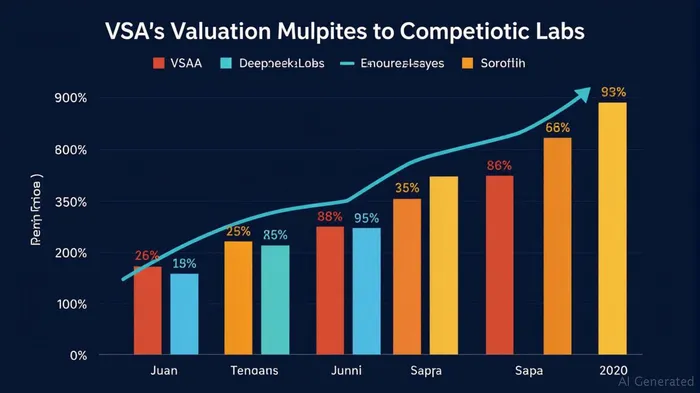
- Valuation Discount: VSA trades at a 10–15% discount to peers in the AI healthcare space, offering a margin of safety.
- Catalyst Timeline: The HopeAI deal could close by early 2026, with revenue synergies materializing by 2027.
- Sector Tailwinds: AI-driven healthcare is a priority for pharma companies, with spending on clinical trial tech rising 8% Y/Y in 2025.
Conclusion: A High-Reward, Low-Risk Entry
VSA's regulatory compliance and AI healthcare pivot create a compelling contrarian opportunity. With shares up 44.64% in six months but still trading at a fraction of peers' valuations, the stock offers asymmetric upside. The near-term catalyst—the HopeAI deal's progress—and longer-term market opportunity in clinical trial optimization position it as a buy for investors willing to navigate execution risks.
Recommendation: Accumulate shares at current levels, with a price target of $3.00–$4.00 by 2026, assuming successful deal closure and revenue growth. Set a stop-loss below the $1.00 compliance threshold to mitigate residual delisting risk. For contrarians, this is a chance to ride a micro-cap's transition from regulatory survival to AI-driven growth.





Comentarios
Aún no hay comentarios