
Von der Leyen Warns West's Influence Declining Amid Tariff Wars
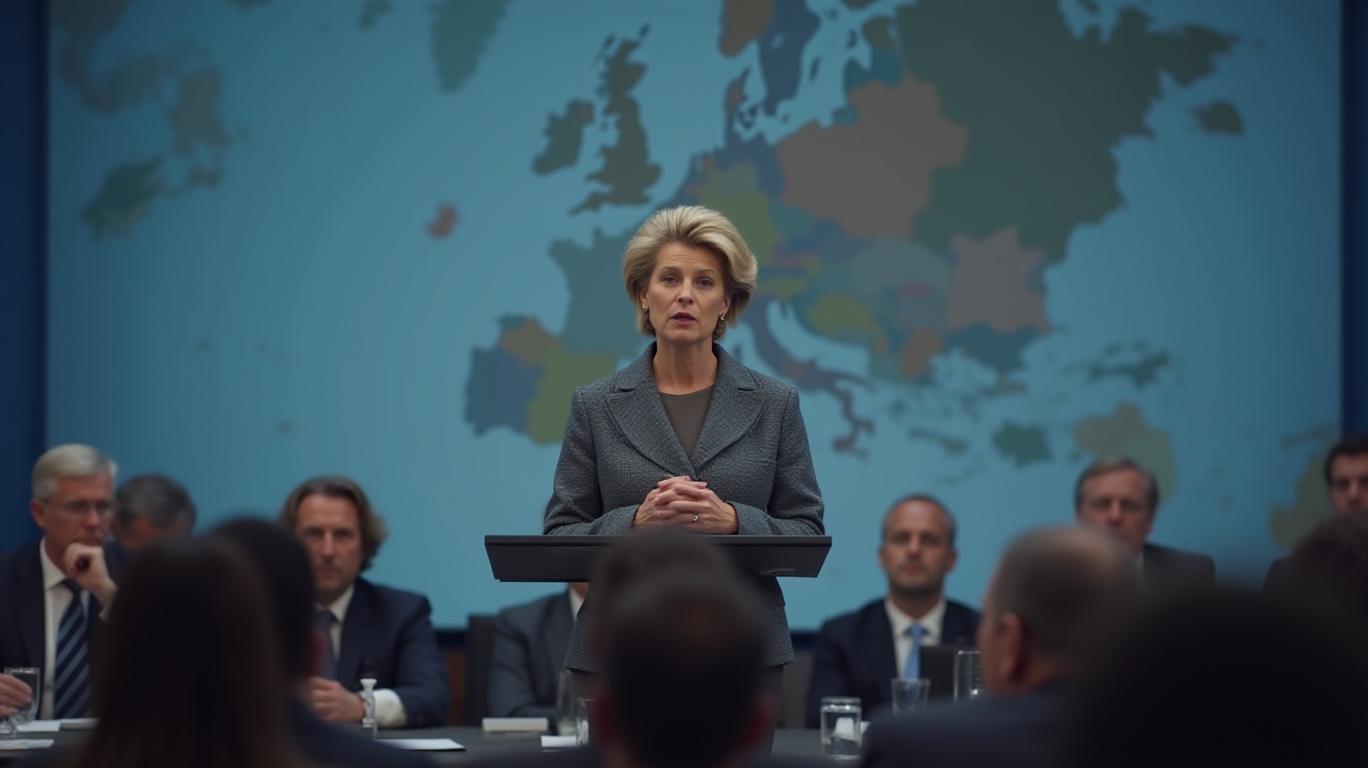
European Commission President Ursula von der Leyen has issued a stark warning about the declining influence of the WestWEST-- amidst escalating global tensions and rising tariffs. She emphasized the need for a strategic shift towards innovation to counterbalance these challenges. Von der Leyen's remarks come at a time when the EU is grappling with significant geopolitical shifts and economic pressures.
In a recent interview, von der Leyen stated bluntly that "The West as we knew it is dead." This statement reflects a growing belief that global power is no longer concentrated in the hands of traditional Western alliances. Rising economies, shifting political alliances, and increasing use of economic tools like sanctions and tariffs are challenging the old systems. Von der Leyen pointed out that while the European Union remains committed to democracy, cooperation, and free trade, the global landscape has become more fragmented. With the United States becoming less predictable in its international policies, especially regarding trade and tariffs, many nations are rethinking their partnerships and realigning their priorities.
One of the biggest concerns raised by von der Leyen is the growing use of economic tools—such as tariffs, export controls, and sanctions—as strategic weapons. What used to be tools for economic negotiation have now become methods of protectionism and even coercion. According to her, these tools are being used more frequently to safeguard national interests, but they’re also creating instability in global markets. The rise in such practices is forcing countries, including EU member states, to rethink their positions in the global economy. While von der Leyen supports defending the EU’s economic security, she warns that a tit-for-tat approach could trigger a damaging global trade war.
Von der Leyen made it clear that the EU does not seek confrontation, but it won’t remain passive either. The European Commission is developing stronger tools to respond to economic aggression, including retaliatory tariffs and tighter trade controls when necessary. But at the same time, she emphasized the importance of “positive economic statecraft.” This includes strengthening global partnerships, investing in innovation and clean technology, and creating fairer trade systems that reflect today’s realities—not just the rules written decades ago. Europe’s goal is to create a stable, modern, and fair economic framework that serves citizens across all regions.
While von der Leyen didn’t mention cryptocurrency directly, her comments signal an opening for digital finance and decentralized technologies. As confidence in traditional economic systems fades, crypto could become a crucial piece in the puzzle of future trade and finance. In fact, many countries are already exploring blockchain-based trade, decentralized finance (DeFi), and even central bank digital currencies (CBDCs) as alternatives to U.S.-led systems. The growing BRICS allianceAENT--, for example, is actively looking at non-dollar-based financial systems—a movement that mirrors von der Leyen’s warning about the need for economic resilience and modernization.
The EU's relationship with China has also been a focal point, with von der Leyen's recent discussions with Chinese PremierPINC-- Li Qiang sparking speculation about a potential thaw in EU-China ties after years of strained relations. This development is seen as a significant move, given the historical tensions between the two economic powerhouses. The global trade landscape is further complicated by the stance of President Donald Trump, who has expressed no urgency in lifting tariffs, viewing them as a means to generate revenue for the United States. This position has led to a prolonged trade war, with tariffs on goods entering the US causing ripples in financial markets and triggering recession warnings.
The geopolitical storms buffeting Europe have led to a cooling of the white heat of expansion that drove the region's solar PV market in 2022-23. The energy transition, which relies heavily on solar PV and energy storage, is facing challenges due to political and economic uncertainties. Despite these hurdles, the mood at the Large Scale Solar Europe 2025 summit was broadly optimistic, with solar installations continuing to increase, albeit at a slower pace. The global macroeconomic situation is undergoing significant changes, with tariffs and defense spending diverting attention and resources away from renewable energy and climate agendas. The energy transition, while gathering pace, is facing headwinds from price shocks and unstable economics, which could fuel arguments against the cost of net-zero targets.
The European solar industry is becoming more integrated with market dynamics, reducing its dependence on direct government support. However, uncertainty and potential recession could complicate investment in the sector. The industry has shown resilience in the past, weathering challenges and continuing to grow. The energy crisis following the Russian invasion of Ukraine in 2022 highlighted the importance of solar PV in achieving energy security. The boom in solar installations during this period demonstrated the rapid deployment potential of solar energy. However, the rate of growth in Europe's solar industry has slowed since the immediate effects of the energy crisis subsided.
The political landscape in Europe is also evolving, with right-wing parties potentially pushing back against pro-solar policies. The introduction of land use laws for agrivoltaics in Italy and proposals to allow international carbon credits to count towards European decarbonisation targets are examples of political rhetoric turning against PV in Europe. Despite these challenges, Europe remains a leader in political climate action, with ambitious targets and continued investment in clean energy projects. The combination of war, fiscal challenges, and shifting political narratives poses a threat to the momentum of the energy transition. However, the resilience of the solar industry and its potential to achieve energy security and independence suggest that it will continue to play a crucial role in Europe's energy future.







Comentarios
Aún no hay comentarios